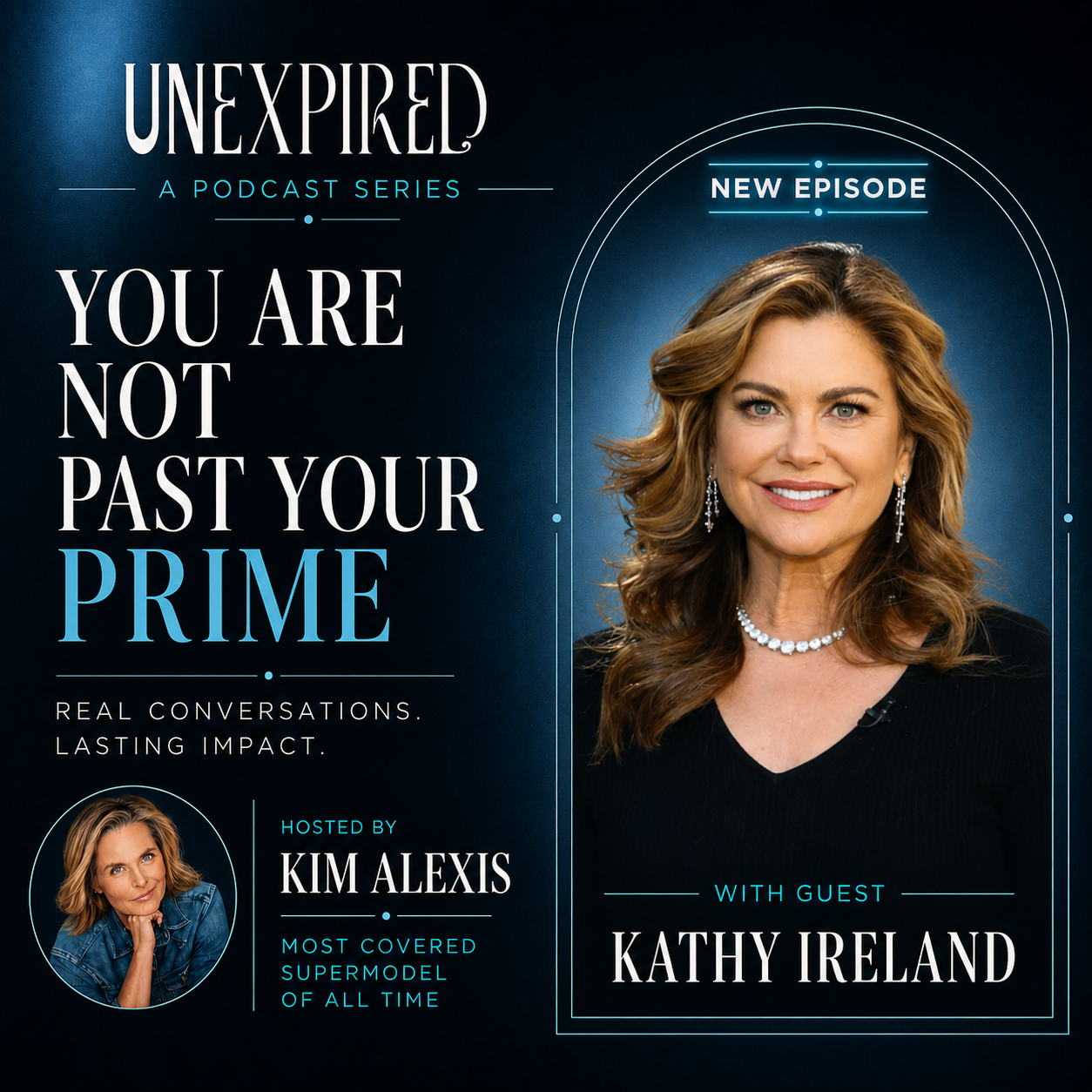
Kathy Ireland on Building a Business, Surviving Fame, and Making Your Future Bigger Than Your Past
Kathy Ireland on Building a Business, Surviving Fame, and Making Your Future Bigger Than Your Past
Where It Actually Starts
What did selling painted rocks and delivering papers have to do with building a billion-dollar brand?
Everything. Those early jobs built the muscles that actually matter in business: persistence, comfort with rejection, and the ability to keep showing up when nobody is particularly impressed with you yet. Kathy Ireland was the only "paper girl" on her route, handling every kind of customer personality before she had any reason to be confident about it.
The practical lesson is not that humble beginnings are romantic. It is that confidence gets trained through action, not granted by a title, a cover, or a perfect moment.
The Mindset Shift That Changed How She Handled Pressure
How do you survive an industry built on constant judgment without it wrecking you?
You stop making yourself the center of the story. Ireland describes a turning point rooted in faith and self-worth that flipped the question from "how am I being judged?" to something deeper about value and purpose. When your identity is stable, feedback becomes information rather than a verdict. You can take risks without being destroyed by the outcome.
That is not a soft idea. In modelling, entertainment, and honestly any high-pressure industry, it is the difference between a long career and one that collapses the first time the wind changes.
What Sports Illustrated Actually Looks Like From the Inside
Is the effortless beach photo actually effortless?
Not even close. Long days, physical strain, uncomfortable underwater shoots, rushed wardrobe changes, and constant adaptation to conditions nobody planned for. The final image is the product of athletic-level work that most people never see.
Why does that matter beyond the behind-the-scenes curiosity?
Because it is where she first notices that "the look of the moment" can change overnight and that fame is not a business model. Even talented people struggle when they do not manage money, reputation, or long-term strategy. The modelling career is the platform. What you build on it is the actual job.
Building a Product Company From Socks to Home Goods
How did kathy ireland Worldwide actually start?
Socks in 1993. Not a lifestyle brand, not a content play. Actual socks designed to solve a real problem for real customers, specifically busy families and moms who do not have time for products that disappoint.
What principles drove the product decisions early on?
Quality, pricing, and genuine customer need. Ethical sourcing was part of it too, including surprise factory inspections and early products like socks made from recycled soda bottles that connected environmental benefit to economic sense before either was a marketing trend.
When the Retail Partner Goes Bankrupt
What happens to a business when its primary retail partner files for bankruptcy?
You find out very fast whether you built something durable or something dependent. Kmart's bankruptcy forced a strategy shift toward diversification that Ireland credits as a turning point. If your entire business runs through one retailer, you do not have a business. You have a vendor relationship with existential risk attached.
What did the Nebraska Furniture Mart and Warren Buffett chapter reinforce?
The fundamentals. Truth, value, and disciplined competition. No shortcuts, no gimmicks, no strategy that does not survive contact with a customer who can spend their money somewhere else.
Hard Chapters and What Comes After
How does she talk about betrayal and misplaced trust?
Directly and without pretending the damage was small. Hard chapters are part of the story, not footnotes. She returns to purpose through philanthropy and a leadership framework she describes as JOY: Jesus, Others, You. That sequence is the actual operating system underneath the business decisions.
The Principles Worth Repeating
What is the repeatable framework for anyone building something, changing direction, or rebuilding after a setback?
Protect your integrity because it is the one asset that cannot be replaced. Stay close to the customer because they tell you what actually matters. Build skills, relationships, and value that survive trend cycles rather than chasing whatever is working right now. And keep your future bigger than your past, which is easier to say than to live and harder to abandon once you actually believe it.