HOW A TROUBLED TEEN FOUND PURPOSE—AND A SUPER BOWL RING
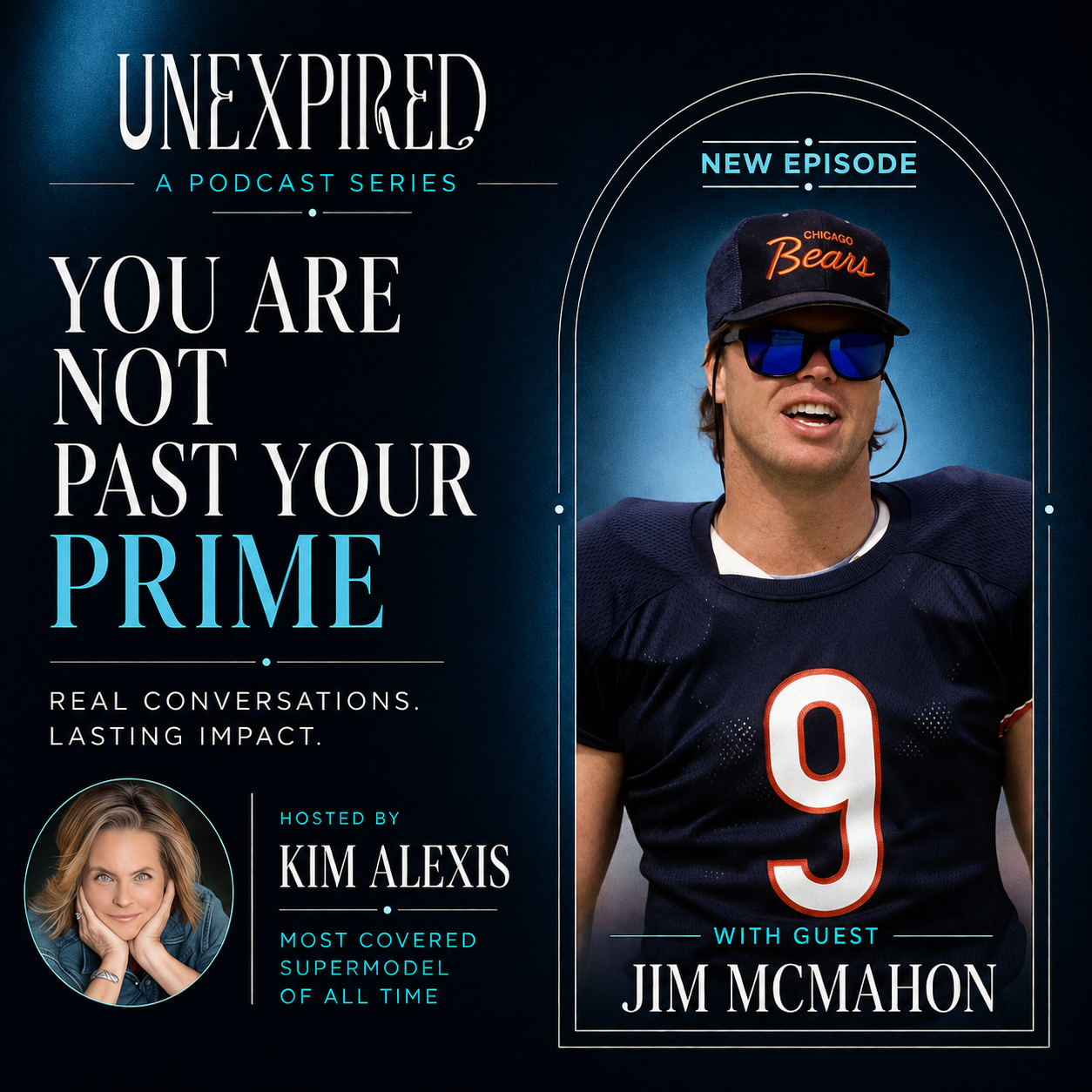
Sometimes the hardest battles begin long after the biggest victory. This episode features Kim Alexis in conversation with Super Bowl champion Jim McMahon, who reflects on the journey from a troubled teenager to one of the NFL's most recognizable quarterbacks. He shares how discipline, resilience, and the right mentors helped change the course of his life on and off the field. The conversation also explores the realities behind football success, including career-defining moments, hidden injuri...


Sometimes the hardest battles begin long after the biggest victory.
This episode features Kim Alexis in conversation with Super Bowl champion Jim McMahon, who reflects on the journey from a troubled teenager to one of the NFL's most recognizable quarterbacks. He shares how discipline, resilience, and the right mentors helped change the course of his life on and off the field.
The conversation also explores the realities behind football success, including career-defining moments, hidden injuries, and the health challenges that followed long after retirement. Jim opens up about brain health, life after the NFL, and finding purpose beyond the game.
Key themes from the episode:
- From troubled teen to Super Bowl champion
- The hidden cost of an NFL career
- Brain health and life after football
- Resilience through life's toughest chapters
Listen to hear the story behind the championship, and the lessons that mattered long after the final whistle.
00:00 - Welcome And Old Friends Reconnect
01:15 - A Childhood Eye Injury And Pain
03:05 - Big Family Losses And Loving Baseball
04:40 - School Trouble And Moving To Utah
07:05 - BYU Roles Punter To Quarterback
14:10 - The Miracle Bowl Comeback Breakdown
18:25 - Reading Defences And Simple Play Calls
22:40 - Heisman Snub And Record Numbers
24:25 - Draft Day Chaos And George Halas
30:45 - Fame Moments Covers Teams And Retirement
33:40 - Broken Neck Discovery And Headache Relief
39:00 - Youth Football Safety And Delaying Pads
41:40 - Life Now Golf Grandkids And Next Pivots
Welcome And Old Friends Reconnect
SPEAKER_01
Hi, I'm Kim Alexis. In Paris, Dr. Kelly is showing his collection of spring clothes. Hi, I'm Kim Alexis with your ticket to adventures. I'm Kim Alexis, and I'm here in New York City. We've got a great show coming up for you, so stay tuned. I love being here with you because I know you for the last 10 years. So it's great for you to be on the show. And I want to try and find parts of you that maybe others don't know because I've seen such a great side of you. You and I, over the years, have done so many celebrity charity tournaments. And I even remember one time when I was single and some guy was giving me a hard time, and you looked at me, you're like, Kim, are you okay? And I'll never forget that because you were like the big brother. So thank you for that.
SPEAKER_00
Oh, no problem. I don't mind a good scrap of that evening. Yeah.
SPEAKER_01
Yeah, I know. No, it's it's nice to um, because I didn't have a brother, so kind of think of you as a brother. So your fame came early to you, like mine did. Um, did you ever realize that you would have to go through so much pain and changes and misery
A Childhood Eye Injury And Pain
SPEAKER_01
um to get through it and to get to where you're sitting right now?
SPEAKER_00
Well, the the pain kind of started early in life. I I I kind of got used to it, getting my butt whipped a lot from my folks, and and uh also had some injuries uh I inflicted upon myself, you know, when I was six, six years old, sticking a fork in my eye. Uh actually was just kind of sitting here like this and had a knot there on my gun holster, you know, and couldn't get the knot out, so I got in fork and started messing with it. Uh it proves the hands quicker than the eye because it got in there before my eye closed and uh had to deal with that. I was in the hospital probably for, I don't know, 10 days. Oh, really? And uh had a couple of surgeries just to save the eye. My dad just told the doc, please just save his eye. He didn't want me to have a glass eye as a six-year-old. So this was 1965, so they they did a hell of a job just to to save my eyeball. And uh they had to big cut a big chunk of my iris out, and that's why I I've always wore sunglasses since I was six because the the pupil doesn't dilate. Uh, and there's it's it's not round. It's kind of a uh it's like looks like a broken egg when I try to explain it to people. Um and it just the the light hurts. I mean, this kind of light hurts. Any, you know. Wow. So I've just been used to wearing these and and get so that started by pain, and then it growing up playing sports, obviously, and and having two brothers and and living where we did, we fought a lot.
SPEAKER_01
And so are you the mid middle?
SPEAKER_00
I'm the second of uh six six kids. We had three boys and three girls.
SPEAKER_01
Oh, okay. I didn't realize you had that. I didn't know you had three sisters.
SPEAKER_00
Yeah, unfortunately, I had um my middle sister passed away about 10, 12 years ago. Um, she was nasmatic her whole life, and all the medications she took shut her system down, and she she passed away at
Big Family Losses And Loving Baseball
SPEAKER_00
44, I believe she was.
SPEAKER_01
Wow, yeah. Sorry about that. So when you were young, um, you I mean your parents must have been busy. You had six kids, and you played not only football, you played other sports also. What did you what did you did you enjoy other sports better than football or baseball was my sport.
SPEAKER_00
I always always loved baseball. I started baseball before I started playing football. Um just just enjoyed the game. And had I played that, I think I'd my body feel a hell of a lot better than it does right now.
SPEAKER_02
Yeah.
SPEAKER_00
But uh yeah, I played, you know, growing up football, b basketball, and baseball.
SPEAKER_01
Were you a pitcher?
SPEAKER_00
I pitched, I played pretty much every position in baseball. But uh, if I would have kept playing in my career, I would have probably been in the outfield.
SPEAKER_01
Okay.
SPEAKER_00
Uh just didn't like being bent over all the time. You know, in the outfield, you kind of kind of walk around, say hi to the fans. Infield, you always gotta be ready. You never know.
SPEAKER_01
Right.
unknown
Right.
SPEAKER_00
But yeah, I'd love the game and and uh wish I could I wish I could have kept playing it, but it wasn't to be, I guess.
SPEAKER_01
Yeah. Interesting. So um did you growing up have this fantasy about being a sports athlete or were you good in school?
SPEAKER_00
I was not good in school. Uh I made a trip to the principal's office my first day at kindergarten, and it didn't seem to get any better until I was until I was going into eighth grade. So I had I had that was a lot of years in there that uh I was not a model child or or student or citizen.
SPEAKER_01
So do you think
School Trouble And Moving To Utah
SPEAKER_01
it's probably because of the way you learn? You know, now they're saying that possibly like ADHD kids is just because of the environment and the that they would learn better out jumping around and playing and Yeah, I was never a good classroom person.
SPEAKER_00
I you know, I'd I'd finish my work, whatever, whatever work you had to do, I'd finish it and then I'd be I couldn't sit still. You know, I'm sure it would have been ADD or radiation, whatever they're calling it now.
SPEAKER_02
But right.
SPEAKER_00
That's just nervous energy from kids. I mean, you can't uh I could I couldn't sit still for that long.
SPEAKER_01
Right.
SPEAKER_00
And so I was always in trouble. And um it affected, you know, my life at home too, because I was I was in trouble at home, it seemed, as well. Doing I did dishes probably every night for for years on end. And dishes at my house was a pain because we had you know six kids and mom and dad. And so yeah, it was uh it was a little rough growing up, but I finally got over that and got on the right track.
SPEAKER_01
Well, okay, so then all of a sudden you're going off to college. Why BYU if you were a problem kid? It seems like that's a rigid school.
SPEAKER_00
Well, I had from eighth grade until I went to college, so to straighten up. So I had a few four or five years to get ready. But uh my dad's job, uh I grew up in San Jose, California, and my dad's job moved him to Utah when I was gonna be a junior in high school.
SPEAKER_01
Okay.
SPEAKER_00
And uh my older brother got to stay in California, finish out his senior year, and I wanted to stay, all my coaches wanted me to stay in California, and uh because I started as a sophomore, and my dad said, No, I'm not gonna leave two sons here, and this one has a police record, which I did. Oh, you did? Because he could moving out of the state probably be a better thing for him. And so I ended up in Utah. So I played my last years of high school ball there.
SPEAKER_01
Now, did those coaches love you too?
SPEAKER_00
Uh at times. During the games they did, but other times probably not. Uh yeah, it was uh it was definitely different going from where I grew up in San Jose. I grew up with the brothers and the Mexicans and never heard of the word Mormon before. I grew up Catholic and uh to move to where I did Roy, Utah, which is outside of Ogden, just north of Salt Lake City. Uh, it was definitely an eye-opener. Yeah. And then to the reason I chose BYU, I wanted to play baseball as well
BYU Roles Punter To Quarterback
SPEAKER_00
as football in college. And the only two schools that said I could play both sports was uh BYU and Nevada, Las Vegas. And of course, where do you think I wanted to go? And I came home that Vegas was my last recruiting trip, and I said, Pops, I'm going to Vegas. And he said, No, you're not. He said, It's not a big enough school, this and that. I think he was worried about me playing there and being able to go on to the next level. And I wasn't worried about that. I knew I had the talent to play. And I said, Look, Pops, I just I want to have kind of a normal college life like most people have, which I knew I wasn't going to have at BYU. And plus, I want to play baseball and this go, I think, would be better. And he just put his foot down and said, Nope, you're not going to your Vegas. So that's how I ended up at BYU.
SPEAKER_01
Wow. So you did listen to your dad though, instead of rebelling.
SPEAKER_00
I'm still listening to him, even though he's he actually just got out of the hospital this morning. He's in there for pneumonia the last couple of days. Oh gonna go see him like see tomorrow morning.
SPEAKER_01
So oh good. Good. I'm glad you still have your dad.
SPEAKER_00
I just lost my him and my mom. They're both turning 90 next month. Oh wow. And we're having a big get together for them for their 90th. And uh hopefully they'll they'll hang on for a little about a little while longer.
SPEAKER_01
So my dad's 90th would have been today. I lost him a month and a half ago. Sorry to hear that. Yeah, yeah. So um, so now you're at BYU, and I guess I didn't realize you were also you were the backup quarterback, but also the punter.
SPEAKER_00
My freshman year, I wanted to make the varsity, and the best, the best chance that I had to make in the squad was was being the punter. Uh, I was gonna be either the fourth or third, third or fourth team quarterback, but I knew, you know, uh I I just wanted to be a varsity player. Never had to play JV, so I didn't want to start in college. So, you know, I I made it being the punter. And our our starter got hurt the fourth year, fourth game of the year, I think it was, and I became the backup. I still punted, and I punted throughout that year, and then uh a little bit in my sophomore year, and then just played cube.
SPEAKER_01
Your mindset growing up was that you knew you were a great athlete pretty much. It was just came easy to you, so you could just try new things.
SPEAKER_00
I never I just wanted to be an athlete. I didn't care what it was. Uh my dad was he was my coach up until I got to high school. He just taught me and my brothers the fundamentals of the sports. He said, if you if you learn the fundamentals, which seem to be going away in pretty much all the sports nowadays, but he goes, You can you can you know do okay. And he and if you have talent and you know you you know the fundamentals, you you know, see how far that can take you. Uh but talent and fundamentals only takes you so far, you gotta have the heart to do it as well. Right. And that's the inner drive that you know, whether or not you get to this level or not, is it's all what's what's inside.
SPEAKER_01
Right. Which you had. You had the whole package.
SPEAKER_00
I was never uh I never wanted to be anybody else. You know, you see kids on the playground, you know, messing around and they're always saying, Oh, I'm so-and-so, I'm so and so. I was I was always me.
SPEAKER_01
Right.
SPEAKER_00
I didn't want to be anybody else.
SPEAKER_01
Do you hear kids say they want to be you?
SPEAKER_00
Making the play. I'm not this guy.
SPEAKER_01
Yeah. Do you hear young kids now saying they want to be you?
SPEAKER_00
Uh probably not for a while. Most young kids don't know who the hell I am now. But yeah. Well, uh, my grand, yeah, I've got seven grandkids now, and and uh the I got a couple little athletes out of that group, I think.
SPEAKER_01
It's pretty interesting watching, isn't it? When you see that they're young, because I had a son, I have three sons, and my youngest, it was like people were asking for his autograph when he was 10.
SPEAKER_00
Yeah, my daughter's uh my youngest daughter's sons, or her oldest son is really he's into sports. I mean, he watches it on TV. He's always on the his phone, you know, looking things up and statistics. And he's a good little athlete. He's gonna be and he's he hates to lose. I mean, he's he's she goes, he he reminds me a lot of you.
SPEAKER_02
You didn't like losing?
SPEAKER_00
No, I hated losing. I mean, it sucks to lose. Why why play if you want if you're gonna lose?
SPEAKER_02
Right.
SPEAKER_00
But uh yeah, he's he's kind of like me. Hell of a lot faster than I am. A little a little kick and run.
SPEAKER_01
So, all right, so you are now backup quarterback and Mark Wilson gets hurt, right? When you're at VYU. So what did what went through your mind like, oh, I finally get to do my thing, or uh-oh, am I ready?
SPEAKER_00
Well, it was actually my uh my sophomore year, Mark and I actually split time.
SPEAKER_01
Oh, you did?
SPEAKER_00
He did yeah, he didn't get hurt. Um he had an apodectomy my redshirt year.
SPEAKER_02
Oh, okay.
SPEAKER_00
And so that would have been my sophomore year. But I redshirted after. And um, yeah, just we we just kind of split time and it wasn't it wasn't a fun year for for either of us. You know, Mark was a good guy, he was a good quarterback for our team, but I I I felt I should be playing. In fact, you know, I I him and I did that our sophomore years, or my sophomore year, and then I redshirted. So I went I went two years, then redshirted, then played two more years. And what was Which was very frustrating.
SPEAKER_01
Was it because you were injured?
SPEAKER_00
Uh well Mark, Mark was gonna be a senior my junior year. And since we were we split time that the year prior, we didn't want to have to do that again. And uh the coach didn't want you know us to do that again. So he figured, all right, redshirt me, then I have two more years to play, and then Mark would finish out his senior year. And Mark had a great year. They they went undefeated, unfortunately, that they lost the bowl game, but you know, he got drafted by the Raiders and their first year, he's there, they won the Super Bowl. So he did pretty well.
SPEAKER_01
Yeah.
SPEAKER_00
Oh, that's yeah, it was it was frustrating to for that year to to go on, but after that, it was it was I would think for you and your personality to stand on the sidelines and not being able to contribute is tough. No, I did not like it at all. I and that's the year I probably should have pressed up my my academic side of the thing and taken a few more classes and instead I didn't take any. I was so upset that I couldn't play that I didn't go to school either. So wow. The following year I had to, all during training camp, I had to get, you know, get eligible academically too. So I had to have to sit in Lavelle's office, have to practice, and do homework. So you know it was no fun. Are you one of these deadline guys where you perform better I just when you have to procrastinate? Put it all, yeah, I'll get it done, I'll get it done. And well, it took me 37 years to graduate. You know, I finally went back in 2015, I think it was, and took five classes and finished. So I got it done. I promised my folks I would do it. I promised Lavelle, uh, our head coach that I'd get it done, and I was uh happy to do that.
SPEAKER_01
Good.
SPEAKER_00
Well it sucks doing homework at 55, though, I'll tell you that. I hated it at 18. I sure as hell didn't like it at 55.
SPEAKER_01
Yeah, that's where we differ. I used to take home extra books. Don't know why. All right, so you've then had a bunch of different
The Miracle Bowl Comeback Breakdown
SPEAKER_01
obviously, this was the start of your injuries, right? Of while you were playing. So knee surgery. So you had to stick out stay out for that. And then um take me through though the holiday bowl.
SPEAKER_00
Oh, that's I'm sure you're referring to the game against SMU. They called it the miracle bowl.
SPEAKER_01
So you guys were down. I mean, it says 45-25.
SPEAKER_00
Yeah, we were down the whole game, basically. But yeah, with with uh it was four minutes left, and it was 45 to 25. Yeah.
SPEAKER_01
In four minutes, you made up 21 points?
SPEAKER_00
It was actually almost three minutes because we we didn't do anything in that.
SPEAKER_01
So how do you do that?
SPEAKER_00
A lot of breaks. You know, I didn't uh it didn't play well for three quarters, and so that's why we were behind. And SMU had the best team money could buy at that time. They had they had a pretty good damn football team. But uh, we started clicking there in the fourth quarter, and in uh that last you know, we went down and scored probably within a minute. Uh and then we kick an onside kick and get it. Oh and so we go down to score again, and we kicked another onside kick and we didn't get it. So we had to stop them one more time. We were down, I think, six points at that point. And the defense was having trouble stopping those guys all night with Eric Dickerson and Craig James, and their quarterback was was was good. And we finally stopped them and we blocked a punt. There's I think we got the ball back with 18 seconds left on on their side of the 50. And uh had time for about three plays. And I just remember the first play, I saw I was trying to hit my tight end coming across the field, and and right at the last second, I saw somebody on the other side come off his man. And if I had thrown a good pass, it probably would have been picked off and game's over.
SPEAKER_02
Right.
SPEAKER_00
But I threw a terrible ball, thank God, and it on the ground. And I think the next one I threw out of the end zone. So now there's only three seconds left. And I we're in a huddle, and I said, Look, boys, we've we've come too far. I said, let's I said, somebody get your butts in the end zone and catch this ball. And I said, Oh, line, give me a little more time because I gotta wait till they get down there. And just so happens, I take take a sna uh drop, I think I dropped like nine steps or something.
SPEAKER_02
Which is okay.
SPEAKER_00
Giving those guys time.
SPEAKER_02
Yeah.
SPEAKER_00
And then just threw it as high as I could throw it. And just and then just watched. And I could see all these guys converging on the ball. Right. And uh my tight end went up. He didn't even get to jump, he kind of stumbled backwards. He had three guys around him above him, and the ball went right through all their hands into him, is into his chest.
SPEAKER_01
It was But you planned that.
SPEAKER_00
How they well, we don't plan it. That's we call the save the save the game pass, and that's what you call it.
SPEAKER_01
Right.
SPEAKER_00
You're there, you got to save the game, right? Right. And everybody knows you just run to the middle, and if you can't catch it, tip it, so somebody else might have a chance. But the ball went through all those arms into his chest. And we still had to kick the extra point because that only tied it. Oh and so we go, I'm getting it. There's no time on the clock, and our kicker goes out there and kicks the extra point. And my dad used to talk to Lavelle all the time after this, after this game and say, Hey, you know what? The the Catholics saved your, save the Mormons tonight. And Lavelle would say, What? And he goes, Yeah. He goes, uh Bill Shefflin, who blocked the punt, he was a Catholic kid. Clay, Clay Brown, who caught the ball, he was a Catholic kid. Jimmy was a Catholic kid. He goes, They saved you. They won the game. He goes, and Lavelle always says, No. He goes, they they tied the game. My little Mormon kicker came in and won the game. So that was always his topper. It was great.
SPEAKER_01
Oh, how funny. All right. So um that that's pretty it's interesting to hear how all that happens, though. And um, as a woman, we know we always look at games differently because I don't see some of the stuff you guys can see. Um, and so you didn't feel necessarily pressure. I mean, when you're a quarterback, I've watched the guys that are on the sidelines, and sometimes the ball, it's out of their hands, right? You can only do so much. And you just, I mean, you either have to trust your other players or you can't make every single play happen, especially with the defense, right?
SPEAKER_00
Without the five guys up front of you, they've nothing, nothing happens right.
SPEAKER_01
Right.
SPEAKER_00
And that's where it all starts, and that's where it's never gonna
Reading Defences And Simple Play Calls
SPEAKER_00
end. I mean, if those guys can't do their jobs, you can't do yours.
SPEAKER_01
Right. Were you a guy that always looked at like the whole strategy of the game? Did you understand like the whole big pic picture? Because I thought I heard a story where you went into the coach and you said, It's halftime and we're not doing it his way, follow me and we're just gonna go. And you ended up winning that game.
SPEAKER_00
Uh it's probably more than halftime. No, I I to for some reason I never it was never that difficult for me to to understand what was going on. Um, I learned a lot of this in college. Uh my quarterback coach that I had there, Doug Scoville, he taught me more than I learned in 15 years in the NFL. And it's it's really simple stuff, you know. Like I said, you got five linemen, all they can do is block, right? Right. And we like to call it hat on a hat. There's somebody blocking somebody, right? Right. So there's five guys. Then you've got a tight end, two receivers, two backs, depending on you know the kind of formation you have. And the defense can always send one more guy than you can block. And as a quarterback, if you can figure out who that guy is, I mean, it's like shooting fish in a barrel. Because the guy who can't be blocked might be eight yards deep in the backfield. Right. So you don't even worry about him. Right. You don't just he blitches, he blitches. So what? Ball should be gone. And so I always told my guys, just do your jobs up front. I'll take care of the guy that can't be blocked, whether or not I change the play or just I I throw a hot receiver. But to me, I it it was never that difficult for me.
SPEAKER_02
Yeah.
SPEAKER_00
Like I could see, I didn't like watching film because the film is being shot from the top of the stadium. Right. And so I that's not the view I can see. I'm I'm only 6'1. I didn't get I couldn't see over people. But I can see when I walked up the line of scrimmage where they were lined up. Right. And what they couldn't do based on where they were lined up. And they might try to fool you. Right. But there's certain things that you can do. I mean, once you get the ball and you take your first step, now if those guys were gonna do what you thought they were gonna do, or they they they fooled you, right? And I don't think I got fooled much because I I understood that yeah, this guy's trying to jerk jerk me around, but this guy gave it away over here.
SPEAKER_01
Right.
SPEAKER_00
And I always used to look at the safeties. Safeties kind of they have to give it away. That's why they call them safeties. They're supposed they're there to save your butt.
SPEAKER_02
Right.
SPEAKER_00
And uh so they give away a lot of things, and then uh different fronts, different teams would play different coverages based on the alignment of their front four or their three or whatever the defense front was. And so if you just took a peek at the game plan, I mean they give you a computer printout about this thick every week about all the stuff that I would just go to the key situations. What do they do on first and ten? What are their tendencies, second and long, third and long, you know, those and that was all I needed.
SPEAKER_01
But didn't you have to teach all the guys around you? I mean, they always are looking at their sleeve or something for the calling the plays. Well, if you understand the game, you've got to make other people understand your game.
SPEAKER_00
Well, the the reason they have so much stuff written down, there's the verbiage is so long nowadays. They they have to basically tell every person what the hell to do on every play, which is ridiculous.
SPEAKER_01
Right.
SPEAKER_00
I mean we I used to get in the huddle and go, red write 65. Everybody knew what the hell a 65 was. Or red write this. I mean, there's not okay, X motion, Z, do this.
SPEAKER_01
Right.
SPEAKER_00
So if you were a quarterback now with these You're putting all the burden on the quarterback.
SPEAKER_01
Right.
SPEAKER_00
These other guys need to learn their positions a little bit better. Right. You should just you know say a number and ever that should correlate. Okay.
SPEAKER_01
Are they afraid of doing something wrong?
SPEAKER_00
I don't know what I don't they might be uh upsetting their play. I don't know whether they're not.
SPEAKER_01
So do you think you'd be a good quarterback?
SPEAKER_00
You can't yell at them anymore.
SPEAKER_01
Would you be a good quarterback now trying to if you were playing with these guys?
SPEAKER_00
I'd love to play now. You get to throw it all over the place right now. I mean, that's what I love doing was throwing the ball. That's I mean, we were doing it at BYU in the late, mid to late 70s, way before they were doing it, you know. And it's all the stuff they're doing now. We'd spread people out. We'd have five guys out on every play. I mean, that's that's hard to that's hard to cover.
SPEAKER_02
Yeah.
SPEAKER_00
Especially when you got guys that are the the the skilled people we have are pretty good.
SPEAKER_01
They're quick, right? They're quick.
Heisman Snub And Record Numbers
SPEAKER_01
So take me through becoming or you were third for the Heisman Trophy. What did that feel like? Did you were you relieved that you were freed of that pressure or disappointed that you didn't get it? Thinking about buying a home, but not sure where to start? Jeff Schwartz at Altitude Home Loans makes the process simple. From application to closing, Jeff helps you find the best loan for your financial goals and keeps everything moving smoothly because the right team makes all the difference. Ready to get started? Apply today with Jeff at Altitude Home Loans.
SPEAKER_00
Oh, I was bummed I didn't win. I mean, I I had a pretty good year that year. I was the first QB to throw for over 4,000 yards. I had 47 touchdowns, so it's almost four-game. Um there was nobody even close. Prior to that, I mean, I think the the highest number of of yards was like maybe 3,700 yards or something. And I had like 45 or 4600 yards, 47 touchdowns. We were we lost our opening game. That's what that probably really hurt me. But we won the next 12. Right. So it was, you know, I should have been. I thought it was better than that.
SPEAKER_01
But so I don't I don't know who the guy who did win it. Is he still know him? People know you. They don't know him, right?
SPEAKER_00
I should have won it, or the year I should have won it was uh 1980, and I think George Rogers from South Carolina won it that year, running back. And my senior year, uh Marcus Allen won it.
SPEAKER_02
Ah.
SPEAKER_00
Um but yeah, I I definitely should have won it my junior year.
SPEAKER_01
Right.
SPEAKER_00
But that didn't, you know, didn't bother me.
Draft Day Chaos And George Halas
SPEAKER_00
I knew I could still play.
SPEAKER_01
Right. Right. You gotta focus on right, stay in your lane, focus on what you're good at. So then you go to Chicago. Had you been to Chicago before? Did you know anything about the team?
SPEAKER_00
Uh the only thing I knew about Chicago was the movie Brian Song with Gail Sayers and Brian Piccolo. Uh I knew my folks had met in Chicago at in the and they were both in the army. Uh my oldest brother was born in Chicago.
SPEAKER_01
Oh.
SPEAKER_00
But uh all indications were at that time when I was coming out of school, was I was going to the Baltimore Colts. Because that's I'd been there a couple of times. I was having dinner, lunch and dinner with Johnny Unitis at his restaurant, and he was explaining how I'm gonna love Baltimore and this and that. And and so when the draft came, I was just sitting at home with my family and friends and um watching on TV, and I saw Pete Rosell get up and say, All right, with the fourth pick, the Baltimore Colts take quarterbacks, I'm thinking it's gonna be me.
SPEAKER_01
Right. You're ready to stand up.
SPEAKER_00
Art Sleeister, Ohio State. And I was like, Whoa, what what happened?
SPEAKER_01
Yeah.
SPEAKER_00
And my phone rang right away, and it was uh my agent. He goes, What'd you think? I said, What happened? I go, I thought he was going to Baltimore. He said, Well, you told me you didn't want to go there. I guess I'd mentioned to him I really didn't want to go to Baltimore.
SPEAKER_02
You're just forgotten.
SPEAKER_00
And so he told them not to draft me because they'd never signed me. They were having trouble signing somebody else. So they said, Don't even bother drafting them. And so that's I had no idea who was picking next. Right. And it was happened to be Chicago, and then the phone rang again. It was them. And um they said, Hey, can you can you come to the city? I said, sure. So I get on a plane that afternoon, fly to Chicago, three and a half hour flight. And uh they picked me up. My my limousine has some beers in it, so I'm I'm having a few on the way to the it's like an hour to Alice Hall. And so I wasn't even thinking about press at this point. I was just I was exhausted. You know, I had some friends over the night before we had a good time, and just take that flight. I was just worried about having a few more pops. And so we finally get there, and I get out of the limo and I see that I had two more beers on the strings. I figure I might take them with me. And I get out of the car and the press goes, whoop. Like, oh man. So I had to deal with that for years. And then uh, as I'm walking in, Mike Dick happened to be walking in the building as well. And it was his first year as a coach. And he just looked at me and says, So you're my first round pick, huh? I said, I guess so. So now I got to go in and meet George Hallis. And so I'm sitting there in his office or outside of his office, just looking at the secretary for about an hour. And finally I said, Hey, what am I waiting here for? What am I sitting here for? And she goes, Well, Mr. Hallis would like to speak with you. I said, Well, that's cool. When when's that gonna happen? And I had some friends that were on the team that wanted to take me out and go celebrate. And and uh she goes, Well, he's taking a nap right now. And I'm like, You gotta be kidding me. I say, Well, go wake him up. I said, I got things to do. I said, you know, I'm not gonna sit out here and wait for him to get finished with his nap.
SPEAKER_02
Right.
SPEAKER_00
And if you remember, at this point when I was coming into the league, the USFL was just starting to come in as well. The USFL was gonna play that spring.
SPEAKER_01
What's USFL?
SPEAKER_00
The United States Football League.
SPEAKER_01
Oh, it's a different okay.
SPEAKER_00
So the new league was coming in, and George Allen, the old Redskin coach, was gonna coach the Chicago team of the USFL. And I knew I had a meeting with him three days after this Hallis meeting. And so as I finally get to go in to see Hallis, I'm walking in and I haven't even sat down yet, and he starts saying, Well, you're too short, you got a bad eye, a bad knee, your arm is suspect. Maybe you should go to Canada. That's the first words out of this guy's mouth.
SPEAKER_01
Oh no.
SPEAKER_00
So how did you and I'm like, Well, why'd you draft me, old man? I said, Who's in your scouting department? You know, why why waste a pick on me? Right. And so I sit down and now he's like he's already had a contract for me. I I got drafted five hours ago. He he slides his contract over, and I just saw one number. And I'm like, I'm not signing this. I watered it up, threw it at him, I walked out. Wow. So that's my that was my welcome to Chicago.
SPEAKER_01
So then I'm you still have those two beers with you?
SPEAKER_00
I finished them. Wait, wait, I waited for an hour for him. They were gone. And so yeah, I just uh I went and met with George Allen three days later. He offered me an awesome deal. And I said, George, you put this in writing, I'll play for you. But you have to do it within these next few days, uh few weeks because they told all the rookies that year if you didn't sign by July 15th, you're ineligible to play. Which was all bullshit. But I knew then the NFL was a bunch of liars. But uh yeah, so he never came back with that contract. So I ended up having going back to Hallis, and he uh he unrolled that paper that I wanted. He kept the same one. I had to sign that contract.
SPEAKER_01
You had to sign the crumpled up.
SPEAKER_00
It was not a very good contract. There was guys in the second round that made more than I did.
SPEAKER_01
Wow. So and you guys didn't have lawyers back then to even look at the stuff? You just signed it for an agent.
SPEAKER_00
Yeah, I had a I had an agent at the time, uh Jerry Argovitz. He was not very well liked by the NFL.
SPEAKER_01
He he ended up playing uh Which means he's doing a good job for you. Yeah.
SPEAKER_00
He ended up being an owner in the USFL team. Um unfortunately he passed away about a year ago. But uh yeah, he was my first agent. And then I had another guy, just an attorney in Chicago that I'd met. He was one of Jerry's friends when I first went to Chicago and met him. And he was my attorney for the rest of my career. Yeah, he, you know, we when I did sign the contract, I gave him a note that said, I'm signing this under duress and reserve my right to sue.
SPEAKER_01
You wrote all that on the crumpled contract?
SPEAKER_00
And then gave it back.
SPEAKER_01
So I love it.
SPEAKER_00
Yeah, we didn't we didn't start off on the best of terms, me and uh old George Hallis.
SPEAKER_01
Yeah. Well, in my business, they used to give us contracts and they wanted you to sign them right then and there. I'm like, don't I get to have somebody look at it? So yeah, those days are gone, I'm sure. Yeah, no, well, you especially the fine contracts are one-sided until you people see it from another point of view. Yeah.
Fame Moments Covers Teams And Retirement
SPEAKER_01
All right, so now you're at Chicago for a couple years. This is when you and I get to meet each other.
SPEAKER_00
Oh, yeah.
SPEAKER_01
So one of the few men who did a cover with me, this was 1987. Yes, look at that. And my hair is long. Do you remember? I the photographer told me to put my hand up on your shoulder and you said, Don't touch me. Do you remember that?
SPEAKER_00
I don't.
SPEAKER_01
Yeah, I'm like, it's just for a photo. Anyway, so yep, this is this is your present. This is for you.
SPEAKER_00
All right, thank you.
SPEAKER_01
Because I have a couple of them. I'll even sign it if you want. Yeah, but I remember that and you walking in, and um you just had this whole presence about you. I don't think I did. You don't remember the booking, do you? Really. You should. That was working with me. Anyways. But were wasn't it a fashion thing? You were in some big, beautiful leather coat. I don't know if it was a s something that was made for you by the bears.
SPEAKER_00
Oh, they wouldn't have made anything for me.
unknown
No.
SPEAKER_01
Well, or a fan or something, I don't know, but it was a beautiful leather coat. I think I was in leather too. I don't know. But anyway.
SPEAKER_00
Well, it was big back then.
SPEAKER_01
Yeah. And that was our cover we did together. I didn't do many covers and shared cover with covers with very many people. You're well, thank you for sharing. Meaning cover space. All right. So obviously you had, and I'm not a guy, so I can't go through all your statistics with uh your Chicago, and then you went to a couple other teams, which I didn't know. I didn't know you played with the Cardinals. Yeah, six other teams. Yeah, and you ended with the Packers.
SPEAKER_00
With the Packers, yeah.
SPEAKER_01
And your last game was it the Super Bowl?
SPEAKER_00
Yep.
SPEAKER_01
Did you know it was gonna be your last game?
SPEAKER_00
Yeah. You did. Yeah, I knew. I promised my oldest daughter that when she got to high school that we'd that I'd quit and just stay in Chicago and they could finish out their their high school years. I didn't want them to have to move like I did in high school. Uh they went, they moved eight different times. Uh they would always go to the school from like September to Christmas break and then go back to Chicago. Kept my house there for 28 years. So they'd always have the second half of their year back at their regular school, but but I didn't want them to have to do that when once they got to high school. So I played one extra year. I'm glad I did. Got another, got another ring, nice ring, actually.
SPEAKER_01
And uh you don't wear them though.
SPEAKER_00
No, they're not. They're I don't wear those.
SPEAKER_01
Where are they?
SPEAKER_00
Uh I think they're in my safe. I've moved so many times. I my daughter had I gave them to my daughter to hold on to the last time I moved. And I think I finally got them back, put them in my safe.
SPEAKER_01
So Okay.
SPEAKER_00
Yeah, I'm not a big on the rings.
SPEAKER_01
No, yeah. I've never seen you wear it. So I I mean, some people
Broken Neck Discovery And Headache Relief
SPEAKER_01
definitely wear them all the time. Um, so as far as I mean, this show is about celebrating change and pivoting, and obviously you've done a lot of it. You had eye injury, knee surgery, lacerated kidney. That sounds terrible. Rotator cuff. And then you I mean, I love the story, not that it's a great story, but that somebody saw you on TV and told you, contacted you and said, Your neck is broken. Can you take me through that story? Because I've heard it before.
SPEAKER_00
It was actually these two doctors in New York. I just did a um a sports illustrated cover, and they talked about the problems I was having with my head. And they they called, they called me and said, Look, come to New York, we think we can help you. We think we know what's going on. So they said you're gonna have to spend a week. And I'm like, why a week? And they're they said, Well, you know, if if if what we think is happening is happening, we'll we'll make an adjustment, but we don't know how long it's gonna the adjustment will stay because it's been out of whack for so long. He goes, Your muscles are probably just gonna pull it right back out of out of whack.
SPEAKER_01
So they were chiropractors?
SPEAKER_00
One guy was a chiropractor by trade. The other was uh he invented the MRI machine.
SPEAKER_01
Oh, wow.
SPEAKER_00
And uh so did they give you sat me down and told me exactly what they thought was happening. They said, I we think we you have a blockage in your neck or your head somewhere that's that's blocking off your spinal fluid, and that's why you're having these bad headaches. And so then they put me in the CAT scan and uh it proved their theory. There I could see them behind the window, just talking and pointing. And and then when I got out of the machine, they said, Yep, this is exactly what we thought. He goes, Look right here. There were three different spots in my neck and my head that the the uh spinal fluid was just getting cut off. And that's when I knew found out my my C6 and seven were cracked and compressed, so I had a broken neck. Uh my atlas bone, which is supposed to be perpendicular to the spine, was was almost like at 10 o'clock. And there was another spot, I can't remember where it was, but uh he says, Yeah, we'll we'll make these adjustments, but uh we don't know how long it'll stay. So sure enough, the first time he did this little adjustment, and it's not a manual thing. I I lay on the t the chiropractor table and I get in the right position, and then he puts it looks like a drill bit behind one of my ear over here, and all I hear is a click like that. Right. And it doesn't touch my skin, but it sends like a vibrating pulse through my neck and it just moves those bones just enough to let this stuff out.
SPEAKER_02
Wow.
SPEAKER_00
And the first time he did it, it was it was amazing because I was I was literally a vegetable. I mean, I was laying in my my house in a dark room for weeks at a time. Because if I didn't have to get out of bed, I wasn't getting out of bed.
SPEAKER_01
So you were in that much pain. Yeah.
SPEAKER_00
I mean, anytime I sat up or stood up, I said, Doc, the only time I feel good is when I'm laying down. He said, That's because when you're sitting up or standing, gravity is ever so slightly pushing down on your neck. And it doesn't take much to cut that, cut those uh, you know, the arteries and everything off. So that's what was happening. And uh so the he did the first adjustment, and I sat up and I I try to explain it like seeing a toilet bow flush. You know, you just see the the level go like this, and that's that I could actually feel it coming out of my head. It was like the most amazing relief.
SPEAKER_02
Right.
SPEAKER_00
And I said, Doc, I don't know what you just did, but I I feel a hell of a lot better already. My you know, I could talk a little bit now. My eyes were jaundice and they were starting to clear up. And he goes, Well, I'm glad it it gave you some relief, but you know, don't get too excited. And then sure enough, that night I'm laying in my hotel room and it came back out, and it was excruciating. I I couldn't sit up, I couldn't they had to sedate me the next morning to to actually do the adjustment again. So they did uh I think they did two, two to three adjustments every day for that week. And then I would go back every two to three months, and now I'm up to five to six months now. I can I can go, I still see them, yeah. Because as soon as I start having headaches, the only other option for me, he said, was to put a shunt in my brain and run it down through my stomach. And I'm like, I'm not gonna do that.
SPEAKER_01
Right, right.
SPEAKER_00
At least now I understand what's happening with me. So when as soon as I start having headaches, I call them, Doc, I'll meet you in Albany, fly in, does the adjustment, fly back.
SPEAKER_02
Wow.
SPEAKER_00
And uh, but it's you know, I I I get it now, I get why I'm having these problems. Yeah, I've had teammates kill themselves because they didn't know what was going on.
SPEAKER_01
Because the pain was so bad.
SPEAKER_00
You know, you just you don't want to ask for help, but you're like, you know, why why am I in this room? I just walked in there for something, and it just it just wears on you. And then the the constant headache and the pain is uh it could be overwhelming.
SPEAKER_01
Yeah. Did you ever think though, when you were young, that you'd have to go through so much pain?
SPEAKER_00
Uh well, I everybody thought, you know, we'd have bad knees and arms and shoulders and stuff like that. That's just wear and tear from from these sports, but nobody ever talked about the head and the brain. Right. And uh we say, you know, you tough it out, you know, tape an aspirin to your helmet, helmet, you know, headache will go away, stuff like that. I mean, you're that's how you're brought up. You you're not brought up to ask for help, and and especially when you're with your head, because if once that starts messing with it, you don't you don't know what to do.
Youth Football Safety And Delaying Pads
SPEAKER_01
Yeah.
SPEAKER_00
You don't you don't you don't know where to go.
SPEAKER_01
So do you feel the NFL is protecting children now?
SPEAKER_00
Oh, they're trying. But that's a joke to me that see these some of these helmets they have, they're like moon helmets. And all that padding on the outside does absolutely nothing.
SPEAKER_01
Well, you still have a neck, right?
SPEAKER_00
You got your neck, but uh when you're going at these kind of speeds and you hit together, your brain's sitting on fluid. It's not detached to anything. Right. It's gonna slam into the side of your skull every time. So what they're you know, what they're trying to do, I get it, but it's they're never gonna be able to stop that.
SPEAKER_01
Right.
SPEAKER_00
Or go back to the old leather helmets.
SPEAKER_01
What if you had no helmet?
SPEAKER_00
Uh that or look what they do in rugby. Right. They do the same things. They don't they don't have nearly the amount of of uh heads.
SPEAKER_01
Sometimes taking that equipment away makes you more protective, even sometimes the shoes. Right? Even the shoes and the feet, and we have everything all taped up and feel like we're secure, and that it doesn't sometimes help in the end. False sense of security, that's how it is. Yeah. So what would you then say to young kids that want to get into football, that want to be you?
SPEAKER_00
I'd say wait until you're at least juniors in high school to play, put pads on. Because at that point, your body is physically able to put a helmet on and your necks can hold it up. I see these these little kids, you know, five, six years old, running, they're look like bobbleheads. They can't even hold their own heads up, let alone a helmet.
SPEAKER_01
How heavy is a helmet? Two.
SPEAKER_00
I don't even know what it how many pounds are. A couple pounds at least, yeah.
SPEAKER_01
Yeah.
SPEAKER_00
The ones they're making now, they're they're really heavy. So I don't know how that's helping them at all.
SPEAKER_01
Right.
SPEAKER_00
But it's it's ridiculous. I mean, but when you're that, once you get to be a junior in high school, I mean you're physically able to do these things. And you only need a couple years. I mean, if you got any talent, people will find you. I mean, the scouts will find you for college, the pro scouts will find you. It doesn't matter. Not every not every player in the NFL is from Alabama or, you know, Florida or, you know, USC, Ohio State. Right. They got, you know, guys from North Dakota, you know, Miz um Montana, I mean all over the country where you you wouldn't think there's there's any football going on. But yeah, that if you have talent, they'll find you. But it'll save you 10 years of head trauma, just just eliminating that. So let them play flag football. Let them learn the the fundamentals, like you keep saying, the fundamentals are key. I mean, they're playing flag football in the Olympics now.
SPEAKER_01
That's what I was just gonna say.
SPEAKER_00
So I mean I love it. You know, why not do that? I mean, you're still gonna have contact, people are still gonna get hurt, but that's
Life Now Golf Grandkids And Next Pivots
SPEAKER_00
you won't get you're not gonna have a whole lot of neck and head injuries doing that.
SPEAKER_01
Right. So when um when you have free time now, I mean, because you could have gone into broadcasting. Did you ever have a uh inkling to coach? Because you seem to know so much about coaching or broadcasting.
SPEAKER_00
No, I well, I have Tourette, so I couldn't broadcast. Things pop out of me.
SPEAKER_01
You've been really good today.
SPEAKER_00
Until they get to the truth network, I'm not gonna do it. Uh yeah, and as far as coaching, no, that's that's a thankless job. It's you spend hours and hours on stuff that you don't need to spend hours and hours on.
SPEAKER_01
I mean, but because you know the game, couldn't you have gone to the code?
SPEAKER_00
That would be more frustrating. Well, how come you can't get this? It's oh it's so simple. I couldn't I couldn't do that.
SPEAKER_01
So you can't teach. You're not a teacher.
SPEAKER_00
I I couldn't, you know, my my kids growing up, they want to be coach their, you know, uh baseball team, and they're and I said, look, I can coach you guys at home, but I'm not gonna deal with these parents. I mean, these parents are what a pain. Especially the hockey ones. Wow.
SPEAKER_01
Oh, your kids played. So did I.
SPEAKER_00
It was uh yeah, I just I admire the guys that can do it, but I just I couldn't I I I don't like wasting time that you shouldn't have to waste. I mean, just because this guy's too stupid to figure out, why do I gotta stay here, right?
SPEAKER_01
Is the game figure out a bull or is it just an innate ability to just see the whole strategy of the game?
SPEAKER_00
No, I think it's it's very foreseeable for for guys. I mean, especially uh your position. That's all you gotta worry about, basically. What am I gonna do at my position to help me better or help the guy next to me that's gonna be, you know?
SPEAKER_01
Doesn't the quarterback have to see everything?
SPEAKER_00
Yeah. It's not like I said, if you're if you you shouldn't have to be looking at your guys to see if they're screwing up. Right. You know, that's they get paid too. I mean, what do you what do you guys do in your meetings? I mean, what are you doing out here in practice?
SPEAKER_01
Did you ever get mad at linemen linesmen when you'd get sacked because it was their fault?
SPEAKER_00
There was a few times. They got a hard job. The people they're blocking are big boys. They're maniacs. And uh they have to be maniacs too.
SPEAKER_01
Oh
SPEAKER_00
And I I get their I get their job is hard. But I told you know I just I just said don't whiff a guy. I said tackle him. You know, if if you go to hit him and he's gone, tackle him. Don't let him hit me in the back. Right. You know. I'll take I'll take a flag over just getting drilled in the back every time. Right. Yeah, I had I had one guy, I just I'm not even gonna say his now. I won't even go into it, but yeah, he was he was brutal. He got me beat, killed almost every week.
SPEAKER_01
Isn't that hard? Like because you know you have the X on the back.
SPEAKER_00
I'll just say I after a play one time, it was a three-step drop. It was like one, two, three, quick throw. And I took three steps and I I got hit in the chest. Like, what? And I looked up and I knew who this guy was, so I knew who missed him.
SPEAKER_01
Right.
SPEAKER_00
So I got up and got in his spot in the huddle. And he thought I was dinged a little bit because I'm in the wrong spot. And he goes, Hey, hey, you okay? I said, Yeah, I'm fine. I said, You go over there and call the play, I'll block this guy. He fat, you know, I started cussing at him. Yeah. But I I I get their job as hard, so I I try not to uh get upset with them.
SPEAKER_01
Yeah, I don't know. I I as a woman I can't imagine when you've got that ball, you've got the big X on you, and they're coming after you.
SPEAKER_00
Oh, there's no doubt. They want to rip your head off.
SPEAKER_01
But in a way, did you like the contact?
SPEAKER_00
It didn't bother me. I mean, it's just part of the game.
SPEAKER_01
My sons loved contacts, which baseball doesn't really have. So you still you weren't so much a contact, you were more of the strategy, I would think, because baseball is a lot of strategy.
SPEAKER_00
Yeah, like it it's just part of the game. You're gonna get hit, and most of the guys that are hit and you're bigger than you, so just you get you get used to it.
SPEAKER_02
Yeah.
SPEAKER_00
I always wanted to play when I was I started playing when I was 10. And I always wanted to play with the older guys because they, you know, you're not gonna get any better playing with the guys your age or younger. Right. So I want to play with the bigger, older guys. And uh that's how you learn. I mean, you're gonna get your butt kicked. Yeah, but that's that's how you learn it.
SPEAKER_01
Yeah. So what do you want to do now currently? Are you have you done everything you've wanted to do, or what's next for you?
SPEAKER_00
Uh, I'd like to win Tahoe one year, but I think that's way out of my league.
SPEAKER_01
So we're talking American Century Golf tournament.
SPEAKER_00
I've been playing there for this will be my 37th year.
SPEAKER_01
A couple of those you've played with like walker.
SPEAKER_00
My little knee scooter. Yes. Yeah, these last three years have been rough. Hopefully, hopefully, I'll be able to walk this year. But that's one thing I'd love to do. Uh I'd like to spend some more time with my grandkids. I don't get to see them as often as I can. That's really the only time I see them all together is up in Lake Tahoe. They usually come up out to my ex-wife's house and we spend a few days before I head up to Tahoe. And uh spend some more time with them. And uh I'm in the cannabis business, so I would like to see that taken off a little bit more. I've been trying to get a meeting with Trump for the last uh year. Hopefully that's gonna happen soon. And then just uh just enjoy the rest of my life. You know, I'm like we talked earlier. I still have my folks with me. They're they're turning 90 next month. Um like to spend more time with them.
SPEAKER_01
Are they still in Utah?
SPEAKER_00
No, they're actually in Mesquite, Nevada.
SPEAKER_01
Okay.
SPEAKER_00
They've been there for 30 years and and uh they love it. Yeah, just travel and and just enjoy life.
SPEAKER_01
So if you had to do it all over again, would you do anything differently? Would you have chosen baseball versus football?
SPEAKER_00
I probably would have.
SPEAKER_01
Do you think you could still play baseball now?
SPEAKER_00
Well, not at this age, but why not? But I could have played, I think I could have did well. I mean, I I've I always did well growing up. No matter how big the guys were or old or how much older they were of than me, never bothered me. I I always excelled, so you know, um but uh it wasn't wasn't to be. This is this is what happened. Yeah, I think that's why I lost all my hair, taking that helmet off and on, just ripped all my hair off. But other than that, yeah, you know, body body could feel better, but hey, I'm still breathing.
SPEAKER_01
Yeah.
SPEAKER_00
My junior high teachers told me I wouldn't make it to 20, so I tripled that output.
SPEAKER_01
So yeah, life's good. That would be fun if you got to see your old teachers again, right?
SPEAKER_00
She'd probably still smack me and I'd smack her back.
SPEAKER_01
No, you did not smack your teacher.
SPEAKER_00
I did, yeah, I did. She hit me first.
SPEAKER_01
And you did you get in trouble?
SPEAKER_00
Oh, yeah. That's one of my one of my many uh what do they call them? Uh, when you get booted for a couple days. Oh, suspension? Suspensions, yeah.
SPEAKER_01
Uh-huh. Your poor mom. Were your brothers and sisters in trouble ever, or it was just you?
SPEAKER_00
Not as not as often as me, that's for sure.
SPEAKER_01
Yeah.
SPEAKER_00
I was I was always the one that was my brothers were with me a lot. I just never rided them out. You know, I knew I was gonna get in trouble, but I I took the heat for them too.
SPEAKER_01
So right. All right. Any last words?
SPEAKER_00
Anything that uh Hey, you can always pivot and do something, right?
SPEAKER_01
Yeah. Yeah.
SPEAKER_00
I pivoted as a young guy, got out of that bad element, and yeah, you made something of yourself.
SPEAKER_01
I love when we're out and um I see people gravitate to you, and they just still love talking to you and talking about you. And I think that's really special. And you've I give it to them straight.
SPEAKER_00
That's what they like.
SPEAKER_01
Well, I think that you were just so much fun to watch when you were playing, too, that you gave it your all. You know, you can see that when people play with their hearts.
SPEAKER_00
That's the only way I knew how to play.
SPEAKER_01
Yeah.
SPEAKER_00
Pop's always told me, hey, you play hard till the you know the whistle blows or the gun goes off, whatever. As long as there's time on the clock, there's time to do something positive.
SPEAKER_01
So yeah. Yeah. Well, I hope you get to spend many more years and maybe see some of your grandchildren turn into the athletes you were.
SPEAKER_00
I do too. Appreciate it. Thanks for having me.
SPEAKER_01
Thank you. Thanks for watching the show. If you have any questions for me or you want any more information, go to Kim Alexis.com.


