CANCER AND A MEMORY WIPE COULDN'T STOP DR. RAHM FROM FOLLOWING HER DREAM
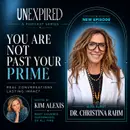


What do you do when life completely knocks you off course?
Dr. Christina Rahm knows a thing or two about starting over, from major health challenges to career pivots, building companies, and learning when it’s time to let go.
She shares the highs, the hard lessons, and what it really takes to lead, innovate, and turn setbacks into something meaningful. We also explore her work in health innovation, women’s leadership, wellness, and some pretty fascinating ideas about the future of healthcare.
If you’re ready for a fresh perspective on business, health, and reinvention, this conversation is worth a listen. Share it with someone navigating their next chapter!
00:00 - Welcome And How They Met
02:05 - Childhood Values And Big Dreams
04:55 - Lyme Disease And Losing Memory
08:50 - Psychology Work And Hard Life Lessons
15:35 - From Research To Pharma And Biotech
20:45 - Learning Business By Starting Companies
28:10 - Launching Root Brands During Covid
29:45 - Protective Clothing And The Super Skin Idea
38:15 - Hormones Sleep Detox And New Products
49:39 - The Wake Up Call That Changed Pace
55:02 - Travel Family Grandkids And Closing
Welcome And How They Met
SPEAKER_01
Hi, I'm Kim Alexis. Dr. Kelly is showing his collection of spring clothes. Hi, I'm Kim Alexis with your ticket to adventure. I'm Kim Alexis, and I'm here in New York City. Got a great show coming up for you, so stay tuned.
SPEAKER_00
Okay, so we are here, and you have so many descriptives. Mother, scientist, inventor, founder, formulator, author, Dr. Christina Rom. And I'm sure I missed so many. Well, you didn't say that we're friends. I wanted to put mother first. I thought that was most important. But yes, friends. Yes, yes. So uh Christine and I met about four years ago. Yeah, when I beat when I beat you at golf.
unknown
Sorry.
SPEAKER_02
I'm looking at Jessica Klein at the camera.
SPEAKER_00
She didn't, I didn't actually beat her, but I try to We were a good celebrity golf tournament, yes, but we actually met in the pool. We did, and you were so nice. In Vegas, we're in Vegas, and we were sitting in the pool. I've never been in a pool. Well, I swam, so I was in the pool longer than that. But um it was just so we always we just had so much to say. And even today, it's like I don't really need notes because it's you and I think so much alike. Uh, but I'm this show is about how you start somewhere and then you just keep evolving and inventing and changing. And you have done obviously so much. And I, as I said, I've missed so many things that we can dive into here of what you did and who you are and what you stand for. And so, but it I always like to go back to where you started. So, when you were young, did you ever think that you were gonna end up doing as much as you've done?
SPEAKER_02
No, I was the child that my mother said, I don't know if you're ever gonna work because you always just want to have fun and be happy and be outside. Um, I did, she knew that I wanted to be like work in an orphanage. I wanted to help children, I loved animals. Um, it was just what I loved. You know how when you're young, you just think of what you love. And that's really I
Childhood Values And Big Dreams
SPEAKER_02
admired like Gandhi. I admired Mother Teresa. I used to read, I was an avid reader. I never thought I would be where I am now.
SPEAKER_00
Right. Well, so you're in high school, you were obviously doing well in science and math, I'm sure. So what you went to college trying to get a doctorate?
SPEAKER_02
I was on, I was, I went at first on a scholarship, and I, but I got Lyme's disease, and I actually completely lost my memory. When I was going to school, I thought I'm either gonna be a lawyer or a doctor, but I also loved art. So I kind of pushed that to my mom too. What about being an artist? And she was like, that's not gonna happen. Because my mom's a classical pianist, and I think she thought, and she almost went into math or science. So I think she thought, well, let's have my daughter do the opposite. So anyway, yeah, that was what I thought. But then when I lost my memory, everything was hard. I couldn't remember anything. And that was at 19.
SPEAKER_00
Yes. So you were already in college, did you have to take time off?
SPEAKER_02
So we had a doctor's note. So back then, Lyme's disease was I know this sounds crazy, but people thought it was in your head and it didn't really happen. But your infectious disease doctors, you could measure it. So I was very fortunate. I was working at a Baptist conference center, and the doctor that was there, or rider, um, was an expert in this. If you could find an expert in the United States, and so he tried a lot of different treatments on me. I'm very thankful to that to this day because so many people have Lyme's disease and don't even know or aren't treated right. And he actually used an IV treatment that was like a chemotherapy, and I lost my hair and eyelashes.
SPEAKER_03
Oh my goodness.
SPEAKER_02
And so I felt sorry for myself. And I said, I'm not going back to school. And my dad was like, You are going, and you're gonna you're gonna do better than you did your freshman year because you did horrible your freshman year. Because my freshman year, I was like, let's have a party. This does not sound like you. This is like this is me. This is me. I used to be fun. I used to be fun. Now I'm a doctor. I used to be the person that would not go home at night that I wanted to stay out, and I was the life of the party. Yes, I was. I was never that. Yeah. Wow. I loved it and I loved, but I was always into health, and I was always, I was I was into sports and stuff like you are, I'm sure. Yes. Um, I was not beautiful like you, and seriously. And I was just a person that really loved being around people, but I also loved school. You're right. I loved learning. And I just thankfully to my parents, because they were so really hard on me during that period because they didn't want me to quit. Yeah, I didn't quit. I just kept going. I didn't go to a lot of classes. I had a doctor's excuse. So I could just show up and take my exams. And I didn't do great in college until actually Lyme disease got better. So by the end of my junior and senior year and then in graduate school, I was I was much better, but it took a while.
SPEAKER_00
Right. Right. Um, so then you what did your what was your degree?
SPEAKER_02
So
Lyme Disease And Losing Memory
SPEAKER_02
I had a degree in psychology and criminal justice. I was actually recruited to do things I'm not doing right now by different agencies. Um, I worked with gang members for a while. The state of Alabama had an experimental program. I was the only female and only white person that was a like a probation officer in Pritchard, Alabama, which is the projects. Wow.
SPEAKER_00
I mean, this is why I love this show.
SPEAKER_02
I'm asking these questions, I'm like, what? Yeah, I was really into it, I really wanted to learn because I grew up in such a small town. I wanted to see everything good and bad in every culture so that I could understand people because I felt like, how can I relate to people if I've never been around the world? And I school for me was kind of secondary because it was easy at one point where I never studied, then it was hard. But for me, I knew I would continue my education, whether it was in medical school or teaching in a university, doing research or law. And I was offered a couple of graduate assistantships where they paid for my school. I ended up taking one at South Alabama, and that really kind of set the stage. I got a master's in science, and it set the stage for I guess I'm gonna do something in science. But I didn't know it really wasn't until, of course, Lyme's disease mattered to me. And it, but it wasn't until later when I had a child and had cancer that this became such a mission for me.
SPEAKER_00
Okay, you just threw that out there. So I just had a child in cancer. Yeah. So I mean, just to get from, okay, so you're now you're in Alabama, and at this point you've found and married someone?
SPEAKER_02
So I was in Alabama and I got married, got into a doctorate program, which was at the University of Sarasota, which later was bought by Argusty and then went back to the University of Sarasota. I think they were having problems with the accreditation, which as a student didn't impact us. Do you know what I mean? You're in school. It's kind of like if they closed Dexter High School where I went, or South Alabama, I still was there and I finished my degree, but it was a long process because when I had my older son Duquesne, I had a lot of health issues. Um, I had what was a partial molar pregnancy, and then I ended up getting sick later and losing a child that was never born. So for me, it was almost like if you ask me, was that hard for me? What was hard for me was having my first child and taking care of him, and he was sick, and I didn't, I they ended up finding a brain tumor during that time of pituitary palactinoma. Oh, wow, and then squamas, basal, melanoma, different things. So that was a balance for me because I think I thought I was almost not superhuman, but I think I thought I would, because of the experience of not quitting, that I wouldn't quit. And the truth is when I had Duquesne, I did quit. I quit school, I quit my job, I took a break, and then I went back. I think it was about three to six months. I moved back to Alabama from Florida, uh, would go back and forth to take my classes on the weekends or online. And um, I went and worked for Mobile Mental Health Center, but I did take a break because, and that message for me is sometimes you do need a break.
SPEAKER_00
Yes, and I think people some people need to hear what you're saying because they need to work harder and they need to strive like you did. But other people like you and I kind of work so hard and it's like it's okay to sit back and whatever.
SPEAKER_02
Well, I think they see like your life, like you've done so many things, Kim, and maybe I don't know how people feel about me, but it might look like it was easy or that I never I never failed or I never quit. And the truth is I did that many times. I'm sure you did too. There's never that path is never straight for anyone. And I think it's one of the things I should talk about more, is where I did stop something and restart it, or I did realize this isn't working for me and I need to change paths. And that happened many times. And I think one of the lessons for me has been
Psychology Work And Hard Life Lessons
SPEAKER_02
you have to hold yourself accountable and figure it out. You can't let the world judge you or tell you what you need to do. You've got to figure it out. But you also can't be a victim.
SPEAKER_00
You can't blame others, and I find society now is doing more and more of that. And I I think that you're more at peace with yourself when you really self-analyze because I find I did that a lot. Like, why am I feeling this way? Why am I in this situation? How do I get out of it? And I mean, you have to really protect yourself, but also not choose to be a victim.
SPEAKER_02
That's so true. Like I was never great as a younger person at relationships. And if you ask me why, I was so focused on on work and my children that really any relationship, I know this sounds horrible, um, with a man was secondary for me because I just really felt that this this responsibility for making money and to take care of my kids. Right. And it that's but I don't blame anyone but me because if you asked me, I would say I made maybe incorrect choices or it just wasn't the right fit. But there's not any part of me that feels like a victim in that, if I'm honest. I feel responsible. Right. And I feel like if I could go back and talk to my younger self, I would have said, you don't even have to get married. Like you like at that time, having children without getting married was not even something in my world I grew up with in a Southern Baptist community with church every day, it wasn't something I considered.
SPEAKER_03
Right.
SPEAKER_02
Um, if I went back, I probably would have considered that. And and my message to women is you shouldn't let society define that.
SPEAKER_00
Exactly. So anyway, yeah. Interesting, but you went on to have three more children. So you have four total.
SPEAKER_02
And they told me that I would never have another one because I had been sick.
SPEAKER_00
And so people who don't know what this partial molar pregnancy is, is that there's too many chromosomes and they don't talk about it. It turns into cancer. Okay.
SPEAKER_02
Yeah, it's really not a pregnancy. You had to look it up. It starts as a pregnancy. I've been criticized for that before. I'm like, it's very rare. It's interesting. I was never criticized in the pharmaceutical biotech or as a CEO, but the minute I went into social media, it was like, and I'm I'm sure you've had to deal with this your whole life. So I kudos to you because I at a younger age, I couldn't have dealt with this. Now that I'm older, when I read things about me that are inaccurate, I realize it's just people that are are bored or trying to find something to do or angry or jealous. It's a plot. And like for me, but when I was younger, I wasn't mature enough. I don't know how you did it, because it was it was painful to me to be sick. It was painful to have a child that I lost. I I lost twin girls actually between, and I never talk about it. Oh, but it was the second trimester before Preston was born, and it happened at Camp Pendleton. And I actually don't think I've talked about this on anywhere, but um, their hearts stopped beating. That was traumatic for me. That was traumatic because I was excited about having girls. Yeah, and twins. And their hearts stopped beating. And they had to actually go in, as you know, during a second trimester and do surgery. And I had miscarried before. Um my body, I think, has never been really healthy. Um, probably another reason why I'm into supplements and health care. But um, then I had a healthy baby boy. So I think for me, Preston, who I just adore, I adore all of them. I'm so thankful for the children I have. Yes, I really don't focus on what I've lost.
SPEAKER_03
Yes.
SPEAKER_02
I really do focus on these four amazing human beings that I get to be around now. Yeah, yeah.
SPEAKER_00
Well, I have three sons and I had a tubal pregnancy with twins.
SPEAKER_02
It's the same thing, real. So you know what I'm talking about. It's it's it's traumatic though.
SPEAKER_00
Mine were six weeks along and my tube burst, but yeah, I mean it's and that's still traumatic.
SPEAKER_02
Yes, it's painful and traumatic. Yes, yes. And it it's so hard to think of anyone even criticizing someone for something like that in their life. But it's, you know, people dig in and try to know someone I guess they see on a platform. And um, I should have called you when that started happening to me.
SPEAKER_00
And if you don't accept the words and let them roll off your back, they can't, they don't have power over you.
SPEAKER_02
Yeah, now I've gotten a lot better. It took me a while. Like when I first met you, I was kind of in the middle of that, and then it just started happening more and more. And now at this point, I'm like, I just understand it's part of it. Right. You just get tough skin.
SPEAKER_03
Yeah. Yeah. In a way.
SPEAKER_02
Right. I mean, the one thing is I just don't, you know, my kids are sacred to me. Yes. So I really don't like that part of my life. Um, to be, it's not really up for debate. No, it's it's the life that's precious to me.
SPEAKER_00
Yeah, it shouldn't be for any mother, any woman. No, any man. I mean, no, it's just it is what it is, and it's their life, and they get to do and be who they want as long as they're not breaking laws, right?
SPEAKER_02
Yeah, yeah. I I I don't know how I I know I'm not, I know this is your podcast, but I don't know how you did it. Because, like for me, even people saying to me, I felt like because I had children that I was held to different accountability. Like I almost didn't need to talk about them because I had so much work to do. And going back now, if I could tell myself again more messages, I would talk about them even more. Do you know what I mean? Because men can talk about them and women can too. They're they're a precious part of what's called life.
SPEAKER_00
Yes, yes, yeah, yeah. And they're they're such a gift. They're such a gift.
SPEAKER_02
That was one of the things I don't know if you remember. I remember when we were in the poll, we talked about it. And then when we play golf, we talked about it a lot.
SPEAKER_00
Yeah. Yeah. When you were beating me?
SPEAKER_02
When I was beating you, I was so much better.
SPEAKER_00
I mean, she was so funny.
SPEAKER_02
She's like, I I was so stressed. You were scared, I never get stressed. No, you don't know this about me. I never get stressed, I never get worried. I just don't have that factor. But I was because it was you. And then I was like, oh my gosh. Don't worry about it. It's fine. It doesn't matter. Oh no. And then you were so nice and kind. But then I was like, I said to Clayton, they think I play golf and I don't.
SPEAKER_00
But it was fine. It didn't matter. It was about the relationship. And and these charity events are, I mean, and I say, don't put me with the ones that want to win the tournament because you're good though. Nope. You're really good. Practicing all the time. I mean, some of these guys play every day. I'm like, if I have free time, I'm not going four hours to the golf course. I'm not. I'm gonna read a book or study something or whatever it is, but I'm not going to the golf course.
SPEAKER_02
Well, I gotta tell you, I love the fact that you're in the game with these men playing and they all really like you. You're like part of their gang and they love you.
SPEAKER_00
I'm normally the only female celebrity at most of these events that I go to. And I like that about it. I do, I really love it. I respect it a lot. I love it when I see other females. I'm like, yes, we can both be off the women's tee. But you're not gonna be good at as good as Kim.
SPEAKER_02
So there it is.
SPEAKER_00
I am not good. And we won't even get into golf right now. But all right, so let's go.
From Research To Pharma And Biotech
SPEAKER_00
Your bio goes all over the place. So you worked with so many different pharmaceutical and biotech companies. Yeah. So your job was research?
SPEAKER_02
I've done everything from sales and marketing to res at the end of my career, yes, it was just research, clinical, medical science.
SPEAKER_00
And is that because it was comfortable? You wanted to slip into it because that you gravitated towards it, or you needed to fill something in? They needed to. How'd you get there?
SPEAKER_02
So I really I was working as a graduate assistant, and then I told you I went on to school, and then I actually supervised other psychologists because I was in psychology. And so I and I worked with sexually abused kids, I worked with gang members, prostitutes, seriously, persistently mentally ill. And honestly, I loved it. But I reached a critical tipping point where I was so drawn into that world that I couldn't separate. And I felt like, how could I raise children when I especially the sexually abused children I worked with? Uh, one of my best friends, I don't think you've met her, you will. She does a lot with with me, Jen Cleveland. We worked together. Um, I still stay in touch with my college friends. You know, we were all we did a lot together and we did some really good things, I think. And we also got into mischief and had fun, but we but I I did that and it started really bothering me because I couldn't leave my son. I was so stressed. And and Duquesne was young, and there were some critical tipping points during that period. When you're a psychologist and you're dealing with that, it's almost like a full-time job. You have like a beeper, you have ER calls, stuff like that, and it was just too much. Right. And so I started really focusing on research and NIMH. I did a study with them. Um, I wrote grants. I was really loved that part. And through that, I was speaking on women in depression, and that's how I came to Pfizer. Pfizer approached me and asked if I was interested in a job. I said, absolutely not. To me, it was a sellout because I felt like my career was helping these people doing research, and I knew that industry, you were doing all these things, and it was exciting and fun, but I felt like my focus needed to be really on the ground level. But then I realized I realized this is important too. And so I took a job with Pfizer. I made about 10 times more than I was making before, and that was important to me to support my kids. Right. And uh I loved working there, and they did some really good stuff. I was there when we launched Viagra and worked, it was fun. It was one of the funnest things. I mean, we had that was an oopsie. It was an yeah, because it was for cardiovascular, right? And then we found out that it worked for male, yeah, you know, sexual interaction. The tool, the tool. Um, and I loved that. But then I was quickly moved to um, I worked in basically insurance, Medicaid, Medicare, and getting things approved through formularies. And I went into Janssen for psychiatric issues, which was a fit with my education. Right. But then when I once I got to biotech, they quickly moved me over. They were like, we need a female that is uh also able to interact with doctors that can do research and can start studies and do publications, but also has this interaction. And that's really where my career changed. And I went with a group of men that we went from company to company. They had started at Amgen. Dave Halau was the CEO, Brad Mathis, who's worked with us at this current company in the past. It was a great group of people. And we would basically go start new brands. A lot of those were human monoclonal antibodies. I would do the research and science. They were on the sales and marketing side. And so it kind of looked like we jumped around, but we jumped around together and we would get in before this stock market. You know, we would get in so that when you launched it, we we had this huge hit. And for me, that was exciting because I got to work on human monoclonal antibodies. Biogen actually paid for me to finish my first doctorate degree because I was all but dissertationed at that point, and they wanted me to have the degree finished, so they paid for it. Right. And then they put me in classes to learn on development and human monoclonal antibodies, which was not my background. Right. So it was it was a God thing. I mean, I don't know what to say because it had nothing to do with me. It really didn't. I don't know how that happened.
SPEAKER_00
I was so open to it, and that's what I love about people that sit in this chair is that some new opportunity comes, and you've you've number one, you've done all your time and your energy and your research and you've put the hours in, but this whole new opportunity comes and you say, Yeah, I'll try it.
SPEAKER_02
Well, I I actually at first said I'm not gonna do that because I love working with the people that the salespeople were fun. Let me be honest. Sales and marketing were fun. I bet the people were like the best people in the world, they're still my friends. And I was like, I do not want to go over and be bored and work in research and science, but I had so much fun, and then I really threw myself in. I think because of having cancer, because of what happened to my children, the research side did intrigue me and it was really important. And I I threw myself into that. Like for me, that aspect of really finding things out and trying
Learning Business By Starting Companies
SPEAKER_02
to help humanity was was important to me. At the same time, since I was 27, I had started companies. So that's the part people don't understand. So I had invested and started in companies. My grandmother had left me some money, and I realized if I'm gonna make an impact uh in healthcare in any way, I need to understand the business side because all these people were around me talking about business, and I didn't understand a performa. I didn't understand a financial, you know, plan and a PL. I didn't understand the board of directors. So I this is interesting, and it's not whether you like Trump or not. I read his books and I thought, well, if he can do this, I can do this. That's exactly what happened. Right. So I started that on the side, did interoperative monitoring, stem cells, and surgical things while I worked in the pharmaceutical industry, but I didn't do it day to day. You know, it's like you owning a company, but you're not working in the company, but you own part of the company.
SPEAKER_00
That's what happened. Well, you have to have even good people that help you. You're doing one thing, and then they're learning something.
SPEAKER_02
You have to hire the right people, and that was my key because it really wasn't me, but some of those companies went into acquisitions and mergers, and I failed at some of them, and I really started learning business through that. Right. Yeah, and it was important, like I said. I didn't want to be the person in the room that didn't understand the discussions. Right. Yeah. Yeah. Some of that goes over my head. And I was good at math, but the some of it. Well, I can I can share any of that with you. One of my goals is to share that with people. And it's funny because my husband, you know, Clay always wants to, he thinks I can do everything. Let me just say that. Yes. Well, and I can't listen to what you're talking about. No. It's one of our big discussions lately, because I'm like, I I love Clayton so much, but I can't do everything. Right. Right. But I can share that knowledge so we all can do all this stuff together. And that's how I feel.
SPEAKER_00
Right. So, so getting back, so you met Clayton and then started the root brands, or you had started it. He helped you start it, right? Yeah. I was our husbands are right over here together, sitting together right over here.
SPEAKER_02
At the time I had left biotech and pharma in 2009, and it was hard to leave. I loved I was I was at a company called Alexion, and we are, if you looked up that company, it's one of the top companies in the world. It made the most money, I think, the first two years at a launch in history. Um, and it was a great, we were working on proximal nocturnal hemoglobinaria and doing all this stuff. It's a rare blood disease, it's like a cancer.
SPEAKER_00
Okay.
SPEAKER_02
And so we worked on human monoclonal antibodies. I loved it. And we were going after AHUS HUS for children and doing all these things. But they wanted me to move to uh Paris, and they also offered me a position at the headquarters in the science medical position, being a director. And I, my husband was like, at the time, we're divorced, was like, no, and this was in 2000 and yeah, 2009. He was like, we need to move the kids back to Nashville, and you've got to settle down. And so I ended up starting a group of companies that were surgical care centers, interoperative monitoring, and um sales and research. I I ended up submitting to the government and being approved to track every diagnosis per in the world through a Pioneer Act that was in place at the time. So that's what I did. I left, it was a really hard transition because in pharmaceutical and biotech, I didn't have to have all the answers. And and if you heard what I said earlier, just to clarify for the audience, I wasn't running the other companies that I had started. So this was my first time to actually be an entrepreneur, it was 2009, where I actually had to run as a CEO companies and it was hard and I didn't like it. Right. Like I wasn't good at it.
SPEAKER_00
Well, in my opinion, you should be allowed to not be good at certain things.
SPEAKER_02
Yeah, I wasn't. I wasn't. It was so scary to me to have a budget and have to hit that budget and to manage so many people and surgical care centers and research at the same time. I don't think I developed an appreciation for entrepreneurs until then. Now I have this huge respect because I've done it. Right. But what happened when I met Clayton and I was so tired of running that. And one of the companies had done really well, the comp the interoperative monitoring, and went into acquisitions and mergers. And then the company that was in the AI space for patient registries and tracking patients per diagnosis wasn't doing well because it was kind of like right now we're doing it, but that was ahead of its time. Yeah, it was new. So I was failing, and I was failing big time. And what I mean by that is I was putting millions of our dollars of our own money into it, trying to fix it. Whereas if I wouldn't have had such an ego, I think I would have brought in investors at the time on a major level, or I would have closed the company because one of the holding companies was successful, you know, the monitoring. But again, it was my ego. There's been a couple of times in my life where I've recognized that was my ego. I should have said to myself, this is something you can't do or you're not good at, and turned it over. And and I don't make that mistake now because for me it's not worth the pain.
SPEAKER_00
Well, yeah, well, you've learned that lesson. I think that as we get older, we realize you know what? I know how this feels, or it's not me, or there's just something that that does help steer you. And it could be like look great to everyone else, but you're like, no, no, I'm not happy.
SPEAKER_02
I'm not a piece there. No, I I won some major awards during that time for being a CEO. And to me, it was really, I should never have gotten anything because I wasn't a great CEO. I think I'm better now at running things because I I'm older and I understand. But when I met Clay, it was because I was using the analytics and the data to help with the NBA and the NFL. I met John Sally, and he's a was a professional NBA player, and he just kept saying, You've got to meet this guy, you've got to meet this guy. And they wanted me to work on a project, which now is like the clean slate project of basically helping athletes repair their bodies through detoxing the body. And I was like, I'm sorry, I'm not gonna do that. That's boring. I really was arrogant again. I was like, that's not something that sounds fun to me. Now it's one of the best things I think I've done in my career.
SPEAKER_00
I know it sounds like so fun to me. I love anything detox, I love it.
SPEAKER_02
I know, I know, but at the time, I don't know what was wrong. I mean, I I don't know, but Clay, Clay was um, I I he caught my attention. Uh like your husband, he he made me laugh. He was not like everyone else, where he was so tightly wound that I couldn't, I was he's pretty tightly wound. I love the fact that he he wasn't always in a suit. I love the fact because at the time, when you're in the middle of major healthcare, whether it's pharmaceutical or biotech or as a CEO, you're pretty buttoned up all day. And there's nothing wrong with that. But I kind of needed a break where I could just be my creative self. Right. And that opportunity came when I met Clayton. Yeah. He he um took over a CEO of the company I was running, and I stepped in to be a scientist again.
SPEAKER_00
Yeah. Yeah. Yeah.
SPEAKER_02
And I loved it.
SPEAKER_00
Yeah, that's what's so neat is your team. Like you become this team and you do what you're good at, and he does what he's good at.
SPEAKER_02
And yeah, yeah, works.
SPEAKER_00
Sometimes he thinks he's good at everything.
SPEAKER_02
Oh Jason. No, but it's it is good to balance it out because no one's good at everything. And it's it was a great, it really taught me that is what I love. I love dealing with people, I love doing science and research. Um, the company stuff's important because you have to succeed in order to have the money to do research and science.
SPEAKER_00
Right. Right. So take me now, you've
Launching Root Brands During Covid
SPEAKER_00
you're with Clay and you've you've that's this is when you've started the root brands.
SPEAKER_02
Yes. So what happened was I was working at another company and I said to him, you know, you should start if you want to do these products, you should start your own company. And Clay was like, No, it's so much work. I don't think I said, I think you'll be great at it. I think you should do it. Um, what so people don't understand this, but honestly, Clay used some of the formulas I had that I ended up changing later, but Clay started Root, not me. And I know everyone gives me credit for that, and I appreciate that, and he does as well. But the truth is he was the founder of Root, not me.
SPEAKER_00
Yeah. Yeah.
SPEAKER_02
The Root Brands. The root brands, the root brands. I mean, he he took that company. I I remember when COVID hit, and he had planned on launching it, and I said, wait, wait, wait, no, no, no, back out. There's no way you're gonna do this. You can't even get paper. And I had known that was gonna happen because of some research science projects I was on before the world knew.
SPEAKER_00
You knew COVID was happening. Yeah, yeah.
SPEAKER_02
Yeah. Yeah. So I was like, there's just no way to start this during that. And he was like, I'm gonna do it anyway. It was one of the few times Clay was right and I was wrong. But this is like jack. No, I was like, you're never gonna be able to start a company. You can't even get paper. How are you gonna source things? Clay took that company in the first year from one country to 26 countries. Wow.
SPEAKER_00
Yeah.
SPEAKER_02
And so that's why you should never listen to someone when they say you can't do something.
SPEAKER_00
Well, exactly. I mean, you guys literally have jumped into the deep end so many times. And you continue to do so. We do, right?
SPEAKER_02
We do, like with clothing right now. I mean, there's lots of different things. Go into the clothing. So for me, um,
Protective Clothing And The Super Skin Idea
SPEAKER_02
I was at the Harvard Extension School. Functional clothing. It's functioning. Yes. And there was a project. So when I was in that program, it was it was nanobiotechnology, bioscience engineering. I don't think they even offered it anymore, but it was under the umbrella of the medical school on the graduate side. And it was a program where you could take it while you were working, you had to do the lab work at Harvard. Um, but you could, I was traveling all over the world at the time, working for another company. And so I could, as long as I was online taking the class and they saw me, I didn't have to always be on campus.
SPEAKER_03
Right.
SPEAKER_02
And it was a very hard course because if you made below a B, you were kicked out on a project. And every project you had to create a new, like one project was I had to create a vaccine, and I was the only one that created a natural vaccine. One project was the clothing project.
SPEAKER_00
Why can't we use this natural vaccine?
SPEAKER_02
Well, a lot of the I know a lot of the well, because if you look back to the 1400s and this go through the 1600s, vaccines were basically herd immunity. Like you would be around someone that had it and gradually be exposed and they would treat you, but you know, that's just not what we do anymore. Right. And so I do understand vaccines, but I also understand they can happen naturally. And that was my focus. During that same program, I wanted, we were doing what was it was called the Mars Project, and they were looking at how do you live on Mars? How are we gonna do this? And there were these experts in class, it was fascinating to me. Everyone was smarter than me in class. I mean, everyone doubt it. I'm I'm being I'm being honest. No, I'm being honest, and it was it was so fascinating to me. And so I started thinking, well, they're only gonna send 100 people to Mars. I'm probably not going, and no one I know will probably go. How are we gonna protect our bodies here? Because one of the topics were that we talked about in class was our environment and how all these things can happen to take down humanity, which all of us don't understand because we've never gone through the ice age, we've never gone through a major thing that's killed, you know, a bunch of people. But if you look at the tipping point of this world, we're right there, right? And so for me, my thought went to what if it's too hot? What if there's too many, too much viruses, too many bacteria, heavy metal pollution, chemtrails, 5G? How are we going to protect our bodies? And that's how I developed what was called the project was called super skin coating. And actually, I have not finished that project because in the project that I produced there, your body actually had an extra coating and so were your clothing, and it was hooked up to a device that they could monitor. So if you've ever had too many toxins or an epigenetic started, it would alert the medical community. But I haven't finished it to that point yet.
SPEAKER_00
But this sounds like a title for a book, too.
SPEAKER_02
But maybe in your free time, maybe you're writing that. I don't know. It it was important to me, and when we launched the brand, it wasn't ready.
SPEAKER_00
So Mercy Dupree is her clothing line.
SPEAKER_02
But it really was education first. Does that make sense? Yes. So so we knew I even said to Clayton, this is like going back to school, and this is going to be a multi-million dollar project because we have to somehow teach, because your politicians are always arguing about whether it's global warming or whether the environment's safe. And the truth is, our governments do not have the money to change everything. My goal was to produce clothing that was high-end, and you understand this, to get the attention of women of influence because they would think they were beautiful, but the true purpose was to protect their families. It's functional. It's functional. Yes. And I'm still intesting in that, and we will have the next version of that coming out at the end of 2027 or 2028, because I started being focused on how do we protect the skin from getting a virus? How do we make sure uh, you know, tea like a tick, a flea, a mosquito doesn't bite you. And if it does, it dies, and you never have anything happen to you. That's my goal because and I think a lot of that probably goes back to Lyme's disease. Yes. And what I've gone through. Yes. But and radiation. And radiation protects from radiation. And like I just filed another uh patent last week against 5G, chemtrails, nuclear waste, and EMFs. Yeah.
SPEAKER_00
Thinking about buying a home, but not sure where to start. Jeff Schwartz at Altitude Home Loans makes the process simple. From application to closing, Jeff helps you find the best loan for your financial goals and keeps everything moving smoothly because the right team makes all the difference. Ready to get started? Apply today with Jeff at Altitude Home Loans. If we all started diving in and know as much as you do, I think we wouldn't sleep as at night.
SPEAKER_02
Well, and I don't sleep very well at night. And so for me, I I don't want to lead with fear. I want, and I think that's why I talk to women so much.
SPEAKER_00
I want to lead with awareness and here's an answer. And that's what you do. You bring awareness, but then you have answers to things. And that's what your root brand does also, is that you have supplements that are functional and they work and they go to the root cause, which is the whole premise behind what you do.
SPEAKER_02
A hundred percent. And and we can have the right people like you working on projects like this. I mean that. We'll we'll make major changes. Yeah. Um, I think people got confused because the product line wasn't ready. We do sell Mercy Deprees. We do have the first version out. Our biggest seller are the baby blankets, or the blankets to protect. And the baby blankets came about because Saudi Arabia needed something with their babies. And I think that's one of the things working in an international brand like Clay has created with Root. I'm exposed to good and bad things, but we're able to offer solutions to different country countries. But I always go back to the fact that I'm an American citizen and the main objective is to always have this country protected and the people here protected.
SPEAKER_00
Right. Right. So what's next for you? I mean, uh you at this point have done so much, and uh you have uh 89 countries you're in with your root brand and the clothing we have 92 that we shipped to.
SPEAKER_02
We're going into 180 this year.
SPEAKER_00
Okay.
SPEAKER_02
Yeah, we're shipping to 188. They're thinking small. Well, well, we just changed how we're doing things, so we're able to do that. And I don't credit myself to that. The team we have, my son's one of those people, Dylan Cravens, Duquesne, uh, Rom, Duquesne took my last name. So Duquesne Rom, they have worked really hard to bring us into 180 countries with Clayton. I get credit for things I don't do right now. So I would say my next, what what the phase I'm in right now is balancing life and finding partnerships. So I don't have to do everything. And we have 31 companies under DRC Ventures that we manage and own. And I want to find partners for those so that I I don't need to own everything. And if you ask me if I want to, no. And I think that might be interesting to people to know that I really don't. It's too much, it's like owning 30 houses. Do you know what I mean? Right. It's not it's not, it's not, it doesn't work. And so that's my goal now is to find those right partnerships to develop that so that it is doable because we took the patents, we filed 40 additional patents this year, and those are all going into the company. And I'm I've only not hit one patent. And and what I mean by that is they're getting approved, right? And so I want to take that to business women and businessmen and partners and to work together to try to help humanity because we've got to do this, and there really isn't an option, like with the viruses that are getting ready to come out. That I I stay up on science, and I have I'm our manufacturing is registered with the Department of Defense and the FDA. So I'm I get all kinds of materials. And again, not to scare people, but this isn't gonna go away, that things are gonna just change overnight with humanity, with health, with politics, with how we're all getting along. So we've got to have people like you and Jeff and and me and Clayton and all of us coming together to partner to really make positive changes.
SPEAKER_00
Yeah, yeah. I mean, I can't even go down there because uh I'm sure it's power-packed. Yeah, yeah. Um I don't even know where to go. You you just uh to me, you were so filled with so much hope and potential. And are are you in the um labs? Are you developing anything new? Like yeah, yeah. Can you talk about it?
SPEAKER_02
Or a little bit. I I I just got back from Asia.
Hormones Sleep Detox And New Products
SPEAKER_02
Uh okay, Clay's giving me some problems over there where I'm working on the clothing, I told you, and the ticks and mosquitoes. We got a 50% success rate, and I'm partnering with Asia American Trading Company, which is one of your top textile companies in the world. They provide for Walmart, Costco, Academy Sports, everything. John Chandler is that CEO, so we've partnered in that. Um, his lifelong goal, too, is to protect people from fleas and ticks and mosquitoes. So it was a great partnership. And then I'm working on things that have to do with hormones and sleep and sex because we are in a sexual recession right now, and not just in this country, but worldwide. And I want to have people, I want people to still have babies. I want people to still like this is a part for me. It's not a taboo topic. It's not something I laugh about really when I talk about it. It's part of humans and part of why we're here. It's it's life. And so for me, that's an important topic. And because of the toxins in the environment, our hormones are affected. So you can take biodentical hormones, but I'm working on basically the next step of that, where it's not a pharmaceutical, but people naturally are detoxing the hormone pathways so their bodies kick in. So if you live to be 130 or 150, you can live healthier lives and generate your own hormones. And generate your own hormones. So that's my goal right now. We have a product coming out we haven't even announced to the human uh to the community. It's called shush. It means shush. And Clayton made something, and Clayton made a comment that made me so mad. He goes, because we're telling women to shush. No. I said, no, no, but it's interesting. The first time Clayton tried it, he goes, Wow, it's supposed to really calm you down because a lot of people have anxiety. And then for men and women, help them sleep because men and women both have similar hormones. You know that.
SPEAKER_00
And it's the HPA access, right? You're you're literally so the hyper.
SPEAKER_02
Yeah, you're you're you're calming them down. Yes. And so this has been this is exciting for me because I actually have the patents to help people sleep. They have been approved. And so now I've gone into research and development with that. Oh, I try so many things for sleep. I'll send you a sample. We got to remember because we only were producing 2,500 bottles. We're testing it to see what people think. Right. I'm using again spirulina. I'm I'm putting in, you know, healthy vitamins, minerals. The key to our product line is I clean it. So it would be like if you never took a bath, you wouldn't look like you look today. Um, the inside of your body has to be detoxed. So I detox um GMOs. I'm trying to get those out of all plants. That's one of the patents. I I've for you that right there is a few. Yeah. Well, I know. And then someone said to me the other day, GMOs aren't hurting people. I'm like, yes, they are. I'm trying to produce vitamins, minerals, and plants, oils, seeds, everything that does not have any heavy metals or toxins because you could have the best formula out there. Right. And if it has that, you're not going to get better. But I will say there's other product lines out there that I like. Like people ask me, do you only use your products? And my answer is no, I use other products as well. And but I do think I want to improve. When you ask me what I want to do in the future, I want to improve manufacturing. I want to improve our food supply so that when people take a supplement or they eat food, they're healthier because I think some of this is killing us, to be honest.
SPEAKER_00
Well, and there's a lot of vitamins and supplements out there that are filled with extra things and trash and it's not good for you. And they're very easily available in certain stores.
SPEAKER_02
Yeah, very easily available. Yeah.
SPEAKER_00
We get way way more than your root brand, which we have to order. And yeah.
SPEAKER_02
Well, I Clay, I mean, everyone always asks me, Are you trying to create products that are a little bit cheaper? And my answer is because I have children, I am looking at that. But the problem is right now the process that has been created through patents is not easy. However, the more we produce, the easier it'll be. You know how that is.
SPEAKER_00
And the more that consumers ask for it, the more they care. Yes, the more that it becomes readily available and price goes down.
SPEAKER_02
Right. But I I want it was Clay knows this. When we started this brand, I said, I don't like, I want everyone to have it. So one of the things that's happened is the foundation that we have and giving back. For me, my role is we give back 50%, whether we do it through sales or giving or nonprofits, um, which is one of the things I want to bring to the Scottsdale community with your nonprofits. That's probably one of the funnest things I do is to give. Right. Um, my husband probably hates it. I don't know, but it's what I love. It's like you, you love your target. You know, we I think we both love the same thing. We love yeah, we love doing that. Yeah. Well, that's how we met.
SPEAKER_00
That's how we're giving back. Yeah. And I love meeting people at these tournaments because they all have that same heart of wanting to help, wanting to give. How can I use what I have done to be able to help other people? And that's what you were doing.
SPEAKER_02
Yeah, I wish I could go back to that tournament because at that time I was a little burnt out. I'm doing better now. Um, it was an adjustment to me to do all of the social media stuff. The research was not an adjustment. The science was not an adjustment. I will say overnight, having hundreds of thousands to millions of people buying your product and reaching out was an adjustment for me.
SPEAKER_00
Right. Well, I mean, you have six million people, followers on at least your Instagram. It's what, 6.2 million or something?
SPEAKER_02
We have over 10 million across, but what people don't know is we have 31 brands that have social, and so we're managing that too in the websites. And we don't talk about that a lot because there's not enough time to talk about everything. Right. But that's why my goal is to get people involved in that. I have people come up to me all the time and they're like, Do you want an investor? Do you and the truth is yes, but you have to have the right people. It's not even the investment. It's the right partnerships and the right people.
SPEAKER_00
Right. Right. Right. Yeah. Yeah. But you've learned that. I think as we age, we kind of learn, oh, these people I want to hang out with. Well, yeah. We learn as we as we age. And I think it's okay for these young kids to say, you know what, that group doesn't make me feel good about me. Or exactly. Right? Or I find that I'm going down the wrong path. Or I have this bad feeling in my gut. And when I'm with this person, it's not good. But when I'm with this person, I can just be me and I can, I don't know, be myself and I'm at peace. And that's very important.
SPEAKER_02
It's very important. I went to, I had a loss in my life of a good friend, and someone said to me there, well, they made a comment. You know how it is, Kim. It must be nice to just come home because someone dies and you don't come home. And I actually go home a lot. The comment though was meant to probably hurt my feelings. I'm saying this because to women, like I know you're addressing this on women hurt other.
SPEAKER_00
They look for ways to knock down someone as successful as you and try to make you hurt.
SPEAKER_02
Well, but you're an example to me and a mentor because you've had to deal with that your whole life. And like I said, I wouldn't have, I don't think I could have handled it like you do. But what I have learned is you're right. I I recognized I don't need to be around that. Like that's not.
SPEAKER_00
And there's so many other women that are so supportive and so. So supportive.
SPEAKER_02
I have so many amazing women around me. I do. It's like I I don't know what happened, but I ended up creating this circle of women and friendships that are really amazing and have made all the difference. And men, it's like I'm around great men right now that have really made a difference in my life. They hold your arms up.
SPEAKER_00
I mean, they literally hold your arms up so that you can be the best you. Yeah. And you still have so much potential and you still have so much to give. And I love that you're shifting because she travels a lot. You have been traveling so much. You said you're home 70 days out of a year.
SPEAKER_02
I'm not now because I'm getting ready to have a grandson. So I'm changing that. And actually, as bad as the Middle East has been, you know, we had gone into all the Middle Eastern countries. Um, that's given us a little bit of a break. I feel really bad for the friends and families that we know there, uh, but we can't travel to some of these places as easily as we did before. And so I just look at life when things like that happen as a pause point where I feel like God's saying to me, for you, of course, we're all different, but for me, it's a pause. And that means I focus in a different area because there's so many areas of humanity we need to help that it's not like we're ever gonna run out of areas where we can help people.
SPEAKER_00
Right. But you also can't be overwhelmed, and that's what you were talking about earlier.
SPEAKER_02
It's too much, yeah.
SPEAKER_00
You can't put all that on your own shoulders, and literally you have to find good people, which you've done, delegate, which you are learning to do.
SPEAKER_03
Yeah.
SPEAKER_00
Yeah, I am, I am, and but nobody can do what you do, I think. My what I think of you is just that pure science of going in and creating, and you just know what to put together and how it should be and where it's clean or how to detox it. And that's what makes your supplement line so trustworthy. And that's why I know every time I don't like, I don't know what that is in there, but I know that she made it and I'm taking it.
SPEAKER_02
Yeah, yeah. I think that is my gift. Um, that and that I love people. I I think the other stuff is just stuff I've had to do to get to the gift, right? Um, but I can look at a situation, a person, a formula, and see where we can make it better. And I don't look at it out of a textbook, I look at it as a creative. Right. And I think that's why it's different. And I look at it as a mother and a woman that wants what's best for other women, and I don't want shortcuts on that. It's got to be the best thing because I don't want if I don't want to put it in my body, I don't want anyone else to put it in their body.
SPEAKER_00
Right. Yeah, right. And that's how everyone should be with every product with everything.
SPEAKER_02
Right?
SPEAKER_00
Yes, and we don't have that. So it's so refreshing when you meet someone like you, and that for me, I mean, I always just want to learn from you. Thank you. Because you just have so much knowledge. And and Clayton, you know, I'm like, why are you doing that? Why you why do you think that? Where'd you say that? Because I think that curiosity is what keeps us going.
SPEAKER_02
Oh, yeah.
SPEAKER_00
And I love that you have so much potential and you've done so much, yet you still have that childlike desire to enjoy other people and what they've done. That's what's so neat.
SPEAKER_02
I I miss learning from other people more, and that's one of my goals is to just listen and and take it in and to laugh more. I just think laugh, laughter, like in a in a period of fear and stress around the world, right? We've got to laugh, we've got to take, we've got to be there for each other, and we've got to create community and enjoy what we're doing.
SPEAKER_00
Yeah, yeah, yeah. I love looking at some of the old on Instagram, some of the old um Tim Conway stuff. I mean, I used to love him. So find a comedian or find a TV show that made you laugh, and it just brings back. I mean, I would drool with my sister when we were young, just watching him on Carol Burnett. It's so he was hilarious. Yeah, yeah, just the way he could deliver lines and uh so finding people that do give you that joy and it is it's so important. It's part of what keeps us healthy and what keeps us going as a society. We need each other, we need to be out, we need to be with each other. We do, yeah, we do, we need to connect.
SPEAKER_02
And I I think that's my goal. I know that sounds when you say, What do you want to do in the future? That's my goal because I think I've realized me working so fast, so quick does not solve something. But when you work with a group of people that you have the same goal in mind, you can do it together. And it's really hit me more and more.
The Wake Up Call That Changed Pace
SPEAKER_02
Um, I think I told you I was had a surgery and I was very sick. Yeah. And when they told me that they didn't know if I would make it, um, I remember, and I told you last night, I thought, you know, I've had a good life, I've enjoyed it, but it did hit me that I needed what I needed to do. And it was really good that it happened because it caused me to reevaluate who I am, right? What I wanted and how I need the future to look. And sometimes we all need a wake-up call like that.
SPEAKER_00
That was a big wake-up call. It was. Yeah. And it it seems like it was unnecessary, but sometimes life has those things happen where you're like, why did I have to go through that? But when you finally get out the other side, if you can if you can be grateful for that to be able to switch mindset or lifestyle or whatever it is, I think that's really important.
SPEAKER_02
It was really important. I I sat there when it was happening. I really asked myself, this sounds crazy, but I asked myself, do I want to be here? I know that sounds crazy.
SPEAKER_00
Well, I'm almost 66. And so for me, it's like, okay, have I done my life? Am I okay? And I'm like, oh, I'm starting a new podcast. Yeah. So it's like this mindset of, well, what makes you think you can do that when everyone else is retiring? I'm like, I don't know. I just don't think like that. Well, there's a purpose.
SPEAKER_02
That's why. And that's what I asked myself. Do I really ask myself? And of course, I wouldn't have said that to my family because they would have been like, what do you mean?
SPEAKER_03
Yeah.
SPEAKER_02
But I I thought, you know, I've I've done I think what God wants me to do here in my finish. And it was a clear no, you're not, is what I heard. Um, but I also heard you also need to enjoy your life. I really did. It it hit me that I'm not just here to work, right? That I'm here to experience people because God made all of us. Yes. And um, I was there was a part of me that thought I would love to see my grandparents, I'd love to see the people I love that are no longer here. But there was a greater part of me that understood that I needed to be here to continue doing things. But it was interesting that I, it was so interesting that it hit me that I needed to relax more and experience people because I wasn't expecting that. And I had never actually been thinking about that.
SPEAKER_00
Well, you get your head down and you're so busy and there's so much, and I mean you had all these companies and all these things and all this travel, and then all of a sudden you had to literally come to a halting stop.
SPEAKER_02
Oh, yeah. And I thought, gosh, I left a lot for my kids in Clayton. That's what I thought. But wait a minute, I need to wait a minute. What about me? Yeah. And it's again, I did ask God. I don't know if you've ever done this. I said, Well, why is this happening right now? Like, do I have this? Even if there's a traffic jam, I'm like, why is that traffic there? That person I know why I'm light for the point. Like, Daddy, I was so stressed because Clyde can't, I was trying to get him in the car and I was like, I can't handle this. I need to be there right now. And he was dealing with stuff, but you're right, you know, you question things and then And you communicate.
SPEAKER_00
You did communicate with him. Did yeah I can't handle this. I do that all the time. But sometimes they're not listening. Some people don't listen. And I think that was my big thing with my ex-husband. I was like, I'm telling you what I need, what I want, and you're not listening.
SPEAKER_02
That's why it hit me. I'm telling you when all this happened to me, I need to listen more. That's what hit me. I was literally like, okay, I'm talking a lot. I need to listen more. And it's really caused me to look at things differently. It really has. It's I don't now, when I'm when someone brings something to me or or they talk to me, I stop and I think, well, I'm here for a reason, so I need to listen.
SPEAKER_00
Yeah.
SPEAKER_02
And that's really that's a game changer for me. And I don't think that would have happened, honestly, unless there is a life-changing event. That's why sometimes we need to be thankful for those, even though at the time I want to be honest with you, I was not thankful. And it took me, it's taken me about six months to be thankful because it was a gradual process to get better.
SPEAKER_00
Yeah, yeah. Yeah, no, you always seem to be scrambling up, but that always trying to be healthier and the the health problems you faced are that same like that thing that you reached for to be able to help other people. And I I I think some really great people go through miserable things. Yeah, and that people don't see that part. That's part of why I love this show is like, what were you thinking and how did that affect you? And what was your experience? And your experience was horrible, but what you're gonna give back to society in the future is probably amazing.
SPEAKER_02
Yeah, because the message to me was pretty clear that I'm not listening. It was that I'm not listening and I'm not relaxing. And the first person you know we have to listen to is God. And I'm not trying to be religious, it's just the truth. Yes. And so I realized okay, I need to listen more, I need to to pray more, and then I need to pay attention more to what's happening. And part part of that in life is paying attention to yourself and trusting yourself. And as much as I love the people around me, I have to, I have to make true, I have to make decisions for me and for the companies I've started that don't don't always include just me. Right. Because I think people get comfortable, especially in a marriage, and Clay and I are in a we work together and we're also personally together. And so you get so dependent on each other, but it's true, you have to let in outside people that are a part of that in order for the mission that God wants you to have to succeed. And you have to drown out all the noise around you, but just really focus on your inner circle as well as people that God puts in your path. And that's the lesson I learned from that.
Travel Family Grandkids And Closing
SPEAKER_00
Yeah. So let's say that you get two weeks off and you can go anywhere and you can do anything. What would you do?
SPEAKER_02
So, first of all, during that two weeks, I would take my kids and their families, and of course, Clay, um, and probably even my own family and his. I love his family. I love mine. Uh, I don't know how that would go with all of us getting together like that. Where would you go though? But um I honestly would probably um I love the beach and I love the mountain, but I'd probably go to somewhere on the beach where I could spend time with them or a place like Sedona or a farm. We have a farm. I like to get away. The busy cities for me are are fun and I love it. And I I actually love living in Nashville. I love visit visiting Scottsdale and Phoenix, but I like to get away. I really need to disconnect. So if I had anything I wanted, like I always tell everyone for any holiday, if they could give me what I wanted, which doesn't happen. I just want to say this for the record. It has not happened. I want a day off. Just a day.
SPEAKER_00
No, I'm giving you two weeks. I'm giving you two weeks.
SPEAKER_02
If someone could give me two weeks off, I think it would really help reset my life. I have not had that and I don't I don't know when.
SPEAKER_00
So, well, okay, so let's work on that. Maybe your next goal is figuring out how to delegate enough that you can take two weeks off. Yeah, where I just say I'm not answering the phone. Yeah. Or social media or and I it seems like that's tough, but sometimes people say, like after the fourth day, is like, oh my gosh, like I'm a I'm a new person.
SPEAKER_02
Yeah.
SPEAKER_00
Right?
SPEAKER_02
Yeah. And I actually I think that's right. I think after you have a break, it's something that we haven't done in these companies, and we need it. Yeah. Because in order to sustain what we're doing and to go to the next level, we need to take breaks. Another thing I love is going with friends on vacation. I really love that. I love being with other couples, spending time together, just sharing our lives because the older I've gotten, the more I do understand that connection and how important it is for people to have friendships in their lives.
SPEAKER_00
So you've traveled the world probably more than anyone else I know. I mean, you'd stay in America. Because I, for me, I loved like Africa. I loved the rawness and the outdoors of Africa.
SPEAKER_02
Just, I mean, I love Africa, but I I actually really, really love I so I like India, I like Malaysia, I like Hong Kong, I like everywhere, but I love I love the Greek islands and I love Italy. And I I really like the coastal areas there. Right. Um, we have houses in the Middle East and on islands and different places, but my problem is I can't live somewhere else or be somewhere. I could for two weeks, but I always worry about my kids. I don't know how you think like for me, yes, I can see myself like I'll give you Portugal, for example. I could live in Portugal, easy. Right. Um, I could live in Rome, easy. I could live on the water in Greece, easy, but I can't leave my kids easily. Right. That's my issue. I know and wait till the grandkid comes.
SPEAKER_00
You want them to talk right away, and mine is now 10 months, and so it's like I'm just waiting for like this a little more of this conversation, but oh, it's just they're just so cute. Yeah. And then you give them back. Yeah. You give them back is the great part. It's like, oh, I don't have to worry about being up all night.
SPEAKER_02
I'm super excited. Clay and I actually thought about having more children, and I just thought, you know, I'm too old. I have children that are older, and I didn't see how we could launch root and or launch a company and work the way we work and do it. It wasn't practical to me because it it's you have to deal with reality, but a grandchild's different. Yeah, you can be in their life and help them, and it's not day-to-day. You know, it's I mean, if they need me their day to day, I'm there. I don't just move in. They asked me to move in. Oh, okay. So they they they asked me to spend some time. I'm gonna do whatever they want. You know how it changes when you have a child. You never know what's gonna happen until you actually have a child.
SPEAKER_00
Yeah. So my son and his wife had a child, and they're like, Mom, we want to experience everything ourselves. We want to, you know, do the nights where you can't be sleeping. And so they literally have not asked for much help because they want to be there every step of the way. And I have to respect that. So yeah, okay, but can I just hold them?
SPEAKER_02
Can I just Yeah, I don't think that's the wrong way either. Do you know what I mean? I think everyone has to do it the way that they want to do it. At some point, they will ask you for help.
SPEAKER_00
Yeah, yeah, yeah. Well, they did once, but we I couldn't do it. It was like, Mom, we're going away for this wedding. Can you come? And I'm like, not that date. No, I had this pre-planned thing and I'm so sorry. And yeah, that would have been great to have them 24 hours a day. I know, I know.
SPEAKER_02
It well, it's it's even like my daughter's here, and she was like, Mom, pick me up for a late breakfast or early lunch. And I told her I was coming over here, and there was just silence. And so I called her and again she goes, I'll just talk to you later. It's hard with kids, yeah, because it's like they don't really need you until they need you. And then when they need you, they're like, drop everything. You have to drop everything. Which is fine.
SPEAKER_00
But when you have a career and you're doing things, it's it's a little bit harder. Right. Yeah, right. And it makes them more independent. And sometimes that independence is tough because they're independent, and then they don't need you. I have a 40-year-old, yeah, doesn't need me. He's independent, yeah. So yeah, it's just different. But I raised him that way because when I was I was 25 when I had him, and I'm literally flying back and forth in New York City, and I was everywhere. And so I had to have him be self-sufficient, and then they are.
SPEAKER_02
I have thought about you so many times with your career and the kids because there's not a lot of women I can really relate to that probably went through similar as I did, you know, just juggling.
SPEAKER_00
Well, and then I had to get my body back in six months. I did the sports illustrated swimsuit six months after Jamie was born. What? Now I have to go back and put that picture up.
SPEAKER_02
I could never have done that. What?
SPEAKER_00
And then I ran a marathon the week after that.
unknown
Yeah.
SPEAKER_02
It's one of the things I really like about you. Like when I met, no, seriously, when I met you, you're tough. Like I was, I see it, like I can feel it. Like I respect that so much because a lot of well, I don't want to judge anyone. People, people get influence, and then sometimes it's a sign, I think, to be arrogant or to just stop producing for humanity. And I said this to Clayton yesterday. I really think the people allowed in humanity should be doing things for humanity or giving back or doing something with their life. I have a hard time when people are like, okay, I've done enough and it's over. I just want you to know I respect that about you. You've never quit. No, you keep going. I couldn't have been a model in a, oh my gosh, can I see the picture? Wait, there's your picture. You're so beautiful. You're still beautiful. We gotta show that on the screen. We gotta show it on the thing. People need to see it. Let me see.
SPEAKER_00
You can go on, Jeff.
SPEAKER_02
Oh my goodness.
SPEAKER_00
Yeah, that was six months after.
SPEAKER_02
Six months after.
SPEAKER_00
Then I ran the marathon right after that.
SPEAKER_02
You are so beautiful. I mean 25. Well, I I think most 25-year-olds don't look like this. Anyways. I didn't look that like that at 25. You know, that's when I had my son too. Oh. Duquesne. And I feel like I was so young. Yes. But I didn't look like that model picture. That cover girl picture. You were busy like in the sports illustrated one in me.
SPEAKER_00
Yeah. But it didn't happen. Well, in the labs wanted me. I could have been in there formulating. No, teasing. Well, I did want to be a pharmacist. I would, I mean, that's what I was ready to go to college for. So I missed that. And instead of regretting, we should just pivot and see. Okay, let's reevaluate. Now here we are. What do we do? So that's what I love about you. And I'm so happy that you've been on Unexpired. And you are unexpired. So just thank you so much for spending time with me.
SPEAKER_02
Thank you. It was a great podcast until I saw your picture. And now I'm comparing myself to the picture, but thank you, Kim. I mean, I love being on and I love being your friend. Thank you. It means a lot to me. Oh, good.
SPEAKER_00
Thank you. Thanks for watching the show. If you have any questions for me or you want any more information, go to Kim Alexis.com.


