WHAT THE FIRST WOMAN IN A MEN'S PRO LEAGUE NEVER TOLD ANYONE
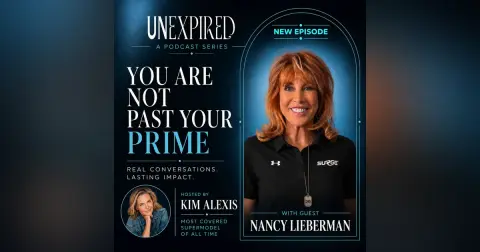
At 12, she walked into Rucker Park and decided she belonged. This episode features Kim Alexis in conversation with two-time Olympian and Hall of Famer Nancy “Lady Magic” Lieberman, who looks back at the experiences that shaped her confidence, toughness, and remarkable career in women’s basketball. From choosing to build a program instead of joining an established one to learning from Muhammad Ali, Pat Riley, and some of the biggest names in sports, Nancy shares the moments that changed how...


At 12, she walked into Rucker Park and decided she belonged.
This episode features Kim Alexis in conversation with two-time Olympian and Hall of Famer Nancy “Lady Magic” Lieberman, who looks back at the experiences that shaped her confidence, toughness, and remarkable career in women’s basketball.
From choosing to build a program instead of joining an established one to learning from Muhammad Ali, Pat Riley, and some of the biggest names in sports, Nancy shares the moments that changed how she approached competition, leadership, and life.
Key themes:
- Confidence under pressure
- Leadership and team culture
- Mental toughness and resilience
- Breaking barriers in sports
- Giving back and creating opportunities
Listen to the stories behind the swagger and the lessons that still apply long after the game ends.
00:00 - Welcome And Guest Introduction
01:20 - Rucker Park And Brooklyn Nerve
05:40 - From Poverty To Olympic Trials
11:40 - Choosing The Underdog School
15:10 - Leadership Means Making Teammates Better
20:25 - Going Pro And Learning Fast
26:40 - Preparation Mental Toughness And Money
32:20 - Dream Courts And Giving Back
36:10 - Pat Riley And Earning Respect
43:00 - Coming Back To Play At 39
45:45 - Making History At 50
46:35 - Kobe Bryant And The Mama Mamba
53:40 - Mentorship Lessons From Modeling
57:55 - Prostate Cancer PSA Test Advocacy
01:02:35 - Training Routine Food And A Licorice Vice
01:08:40 - Final Thanks And Where To Connect
Welcome And Guest Introduction
SPEAKER_00Hi, I'm Kim Alexis. In Paris, after Kelly is showing his collection of spring clothes. Hi, I'm Kim Alexis with your ticket to adventure. I'm Kim Alexis, and I'm here in New York City. Got a great show coming up for you, so stay tuned.
SPEAKER_01So you're a two-time Olympian, two-time Hall of Famer. I mean, you know all this, but you're known as Lady Magic, Nancy Lieberman. Thank you for being here.
SPEAKER_03Thank you for having me. This is an honor. Uh, you are, you know, you are just heroic. You are so so many people admire you for so many decades, including myself. So thank you for being just uh, you know, way to flex on people for all these years.
SPEAKER_01Oh well, and you know what? Back then we didn't know. So you and I are a couple of years apart, but we didn't have social media. We didn't have the feedback we have now. So a lot of times I believe what we did was kind of silent, and you just we kept plugging along for some reason, but we didn't quite realize how we affected other people. So I just find um it must have come from an inner strength. That's what I'm gonna pull out of you, because you have
Rucker Park And Brooklyn Nerve
SPEAKER_01so much, you have this why not? Why, why can't I do that? You know, that attitude. And so starting in Brooklyn, you used to take the subway to go up to Harlem to play basketball.
SPEAKER_03I did, I did. I might have lied to my mother because by that time we had gotten to Faroc away in Queens. Okay. People had told me some of the greatest players in the world play uh in Harlem at Rucker Park. And so I wanted to see what that looked like. So I can remember taking a couple dollars from my mom's wallet and going to the A train, you know, the elevator train, and two stops, change the tra uh at Penn Station, and then go into 155th in uh in Harlem, and I would have serious, I put t-shirts in my jacket, so I looked menacing at 120 pounds, flaming red hair, and people would stare and look at me, and I would go, What you looking at? You looking at me, because I'm looking at you. And I was 12 years old, and I figured do it to them before they do it to you. I hope they think you're crazy. And I had a ball, and I walked into Rucker Park, and these guys were looking at me, these super great black guys, and they're like, little girl, are you lost? And I said, No, are you? And they said, Do you know where you are? I said, Yeah, I know. Like I used to talk like this all the time before ESPN sent me for elocution lessons because they knew I was coming on your show like 40 years later. I needed to be articulate. And so I met Rucker and they're like, You know where you are? I said, Yeah, Rucker Park. There's like where all the really great players play, and I need to be great. And they they said, uh, are you are you scared? I said, No, I ain't scared of nothing. Are you scared of me? Because like I ain't afraid of you. And I said, Is your name Rucker? And the the kid said, No. I said, Good, it's not your park. And I need your help because my mom don't know I'm here, and I I just need somebody to help me be really good. Can you guys help me? And that was love story. Love and basketball started at Rucker Park.
SPEAKER_01Wow. So you appealed to their their instinct to uh help out a young fellow girl. Were you five foot ten at this point?
SPEAKER_03No, I was probably five foot three. Okay. Because I was in 12 years old. But I was able to fight.
SPEAKER_01At 11, I was five foot ten. You were? Yeah, I stopped growing in sixth grade.
SPEAKER_03No, I uh I grew five inches. I went from five three to five eight one summer and landed at at five foot ten. Yeah. The guys in the park were amazing, you know, because they were bigger, stronger, quicker. They'd ride the train home with me and uh allow me to introduce you, mom, to my friends. And she's like, Who are your friends? I said, Ma, this is Donald, Ronald, and Gary. And we won three games together, and we're really good friends, mom. She was just over it with me. So did she have to feed everyone? I asked her, she said, Can you they're hungry? Can you just make them, you know, spaghetti so they before they get on the train and go back. But I was teaching my mom not to profile people and you know, really not to be racist, just to kind of open up your arms. Right. And if they don't look like you.
SPEAKER_01So So and and that's where they named you Lady Magic?
SPEAKER_03Fire. Fire. I didn't become Lady Magic until college. But in Rutherford because of my fiery personality and my hair, they just fire, come over here. Fire, jump, uh, grab the rim. And I was like, I was like the carnival monkey at Rucker Park. They were like showing me off like I was a shiny penny. But it was awesome. They toughened me up.
SPEAKER_01Right, right. You became it gave you your aggressive style, right? Yes, without a voice. Yeah. So then from there, how you went to the Olympics first, even before college. I did. So explain that. How did you go from Rucker Park at 12 to get that good to
From Poverty To Olympic Trials
SPEAKER_01be able to go to the Olympics? And how'd you get into the Olympics at 17?
SPEAKER_03Well, it's it's a great question. Uh, at about 10 years old, if I can give you the backstory, um, I was a poor kid growing up in New York, uh, like no father, no food, no heat, no electricity, um, a grandparent away from, you know, I guess today it's called Snap. And I was angry and I was broken and I was having fist fights every single day. And my mom was like, Nancy, you can't beat up the world. And I said, Well, you know, people irritate me. So they make fun of me because I don't have a lot of clothes or I have holes in my sneakers and things like that. And one day I came in the house and I saw this guy on TV, and it was Muhammad Ali. And I heard him talk and I heard him say, I'm gonna be the greatest of all time. I beat Joe Frazier like I'm beat George Foreman, like I beat Sonny Liston back in 1964. I'm too pretty not to be the champion of the world. I am the greatest. And I was mesmerized. And I walked in the kitchen and I looked at my mother at 10 and I go, I'm gonna be the greatest of all times. And she goes, Why are you talking like that? I don't know, but I'm gonna knock you out. And she goes, I am your mother. I said, Well, then I'm gonna hit I'm gonna knock him out. She goes, him is your brother. And I stood at the door frame and I said, You better get used to me. I'm gonna be the greatest of all times, and and I'm gonna be famous, and you're gonna want my autograph. And I ran in my room and cried.
SPEAKER_01And uh somehow that drive blinders.
SPEAKER_03Ali had blinders. I now know why horses have blinders. I decided I wasn't gonna kill you and I wasn't gonna kill me. It was optional. I wasn't gonna join a gang, I wasn't gonna keep fighting people. So I just kept playing basketball and playing AAU and in the streets. And 1974, there's the Long Island Press, and there's an article. It couldn't have been this big. It said USA women playing Russia three games series, exhibition series. And my friend uh from uh high school, Marianne Aida, who d her dad loaded up the car. We all went to Queen's College. They slapped a number on us. From the beginning at 10 a.m. until 6 that night, there were over 200 women playing. And I was only a sophomore in high school, 14 and a half, going on 15. And I was the youngest player there. At the end of the day, the 200 women were cut down to 20. And it was like America's had talent for basketball. They had four places around the country. And I was one of the 10 that made the cut uh at Queen's College. And I went home, I'm like, Ma, Ma, Ma, you're not gonna believe this. There ain't nothing wrong with me. Uh, you I don't need a psychologist. There were like 200 girls playing basketball today, and everybody said there's something wrong with me. And um, I'm thinking about beating them up, but I'm not going to because I'm gonna make the Olympic team. And she's like, yo, what just happened? And she's I can't afford to put dinner on the table. How am I gonna get you to Albuquerque, New Mexico? So my high school principal got a can of corn and opened it, cleaned it, put an envelope, and said we're endeavoring to raise $300 to get Nancy to the Olympic trials. So I go to Albuquerque of the 40 women there, you know, 10 from each site, right, took 10 to go into the training camp with the greats, the Pat Summits, the Anne Myers, uh, the Lucy Harris's Hall of Famers. And uh so I go through that and I'm learning and I had had my ribs broken, so they're taking me home. They're sending me in a car to the airport, and the coach is driving, and she looks at me, Alberta Cox, and she goes, Now, honey, we really liked how you played. I said, Thank you, I appreciate you. And she said, Well, we're gonna need you in 1980. And I went, like, coach, I'm not that smart or nothing. Like, but uh I know that 76 comes before 80, and I'm gonna be on the 76 team. So I think you you need to start getting used to me because I'm gonna work really hard to prove you wrong. And she's like, Okay. And then I make the Pan Am team in 75. As a junior in high school, we win the gold medal in Mexico, make the Olympic team, we win the silver in Montreal. And you know, people are like, Did you go to graduation? No, I wasn't available. I was getting a medal put on my neck in Montreal. Yeah.
SPEAKER_01It was always missed your own high school graduation, but that's a good reason to miss it.
SPEAKER_03Yeah.
SPEAKER_01Not many other high school kids can say they were getting a Olympic medal put around their neck. It's crazy. Uh and that wasn't the end for me. It wasn't like you made it to the some people make it to the Olympics and that's it. That was just your start. That's where you started.
SPEAKER_03Yeah, it's uh it was great. I mean, I had so many great veterans uh, you know, that were five, six, seven years older than me. But every day I was learning. I was learning how to be a professional. I was learning how to have a professional routine, how to eat right. I mean, you're 15 years old, 16 years old. You eat hamburgers. I didn't even eat with silverware. We were eating off of plastic plates and plastic silverware. Oh I mean, it was um it was tough for me because I didn't have anybody, you know, for those two or three months we were on the training. But I look back and I'm I'm grateful to my teammates for what they taught me and and really how to be a pro's pro.
SPEAKER_01Right. So then you go off to college.
Choosing The Underdog School
SPEAKER_01What made you choose Old Dominion?
SPEAKER_03Uh they were the worst team that recruited me. Uh why did you pick the worst? Because I thought I was an underdog. Talk about how things can filter right into your psyche. Right. So um when I went to these USA tryouts, I was the only high school kid there. So obviously everybody was, you know, paying attention to me and, you know, if you will, sucking up to me. And um I just kept thinking, I wonder who's the worst team here. And this coach from Old Dominion, she talked to me and I said, so I came down to do a recruiting visit. It was only a seven-hour drive from New York. And I was thinking, if I went to UCLA, if I went to Cal State Fullerton, if I went to, you know, some of these other schools, and the coach left, I would have no money to get home. I wouldn't know anybody. And so I decided to go to Old Dominion and be a part of building their program. And so we're in the locker room, one of the first times with seven freshmen. And I just walked in and I said, Look, they won't they were not very good. Right. Let's pinky swear right now in the locker room. I'm taking Yvette Baggage's job. Who you're taking uh Debbie Debbie Richards' jobs, you're taking Wendy Larry's job. The seven freshmen, we we uh had that swear, and it starts in every practice, it starts with every possession, it starts with how we train and how we eat, and so that's what we did. And we are we set out winning starts at home, not not against your opponent. It starts with you know how you take care of yourself and what culture, you know that from swimming, and everything you've done. So we go 23 and 9, we we break into the top ten. We play Delta State, number one, we play uh Immaculata, number three in the nation, we play UCLA, we're playing the big boys. Right. Then my second year we go 30 and 4, we win the NIT, then we go 37 and 1, win the national championship, then we go 35 and 1, we win back-to-back national championships. And you know, I had been telling uh a while back to Caitlin, you know, Caitlin Clark, and we were talking, and I was like, dude, this is crazy, because I understand on some level what you're going through. It's you know, on steroids for you. But I had 99.9% of the pie, and there was a lot of jealousy and a lot of envy, and why is it all about Nancy Lieberman? And well, maybe she's not this and maybe she's not that. And I can remember a kid on Queens saying that I was overrated uh my my senior year when we played at Madison Square Garden. And we we beat Queens like 102 to 50. And because of her mouthing off, I think I had something like 30 points or you know, 10 rebounds or 10 assists or 10 steals. I mean, I had uh a game. Right. And then she came in the press conference and she apologized and she said I was sorry. And I was like, it's okay. I I accept your apology, but uh I I'm gonna play hard. Whatever I do, I'm gonna play hard. Yeah. But she gave
Leadership Means Making Teammates Better
SPEAKER_03me even more motivation to do that.
SPEAKER_01So how was your coach? If you were on the worst team when you started, was the coach what was the problem? Was it just a lot of I mean, because you must have had, obviously, because you've now gone into coaching, you've had this concept of this whole, what makes the whole team work versus just you and your skills?
SPEAKER_03Well, it everybody has to play a role, right? Uh it's hand in glove. Um, what I what I do know is we have to agree, and this is business, this is life, this is love, this is our children. Agree, disagree, align. And we have to find a common place of uh of alignment. And a lot of that is uh a lot of that is culture, and there has to be there has to be some rules like how are we going to be organized or what's our approach? I'm a minimalist. This is what we're gonna do, this is how we're gonna do it, these are gonna be the results.
SPEAKER_01Uh was the was the coach um was they was he, she okay with you like kind of taking over with this concept?
SPEAKER_03Well, I didn't uh first of all, the the coach we had my freshman year ended up getting fired for some uh indiscretions that she had. And we brought in uh Marianne Stanley, who was a three-time national champion at Immaculata, and then you know, kind of cut her teeth coaching um by her coach, you know, uh Kathy Rush, who is a Hall of Fame coach, and she coached me my first year on the USA team. So having Marianne coming in, I was gonna learn from somebody who was already great. Okay. And so she so it's it was it I'm not putting the practice plan together, I'm not putting our game plan together, but players determine probability and outcome. So you can give me anything you want. Um, like today, I don't get to shoot the ball. I get to put in the offense, I get to put in the defense, I get to, you know, call plays on dead balls or coming at a timeout. It's a player's game. I gotta trust them and I gotta let players play. Right. And Marianne was great about, you know, giving us concepts and making sure we understand what really what the culture was. Um we wanted to be process driven, uh, not outcome oriented. And that's even affected me from how she coached me in in 77 through 80. Uh, you know, uh I can remember my um exit meeting after we go 30 and 4 and we win the NIT and she sits me down and she says, Nancy, do you make you good or do you make people around you good? And yeah, at that time I'm like, Yo, Marianne, I make everybody good, you know? And she goes, Nancy, if you'll make Ingnes and an all-American, if you'll make Jan Trombley All State, if you'll lift your teammates up, and I was like, What do I have to do? She goes, You need to shoot less. I'm like, like, less, less? And she's like, Uh, you're you're averaging like twenty-two points a game, but I think you're taking twenty-five shots. Marianne, I'm a volume shooter. It's like what I do.
unknownRight.
SPEAKER_03She had the guts to say, Nancy, you you know, I I think because of my childhood and things I've shared with you, I needed that uh I I I need it to be a something.
SPEAKER_02Yeah.
SPEAKER_03So, you know, uh when she said that to me, at first I was a little, you know, w wh why don't you want me to be who I am? You know? And she said, I want you to be the best player in the world. I want you to best be the best player in college basketball, but you can't do it by yourself. So I played USA basketball over the summer. I came back and I decided I wasn't gonna take 25 shots. I was gonna take somewhere around 11 or 12. But my efficiency was gonna be better, and I was going to make the right pass to the right player at the right time, and not just, you know, throw up a shot that I had a 30% chance of making. And we go 37 and one and we win the national championship, and I'm player of the year in college basketball, and like bing, the light went on. You can still get yours if you make people better. I never thought like that. Right. Um and then, you know, my senior year, we go 35 and 1, we win back-to-back championships, and I'm two-time player of the year in college basketball, and it's the same thing. Ing makes all American, Ann Donovan makes all American, Jan Tom Tremblay is all state. And it's how I've led my life with my son, with um family, in business, in philanthropy. And it's it's been such a crucial part of my my life. Uh and and really it's the cornerstone of of who I am. Right.
SPEAKER_01Team player.
SPEAKER_03Yeah.
SPEAKER_01Kind of what it comes down to. And and that
Going Pro And Learning Fast
SPEAKER_01helped you, obviously. Then you went pro overall, first overall draft pick.
SPEAKER_03Yeah. I mean, that's pretty cool. It's interesting with Dallas right now, because I became the first pick in the draft in 19 uh. And then Paige Becker's a year ago was the first round pick by the the wings, Dallas Wings. Then Cooper Flag gets picked last year by the Dallas uh Dallas Mavericks. Then AZ Fudd comes here this year, and she's the number one pick. So uh basketball's been good to Dallas, but yeah, the Dallas Diamonds, I was so embarrassed. Um at my press conference in Dallas, you know, I come down and they give me a white cowboy hat. I put it on, and media's like, so Nancy, what do you know about Dallas? And I'm like, I know everything about Dallas. This is 1981. They're like, Well, how so? I said, I watch Bonanza. I love it, and and I like Lil Joe and Haas and all those guys. And you should, they the media was like more mortified that I'm talking about bonanza. I said, like, I don't have a uh a horse or anything, but I'm gonna get a car. And so I go back to my hotel room and I get a phone call, and this person goes, uh, is Nancy there? And I go, yo, who is this? And the person goes, uh, this is Roger Staubak. Um and I go, yo, you Mr. Hail Mary, how are you doing? How'd you get my number? This is so great. And I'm on every time I see him, I'm like, okay, we've come a long way. So he says, Nancy, uh, Marianne and I would love for you to come to the house. We have a court in the backyard, and the guys we play, you know, after church on Sundays, we'd love for you to play ball with us. I said, I would love to do that. That's fine. He says, and come and you can eat and everything. I said, Is the Heisman trophy there? And he goes, Yeah. I go, can I touch it? And he goes, uh, yeah. I said, you know, like I'm not gonna take anything from your house if you let me in the house. And he went, What? I said, Well, everybody thinks like because we're from New York, we're just gonna take people's stuff, but I'm not gonna take anything from your house. And he to this day he goes, Remember when you said you weren't gonna take anything? I go, Yeah, I was not very polished at the time.
SPEAKER_01Yeah, yeah, but you yeah, there were you had a lot to learn, and you went from way one way to another, right?
SPEAKER_03I mean yeah, it's it's been God is good. That's all I can say. Because to to see like my life in 2026 and to s to see that little girl, that young person, and uh it's been amazing to have um everybody needs somebody. And what I didn't have at home, and my mom was just surviving. Um people were great to me. You know, Roger was great to me, um Kobe was great to me, Ali changed my life. So that's what I do for other people. Um I try to be the giver, not the taker.
SPEAKER_01Yeah, but you also were positioned in such a way to be able to run into all these great people. That's what's neat. And that you had the ability to learn from them and versus compete with them or think you're better than them. You know what I mean? It's like there's an attitude that we have. When I changed jobs and from modeling and went to Good Morning America as a broadcaster, Joan London was there. I'm like, I'm not here to take your job. I want to learn from you. You're the mom, you're like the queen bee, right? That attitude really helps when then they can relax and they know that they can just that you're not a threat anymore. That and she she had her little motherly instincts and literally taught me what she knew, which was wonderful.
SPEAKER_03Yeah, she's pretty special. Um, what she's done over so many decades. And to have somebody like that, that's that's pretty powerful. So, yeah, we all you know, no matter what we do, we all somebody has a little bit more experience, a little bit more knowledge. But this thing uh called life and sports, and like you, you uh think of the people in your phone, in your phone book, right? In right now, and it's crazy. Like I was in the office the other day, and uh I was talking to some of the young uh people about you know the Knicks, because I grew up a Knicks fan. I loved my Dallas. How are they doing? They're in the playoffs, they're crushing it, crushing it. And and and and you know this, like when we were there, or Walt Frazier, Clyde, is amazing. So I I wore number 10 my whole life because of Walt Frazier. Oh and then through time and you know, elevated status, and then we're doing appearances together, and I'm like a two-year-old because my hero who saved my life, one of my heroes, Wall Frasier. And I learned a lot about the game and how to carry myself and you know be a good leader through watching him. And uh, so I'm sitting in the house yesterday, and I had texted uh him saying, Go Nick's. And he called me, and he was on speaker with me, and everybody was like, Well, for you calling you? I was like, Yeah, it's kind of crazy, but it's very special to me because it makes me feel like I'm 15 again.
SPEAKER_01Thinking about buying a home, but not sure where to start? Jeff Schwartz at Altitude Home Loans makes the process simple. From application to closing, Jeff helps you find the best loan for your financial goals and keeps everything moving smoothly because the right team makes all the difference. Ready to get started? Apply today with Jeff at Altitude Home Loans. Yeah, yeah. That's that's a good thing. I think it's we have that young heart and that young spirit, and it's
Preparation Mental Toughness And Money
SPEAKER_01what keeps us young, keeps us going. So I have a question. What what do you think was the biggest thing you learned in the pros? That's a great question. I don't think anybody ever asked me that before. Uh well, you've been to the Olympics, you'd you've done all these things. I mean, you took a team from college that was terrible to great, and so now you're in the pros. Like, well, what else did you learn? What else did you give?
SPEAKER_03Well, I learned about uh I learned about preparation. Uh I'm a prehab, not a rehab girl. Uh, if you do your work early, um, there's a chance you'll be successful. Uh rehab is you haven't done your thing, or you got hurt, or it could be substance or things like that. And I just got rooted in um, you know, like never stop competing. Uh push yourself and your teammates to improve, you know, be better today than you were yesterday. And, you know, preparation is a byproduct of long-term sustainability and success. I didn't want to be a one-hit wonder. I didn't want, you know, so your mentality and uh the uh psychology of like I'm very tough-minded because of my childhood. So TJ said to me a couple weeks ago, he goes, Mom, your generation, you could get knocked on the court playing on cement. Remember, we used to play in our Chuck Taylors, um, you know, rubber and canvas, and now they have all these fancy shoes that you could practically fly with. And he goes, Yeah, your generation, if something happened, you just picked up some dirt, you rubbed it on your hand, and you just kept playing. And I went, Uh-huh. You're right.
SPEAKER_01Yeah, we weren't babied, we weren't given participant participation trophies, right? None of that.
SPEAKER_03Yes. And and that's the driving culture that like I I try to explain to my my players. Like, you know, you there's accountability, like I said, and uh preparation. You know, everything we do is with intensity and work ethic. It's not just about winning, it's about how to win and how we conduct ourselves. And like you have to build to be in a team sport, you have to have unshakable uh chemistry with your your your teammates and I believe the coaches. And you you you have to protect the environment, uh, the standards, uh, what are the differentiators in why we win and you don't win? Right.
SPEAKER_01And you know, how about how about money, Nancy? Because this is the first time you started making money as a pro. Did you handle that well because of where you came from at a young age? Were you smart with that, or did you get taken advantage of?
SPEAKER_03Uh uh no, I because the you know, the joke is, you know, when I started making money, the the diamonds back in 80 paid me a hundred thousand dollars, and I thought I died and went to heaven. Okay, you know, a car company gave me a car. I bought uh a condo in Dallas at the time, and I just was like, oh my gosh. So I did buy a watch and I did buy a necklace. Like I did those two things. And I think as I continued to grow and to meet people and learn business, uh what what I didn't do is that I used to watch my mom sit in the in the kitchen bawling because my dad never um paid alimony. And like I said, the the lights were going out and all this other stuff. And it had an effect on me because I decided I'm gonna make me and I'll break me. I'm not gonna wait for you know, at that time for a man to take care of me. I'm gonna be self-sufficient. So when I started making money, I was putting it in the putting it in the bank. Um, I never wanted to have a mortgage. I I don't think I've ever had a mortgage on it. If if I have something, it's paid in full. I paid nothing to nobody on no credit cards, even today, and I've by the grace of God made millions of dollars playing or or or doing what I do in business or sports or TV. But like uh I I I joke with my son. I don't know if he likes the joke or not. But I said to him, I said, TJ, you were born on third base, but you think you hit a triple.
SPEAKER_01Yeah. A lot of our the d this day and age, right?
SPEAKER_03Because we and and I'm my worst enemy because uh I I get mad when he doesn't do something, but I'm the one who created the problem. You know, he said to me when he was in high school, he was taking a girl out for for dinner, and he goes, I go, where are you going? He goes, Oh, we're gonna get sushi. TJ, take her for a hamburger. And he goes, Mother, this is the life you gave me. I'm like, damn it. Right. So I it it it starts and stops with me and Tim and and giving him and showing him a different a different life. And uh But you know what? I uh I'm I'm blessed beyond understanding. Uh the kid knows that, you know, he'll be just fine, but I'm gonna help other people along the way, which is why I started the charity.
Dream Courts And Giving Back
SPEAKER_03And I'm really proud of it. Uh, you know, we've we've given over 17 million dollars uh in 14 years, cold hard cash to the black, brown, underserved communities.
unknownYeah.
SPEAKER_03Uh 140 high school seniors to college. We've built a hundred and forty-one, we call them dream courts. And my gala is dream dream ball gala, because it was my dream to have a ball, because the ball was going to change my life. Right. And so dream courts are outdoor parks, and they're all over the country. And you don't have to be famous to have one. Be happy to build one for you, by the way. Whatever city. We have Ali's in Phoenix. We have like two, I think two or three in Phoenix. And uh they're all over. There's STEM, financial literacy, kids and cops, uh uh uh, you know, everything about what you're gonna need to do going forward, like career readiness, civic engagement. It's they're they're pop-up classrooms. Yeah. We just, you know, we do uh we have social justice uh lecture series. Uh we're all over the place. We have shop with a cop where we bring kids in and they get credit cards and they go into Albertson's or Tom Thumb and they shop with police officers uh until they spend the card out. We do this with Under Armour at uh their stores three, four times a year. We're just trying to do our fair share. Like I I didn't wake up at 50 and have a moment of consciousness. I know what it's like to not have. I know what it's like I know what the the Nancy Kant moments of my life has have been. I I'm not a victim, I'm a victor. Because I didn't let you filter my mind with mine monsters. I'm not good enough, I'm not smart enough, I'm not this, I'm not that. There's so many people, and that's a lot of that is mental health and your belief system.
SPEAKER_02Right.
SPEAKER_03And we're very cognizant of of helping people and taking perfectly young, wonderful kids who just grew up on the other side of the Mendoza line, if you will. I I was that kid. So I know what it's like. And you go to college, you network, then you meet people, you never know who you're sitting next to. Maybe the father's a CEO or a multimillionaire, and all of a sudden you're you're the door opens, right? Yeah.
SPEAKER_01And then are you ready? Yeah. Are you ready? Yeah, you've got to have that mindset that you're worth it and you can try something new. I was raised that way too. It was wonderful.
SPEAKER_03It's uh you know, life is good. I I tend to fall on the the happy side, you know, like I can wake up in in most days I wake up, I wake up happy, I wake up faithful, I wake, wake up inspired. But if there's a day I wake up and I'm cranky and I'm not sure why I'm cranky, I do something for somebody else. Yes. I forget what I was cranky about, and I'm so far from perfect. God plays through my mistakes every day. I'm sure God goes. And then I go, You made me. You knew what you were doing. My humor, which Billy Crystal says I'm not funny, which still irritates me. Um I'm laughing. Thank you. Yeah, TJ and uh Billy say I'm not funny, but I think I'm hysterical.
SPEAKER_01Those make the worst kind of jokesters when they think they're funny, I think. I think sometimes my mother thinks she's funny, and I'm just some people are just you laugh because they're trying to justify. I don't know. It's just pretty interesting. I want to get to back to because
Pat Riley And Earning Respect
SPEAKER_01I love all these transitions. You've had more transitions than almost any guest I've had. I'm like, okay, she went from this to this to this. So after pros and you kind of went in and out of pro because you, I don't even want to say the word retire. We can't say the word retire with you because you didn't. You just moved and did something different. But you went back to play again at 50. What was that like? What were you thinking?
SPEAKER_03Well, you know, it's interesting the whole retirement conversation, because retirement wasn't my choice. I didn't have the WNBA in my prime. All right. So uh once I graduated from Old Dominion, even though I was coming here to Dallas, uh, that summer I played, I was actually it's a great story. I was playing in a men's professional uh summer league in New York at Xavier High School, and Jane Paulie came down and did a story on me that there was this, you know, chick playing basketball and da-da-da-guest all these NBA guys. Well, Jerry West and Dr. Buss, you know, who owned the Lakers, I guess saw the interview for the morning. And the next day I'm in Far Rockaway and my phone rings, and my mom goes, What's your name again? It's it's Jerry West, and you you're with whom? And so I go, Mom, that's Jerry West. He's the logo. I don't know anything about logos. So he says, Nancy, um, the Lakers would like for you to play in summer league. We have a new coach, he's really a great guy. His name is Pat Riley, and would you consider flying to Los Angeles tomorrow and joining the team? And I said, Yeah, no, I'd love to play. So I go to LA. Unbeknownst to me, Pat had told the guys the day before when they were stretching up against the wall that this is going to be serious and we're gonna work hard and we're gonna get you to your dreams and goals. And then they call him in the morning and say, You have one more player coming. I don't want one more player. Well, good. She'll be here tomorrow. So introduce her to her teammates. He goes, Nancy Lehman's playing for you. I don't want her. And so I see you didn't know that at the time, right? No, no, I had no clue. I was oblivious to everything. I just needed to play ball for my own health and well-being. So uh I show up at Loyola, Marymount College or University, and the trainer, Jack Kern, flips this mesh bag at me. I said, Where do I trade? And he goes, You change in there. That's where the guys are. What do I change? He says, You change in there. It was like almost, you know, giving me the finger. You had to change in the men's locker room. Uh-huh. So I was like, Okay, I got a brother. So I went into Laker locker room and I kept my eyes up and I found a place in the back, and I opened this Laker mesh bag, and I had my uniform and I had my socks and whatever I needed. And he put a jock strap. Kids today don't know what a jock strap is. He put a jock strap in my bag on purpose. And so instead of me, like I'm not the whiny kind of as you have surmised here, kind of girl. I went, I went, yo, Jack, this thing's too small. I'm gonna need something bigger if you want me to practice today. And I just flipped it at him. So that kind of broke the ice in the locker room that he's not gonna put up with your shit, okay? So I go to practice and Pat goes, okay, I need five guys. I run out. I was one of the five guys. And so he puts us through this offense, I make mistakes, they coach me up, I start to get a rhythm, then I walk off the court, the next five guys come on, and I said to the kid, um, I said, Zam, if you don't know how to run that, I do. I'd be happy to help you. And the coaches are kind of like, who the heck does she think she is? The first day of practice was a Pat Riley legendary three-hour practice. They beat the tar out of me. They knocked me down. And I found this out uh years later. And I found it out when that Laker series aired uh during COVID and Showtime. I was like, oh my gosh, that's when I was there. And um I guess in the locker room after the first practice, Pat goes and looks at Jerry West and Dr. Buss and everybody goes, What am I supposed to do with her? I asked five guys to come on the court, she runs out on the court. She's telling people where to go, how to make the cut, where she's gonna give you the ball. They they beat her up, they knocked her down, she didn't cry. She tried to start two fist fights. What am I supposed to do with her? And they said, Good, play her. And so I have the video of this, and Pat tells the story about at the end of the three weeks of Summer League, everybody puts their hands in in the locker room, and they go, one, two, three, Nancy. And then he he tells this story about when he was coaching that that he used to think of me. And I was like, Pat Riley used to think of me. Wow. And he said every day they were bigger, stronger, faster, more athletic. You came in, you acted like you were the best player there. You were not afraid of anybody, you you respected everybody, you feared nobody. And I felt overwhelmed coaching sometimes, and I would think, if she can do that, I can do this. And I was just like, oh, and like his wife Chris, and there's they're forever in my heart because he gave me a chance to play, whether he liked it or not. And the moral of the story, as he says, is that she didn't look like the person who could run my team. In reality, you have to be open-minded that somebody might look different.
unknownYes.
SPEAKER_03And have to accept what they bring to the table.
unknownYes.
SPEAKER_03And he said that was a very big learning experience for me. And I said, it took wait, it took you 30 years to tell me this, and you get paid what, a hundred grand for every speech you give about me? That ain't cool. That is not cool.
SPEAKER_01Yeah, you're so funny. All right, so after that summer camp, what'd you do? Is this when you started coaching?
SPEAKER_03Uh after playing with the Lakers? Okay, so we play the first year with the Diamonds, we make it to the championship game, we lose in the fifth game, best of five, and uh the league folds. And so I don't
Coming Back To Play At 39
SPEAKER_03even know what I'm gonna do. So I play for the Jets. Then I try to come back and play. I I wanted to keep playing. I wasn't ready to retire. And how old were you at this point? 25, 26 years old. I was in my prime. I mean, people thought I was the best player in the world, and I had no place to play.
unknownRight.
SPEAKER_03So I played men's leagues. I played two years in the USB L, which is equivalent to the NBA G League. I played for Frank Leighton in a Utah Jazz Summer League. Uh, I came back in '88 and played on the USA team. But when the W started, I thought, you know what? I'm gonna try to do this. So I'm at the Olympics in '96 with Magic Johnson. Magic, lady magic. We're just sitting there watching the games. And he goes, You gonna play in the WNBA next year? And I went, I don't know. I mean, I'm 38, I'll be 39. He goes, Nancy Lehman, I've never heard you say I. I don't know. And I was like, No, you're right. So I go home. I I talked to my husband Tim and I said, Tim, I'm gonna try out for the WMBA. And he goes, Nancy, you just you just got inducted in the basketball hall of fame last year. He was seeing the the glass half empty. And I I'm needing somebody to put some water in that glass. TJ was two years old, and I said, TJ, come here, baby. And I said, Go in there right now and tell your father, your mother is coming out of retirement, and she's going to play in the WMBA. And, you know, Tim is 6'7, okay? He's a big boy. And then TJ walks in and goes, Daddy, we're in trouble. And he goes, Why? It was mama's gonna come out of retirement and play in the WMBA. And I I did, you know, so I played for the Phoenix Mercury. I was 39 years old. And then I played uh and then even though I was coaching after that, um TJ was in high school, junior high, and I wanted my son to know what his mother really did for a living. So I got in shape, and Lambert with Detroit asked me uh if I wanted to play. When do you turn 50? I said, July 1st. He goes, let's make history. I said, okay, let's do it. So I'm not saying I'm not afraid. And two things could have happened. I could play well or not play well. I I could show somebody a path. Maybe Tarasi played till she was 40, Bird played till she was 42. Maybe this could be a Pat Riley kind of moment. And I'm not afraid. I'm still not afraid. Right.
Making History At 50
SPEAKER_03So and then I got into coaching, coached in WNBA.
SPEAKER_01Wait, wait, wait. So on Matt, you got a standing ovation playing that game.
SPEAKER_03Well, the playing core is killed that. We play, and the game's on national TV. TJ's sitting across the court, and I'm sitting on the bench, and he keeps tapping his watch and going like this. Like, when are you what dude? I I I'm playing. I don't put myself in the game. He has to put me in the game. But he's so funny, TJ. Like, can can you? I'm getting bored. Can you go in the game type of deal? And so I end up going in the game. I end up playing. I had a great time. You know, uh, we played against the Houston Comets, and it was pretty fantastic. And I I went back, I thought, you know what?
Kobe Bryant And The Mama Mamba
SPEAKER_03This was amazing. It can't get better than this. So I go back to ESPN. I have the game, I have the Laker game, and I'm in uh yeah, I'm in the forum, and uh I'm walking down the hall, and Kobe Bryant goes, Nancy, I'm like, hi Kobe. He goes, You got uh 15 minutes? I go, yeah. So we go in the back room, we sit there, and he goes, Me and Vanessa and Natalia watched you play Saturday night. I'm like, Yeah, it was pretty cool. And he says, uh sorry, he says, Were you scared? Were you nervous? Uh were you sore? How'd you eat? Would you eat? How'd you lift? Who trained you? What was your mindset? D what was your sleep pattern? I'm like, oh my god, I'm in a think tank. And that is the coolest thing about Kobe. He was non-discriminatory. If he could take something from your swimming career or your modeling career, if he could take and I kept saying, you know, Kobe, you you just won the championship and you're the MVP and you're asking a 50-year-old white woman why I did what I did. He goes, Well, y you're a Hall of Famer. Were you worried about what people thought or didn't think? Were you good enough or you're not good enough? I said, I don't think like that. I'm gonna let other people think like that. I don't think like that. I d I do what I have to do to the best of my ability. And he said, Oh my gosh, you're the mama mamba. I go, Yeah. Yes, I am the mama mama, because I'm mentally tough and strong, and I'm not afraid. And so he would always, how's my how's my mama mama doing? And we had such a great relationship, and he was so good to me. Even when I was coaching in the NBA, he was very, very protective of me. And uh, you know, I wish I could show you my text messages uh from Friday night the 19th, uh the 18th. Uh he died on the 26th?
SPEAKER_01Yeah, I don't remember what day.
SPEAKER_03So Friday night I'm doing TV, and there's the guys in the studio I was doing TV for Oklahoma City at Fox, and the guys, whoever was doing the Pelicans and whoever was doing the Spurs games, were in this area, and they're like, Can you believe Kobe said that women could play in the NBA? And they're great people, and I go, you know, I'm here. Just for edification, turn around, hi, and I'm like, uh, should we ask Kobe? What Kobe thinks? So I take my phone and I start texting Kobe. Kobe, I'm in here, you know, with uh so-and-so, and they, you know, don't think women can play, blah, blah, blah. And he goes on a rant for 30 minutes. Uh, I can't even use the words that he was, but it was fantastic. He's very protective of us. And he goes, Women can do. I know when you played for the Lakers. I went, You know I played for the Lakers? He goes, Hell yeah. Of course I knew. So he said, When when are you coming to put Gigi's team through practice? We've been talking about this for a couple years. Lesson learned here for your listeners. So we had been talking for two years or more about me coming to LA and putting her team through practice. And then life gets busy, and the you you've done that, right? And we say we're gonna do something, but it never actually comes to fruition.
SPEAKER_02Right.
SPEAKER_03So I was like, okay, I have an appearance tomorrow, Saturday. Um, I have TV Monday, Tuesday. Okay, so I told TJ, my son, he was in Israel, he was playing in Italy that weekend. So I fly to Palm Springs to do this appearance, and this is how I am, Kim. I always sit in the aisle and in the, you know, in an auditorium. I'm usually in the last seat because I have the attention span of a fly, and I I can't sit, you know, I just can't sit. I need to have my freedom. So I swear to God that I had put my phone on vibrate as to not let anybody be disturbed. And I'm sitting there listening to the speaker, and the next thing I know, my phone starts ringing. And it's so I grab my phone and my purse and I run out the back doors, and I'm like, TJ. He goes, Mother. And you can tell by his tone. He goes, Mother. And I go, honey, what's wrong? He goes, Mom. I go, what? He goes, You haven't heard. I said, heard what? He said, Mom, Kobe Bryant died. I go, no, he didn't. He called me last night after midnight. I'm going out there Wednesday to put uh GG's team through practice with him. He goes, Mom, his helicopter crashed, and I thought you were on the helicopter.
SPEAKER_02Oh, I just got chills.
SPEAKER_03So think about it. If my phone is on vibrate and I don't answer my phone for two hours, my kid has no clue what happened. Because they they couldn't identify, you know, certain people on the flight. The last thing I heard was a secret service guy just go, it's Miss Leverman, and somebody grabbed me before I hit the floor. And they took me in a back room. I I was hyperventilated, I was bawling, hyper ventilating. I thought I was having a heart attack. I I did. I thought I was having a heart attack. And I I was like probably mumbling. I I got I want to go home. I need to go home. I have to go home. I want to go home. And they're like, Miss Lieberman, I don't think we can put you on a plane right now. I say, I just need to go home. I I need to uh and I really didn't know Vanessa that well at the time to be able to call her because all my interaction was with Kobe's, you know, all those years. Right. Um he was he was different. He was amazing.
SPEAKER_01Yeah, sounds like he was really a special guy.
SPEAKER_03Yeah. Yeah. Whatever whatever people say about him, take it up ten notches. Oh he he was such a protector of us women. He he was just great. And um Gigi was special, all the kids are.
SPEAKER_01Well, and it sounds like even though he was at the top, he was always trying to ask and learn. You know, even people at the top of their profession, they're they're watching, they're observing, they're asking questions like you do. I think that's what makes us professional and more well-rounded and appreciative of others and their strengths, and that's why I love doing the show.
SPEAKER_03I I
Mentorship Lessons From Modeling
SPEAKER_03have a question for you. Like when you're at the top of your game and you're iconic, and there's these young girls coming into the modeling industry. Like in basket, in sports, we have our vet, the person that looks out for us or buys us our first suit jacket, or so we look appropriate, or takes us out for a meal. Was it that way in your world? No.
SPEAKER_01And because I grew up as an individual. So when we modeled, we were always by ourselves. Every day was a different place, every every shot was something, it was different people, different locations, no teammates, no coaches. So we had to almost coach ourselves. We had to, I flew the world by myself and would wait for the team to show up. So a lot of what we did was very, very um individualized. It was just me hanging out with me a lot of times. And so when we would work with other girls if they were younger, and and I remember Carol Alt, even because I'm a year older than her. So when she first started, she would watch me do covers. So she learned how to do magazine covers. So if you could feed in and if you had that opportunity, you would. But it wasn't like your agency would ever put us all together a lot and have us mentor other people, which is it's sad in a way, because we all need that strength and the community of other people in order to stay with your head above water. And I think a lot of the young girls in modeling, they don't have the business sense or they don't have the boundaries. And nobody really teaches you that. You're on your own, kind of flying solo. So it was a it was different in that way.
SPEAKER_03Well, like I I've watched so many of y'all from your industry and uh the products that the product lines and the beauty lines and the the business side of it. Um it it's fascinating uh to me uh what what you've been able to do and the you know the scalability, but to be able to be out here today and you know, do this and and have a podcast and and be inquisitive but still be iconic. I'm sure there's a lot of people like me who I'm like, oh yeah, this is amazing.
SPEAKER_01Well, I just I'm here to give back, and this is my way of doing it by interviewing people that have these amazing strengths to be able to reinvent and keep going, and that's what you're doing, and that's what I love bringing out that inspiration and the drive and maybe some tips of how other people can do it. I hope a lot of young people do watch this show because I think uh they have things that they could learn from all these different successful people that I've had on.
SPEAKER_03Well, I I I I think that for me, I hear people say uh there's people that buy the shoes, the Nikes or whatever Puma Under Armour, and there's people that actually buy the stock. And it it's it's really brilliant. Look what look what Mike's done, right, with Nike with the his Jordan line. I think they pay him $350 million a year and they sell billions. That was so brilliant uh to be able to do that. Uh where athletes, I I believe it's uh Shaq. If you see Shaq on a commercial now, he doesn't get paid just to be uh in the commercial. He has ownership in that company. Piece of the pie. Yeah, and that's where like for me, that's where I've gone in my life, like uh uh trying to invest in in women's uh sports teams, whether it's football leagues or basketball or WNBA or volleyball. And you know, for me, that's kind of my my give back is to try and support uh some of these teams.
SPEAKER_01Yeah, and we have to find what it is that we can give back, what our value is. And so I don't know, we we both just did our thing when we were younger, and the the satisfaction comes from giving back. I think that's what you and I have learned. It's what keeps us going.
SPEAKER_03It it is, and
Prostate Cancer PSA Test Advocacy
SPEAKER_03and if I may uh just segue about eight, nine months ago. There was uh I have a really good friend, uh, he's a Emmy winning sports anchor at uh ESPN Jay Harris, and we're both monarchs. Um, so the power of the logo is real. And he's probably four, maybe five years younger than me. And Jay called me one night, and uh his wife, uh Stephanie, is on the phone, and they're like, Nancy, Jay has prostate cancer. And I went, No, he doesn't. He's big, he's strong, he's fun. She goes, Nancy, he's got prostate cancer. So I was mortified. And uh Stephanie now says that I'm his cancer wife. He's cancer free, but I was like, we've all heard, right? Prostate cancer, but I didn't really know what it meant. So I started doing some research. Had I only been like this in Old Dominion, I would have been a 4-0 instead of a 2-3 in ZPA. But so I started talking and then I met um, I I talked to their, I was connected to their C uh CEO, Gina uh Carrithers at the Prostate Cancer Foundation. I flew out there af after my season last year. And I uh I sat there with her her team of I don't know, 20 some odd people. And I said, tell me, what do I need to know? What can I do? And she goes, Nancy, you know, uh, it was started by Michael Milken, remember the Milken Institute. Yeah. And um, when he got prostate cancer at, I think, 48 or so years old. So they've raised over a billion dollars to help research and fight prostate cancer. So let me get to the point. But she said, Nancy, I can't, I raise all this money for research, but I can't get into black America. I said, I am black America. What do you need me to do? It's not just black men, but it's it's white men over 40 that get, by and large, prostate cancer. But black men, two and a half times to one, get prostate cancer to white men. And I'm like, how what's the origin? How how is this? Have we been able to find this out? And that's what a lot of the research is. So this is what I've learned. And if there's men who are watching, actually, if there's women who are watching and listening to me, just give me two minutes. We have to advocate for for our guys. It could be grandpa, it could be dad, it could be our uncle, it could be our sons, it could be anybody. We can we can save lives together. So if we have somebody, we have to have our men go get their blood test every year, and you have to ask the doctor to check the box, the PSA box, the prostate uh specific antigen box. And sometimes if your insurance isn't quite good enough, they skip over it because they don't get paid for that. So you gotta advocate for yourself and say, do this. If they catch it early, early, all right. You you get tested every year, you know, between the ages of 40 and 45, you have a 99% chance of living. If you don't, and it metastasizes into your organs and your bones, and it it gets into your blood, it the outcome is not going to be very cool. It's a simple blood test, and it's not the old uh, you know, I don't want to emasculate myself because they think it's like that physical digital test. We've come a long way. So please, I I've spoken at too many funerals recently for people that I love who could have been saved by just getting a yearly blood test. And please, and it'll give you your levels if there's something going on like Jay or Alonzo Morning or Oscar Robertson or Jerry Colangelo or people like that. You will be survivors. And so I'm I'm on this. This is really important to me to not only get the message. So when I was talking to Alonzo Morning, I said, again, tell me what I need. We need to advocate, we need awareness, we need knowledge, and we must get tested. And so the way I processed it, I'm gonna run the offense, I'm gonna execute the offense, but at the end of the day, I have to score. Scoring is getting tested. Please, I mean, this is as organic from my heart as I can be. And thank you for giving me uh a platform to you know implore, you know, guys to get tested every year for prostate cancer.
SPEAKER_01Yeah, yeah. It's important. Well, thank you. That was wonderful.
Training Routine Food And A Licorice Vice
SPEAKER_01Thank you. So, real quick before you go, what's your exercise routine now? Is it easy for you without a coach to go and work out?
SPEAKER_03It is. Um, it it is. Sometimes if I get bored, it'll be fun to work out with somebody. But uh five days a week, I lift weights minimum. Now I just had shoulder surgery uh two weeks ago today. Um, I have lovingly abused my body, um, probably as much as anybody. I've gotten every ounce of workout out of it, but I'm still fine. So I like to lift weights, I like to run, I like to play tennis, I love golf. So I'm very active, whether it's riding a bike, I do something. Okay, depending on how I feel that day. And you know, I'm I'm 67 years old. I'm on Medicare. And it's like, by the way, I like it. Didn't cost me nothing to get my shoulder done. Um, um, I'm on social security. I tell the kids I'm taking your social security. And I'm really, really super happy about you know, tongue in cheek. Um, yeah. So um I love working out, I love cardio. If there's days I just want to walk three, four miles, but I love activity, I love to play. Yeah. And I eat right. Like I don't eat a lot of junk. Uh now I am I I have an addiction. Uh oh. It's called Twizzlers. I have been eating licorice. That's why my hair's red.
SPEAKER_01Um red or or black? Doesn't matter. Well, black is medicinal. Red is not. Yes.
SPEAKER_03Yes. And they used to that in the 1800s it was medicine to heal without all the the coloring in it and fillers. I could eat it as if I were a hostage. Okay. It's it's tucked away everywhere. And I even have my little dogs. Well, one of them, I have two have an ease. Do not give licorice to your dogs. Thunder loves licorice. We sit there and we watch the game together and we each hold a piece, even though he has the the he doesn't have thumbs. Okay. And he just looks at me, I go, Nick's for winning. And we just sit there and eat licorice. I don't eat cake, I don't eat candy, I don't eat chocolates, I don't eat any of that stuff. I don't eat fried foods. I I cook, I've been to cooking school. Um, I love it. Uh I I I wake up happy, by and large, but licorice is my thing.
SPEAKER_01Somebody, I guess we all have to have a vice. I would be more of a chocolate. Well, I said I've run marathons for chocolate chip cookies. So that's my thing. Have you ever had a Cronut? A what?
SPEAKER_03Okay, a challenge. Pinky Swear, me and you. Uh-oh. Cronut. No, it's a croissant donut. It's called a Cronout. There's gotta be one in Phoenix.
SPEAKER_01I don't really eat donuts.
SPEAKER_03Okay, do you eat fried food? I I don't, but somebody turned me on to and it's it's like I like the peeling process. Okay, you might not ever have me on the show again. Why did we do this?
SPEAKER_01I actually have a lot of people that are strangers that come up to me and they start confessing. I had chocolate cake last night. I I didn't even say hello to these people, and they're already confessing, so I don't know what it is, but now you've confessed your.
SPEAKER_03Yeah.
SPEAKER_01So we all have our things. For me, it's still chocolate chip cookies. I love it. You're amazing.
SPEAKER_03We have to play golf one day. I'll come out to if you guys come out here and uh come to Dallas. We'll go golf. We'll we'll go golf uh over at PGA, the new you know, PGA headquarters. It's beautiful there. The top topography is gorgeous. We're in Phoenix, we can go golf. Yeah, there you go. All right, it's a date. I love it. I love it. Did you did you have fun? So I gotta tell you what happened. We got to the the Hootie and the Blowfish event that we were at. Yes, the ma'am. Uh-huh. Monday after the masses. Yeah, so I got out of the car, they pick you up, I go to the hotel, you know, with the arch, like Atlantis, and I get out and the guy opens the door. He goes, ma'am, and I go, Yes, sir. He goes, ma'am. I go, yes. And he goes, ma'am. I said, I might have went, yes, sir. Ma'am. And I am like, he keeps calling me ma'am. Yeah. Why do you keep calling me ma'am? He goes, Well, the people at the ma'am, the Monday after the masters, the celebrities are on this side or something. And I went, Oh, okay, I knew that. I I saw Darius and Sony. I go, stuff like this falls in my lap. The guy asked me three times, ma'am. Yes, ma'am, yes, ma'am, sir.
SPEAKER_01You're funny. You're funny.
SPEAKER_03This is my life.
SPEAKER_01Yeah, and that Jeff said he was in a golf cart and you just jumped right in and started talking to him. I'm like, wait, I didn't see her.
SPEAKER_03Where I don't even know what it was. Yeah, right. He didn't have donuts or anything or licorice.
SPEAKER_01No, he doesn't have donuts, but you know what? He you got him with the uh the Twizzlers. It's the same little passion. So I love it. Try not to have any in the house. We don't have any in the house. I'll send some to you.
SPEAKER_03I'll get your from the Coggins family.
unknownYeah.
SPEAKER_03Yeah. Toby. He introduced me to Toby. Oh, he did. Yeah.
SPEAKER_01Yeah. Yeah. I missed all that. But what a guy. We've lost a bunch of good ones. Yes, we have.
SPEAKER_03We have. That's why we got to take care of ourselves.
SPEAKER_01That's right. That's right. Well, thank you so
Final Thanks And Where To Connect
SPEAKER_01much, Nancy, for being on Unexpired. I love it.
SPEAKER_03Thank you so much. I appreciate you. God bless you always and uh deeply admire.
SPEAKER_01He does bless me. He blesses all of both of us. Thanks for watching the show. If you have any questions for me or you want any more information, go to Kim Alexis.com.


