Ann Liguori on Breaking into the Boys’ Club of Sports Broadcasting
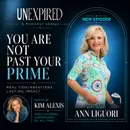


Breaking barriers in sports media takes more than talent. It takes persistence, preparation, and the courage to create your own opportunities.
In this episode of Unexpired, Kim Alexis sits down with sports broadcasting pioneer Ann Liguori to discuss her journey as one of the first women to host a call-in sports radio show on WFAN. Ann shares how she built a lasting career, landed interviews with legendary athletes, and turned her passion for sports into a successful media business.
From navigating a male-dominated industry to finding purpose through philanthropy, Ann reveals the lessons behind a career built on grit, relationships, and knowing when to take a chance.
00:00 - Welcome And Set The Scene
00:22 - Meeting Ann Liguori
00:54 - A Childhood Obsession With Interviews
03:32 - Competing In Sports With Limited Options
04:44 - The New York Fellowship And Sudden Loss
09:33 - USA Today Byline And ABC Radio Grind
11:34 - WFAN Launch And Earning Respect
16:35 - Booking Celebrities Through Real Networking
19:48 - Funding A TV Show From Scratch
23:18 - Sacrifice And Scrutiny For Women
24:55 - Turning Golf Legends Into Life Lessons
33:27 - Sponsor Message Altitude Home Loans
34:02 - A Foundation Built On Giving Back
36:17 - IBKUL Sun Protection Style And Business
37:54 - Designing The Hamptons Rope Jewelry Line
38:52 - Why Retirement Is Not The Goal
41:56 - Locker Room Rules And Staying Professional
44:16 - Research Discipline Before Google Existed
46:17 - Night Callers And Live Radio Chaos
47:45 - How She Landed Ted Williams
51:10 - Preserving A Massive Interview Archive
51:55 - Closing Thoughts And Next Steps
Welcome And Set The Scene
SPEAKER_01
Hi, I'm Kim Alexis. Today in Paris, Patrick Kelly is showing his collection of spring clothes. Hi, I'm Kim Alexis with your ticket to adventure. I'm Kim Alexis, and I'm here in New York City. Got a great show coming up for you, so stay tuned.
SPEAKER_02
So
Meeting Ann Liguori
SPEAKER_02
I'm here today with Ann Liguri. She is a sports broadcaster, an author, an entrepreneur, and a talk show host with a very long-running talk show, Callin Talk Show. So welcome, Ann.
SPEAKER_00
Kim, it's a pleasure to be on your show. And we've been golf buddies for a long, long time.
SPEAKER_02
Yes, I know. We've met at um different numerous golf events. And you didn't start out with a passion for golf, though, really. You did start out with a passion for journalism. Talk about that a little bit.
A Childhood Obsession With Interviews
SPEAKER_00
For journalism and sports, not particularly golf. I think I played every other sport but golf when I was a kid. But I don't know how many people, how many of your viewers and listeners knew what they wanted to do when they were three years old, Kim, but that's my earliest recollection of knowing that I wanted to interview people and be a talk show host. I was in my high chair. I can remember this, believe it or not, in Cincinnati, Ohio. My mother must have been watching Ruth Lyon's show every day. She was a true talk show host, pioneer. And she was in Cincinnati on a local station there. And she was also a piano player and a singer. And she just happened to be interviewing the most fascinating people that came through Cincinnati, Ohio. And I just remember watching her. And that memory stuck with me all this time. And from my earliest days, I wanted to be like her, interviewing the most fascinating personalities because I was so athletic. And my I had an older brother, Jim, who was very athletic and everything he did, I had to do. So, you know, the boys would come to our backyard and the girls in the neighborhood, and we would play kickball and baseball and and football and everything in the backyard. And then I just developed as an athlete my whole my whole life with opportunities that that came. There weren't that many opportunities when I was a kid to compete, and we can get into that. But um anyway, so I always wanted to combine my love for sports with with broadcasting. And um, all these years later, that's what I'm doing. I have a passion for it, and uh it's been an incredible journey.
SPEAKER_02
I could see you in the backyard with a hairbrush interviewing the little boys you're playing sports with.
SPEAKER_00
Exactly. Well, you know, I was really athletic and I still am. And um, it was just a natural for me. And, you know, remembering Ruth Lyons, who was this incredible pioneer. She actually wrote a book years ago that I got my hands on. And and I just remember how many people know that that's what they want to do when they're that young. I was a toddler for heaven's sake. But um, you know, my parents encouraged me back then. The opportunities were few and far between as I got into you know high school and college for women in media, sports media in particular, and being even an athlete.
SPEAKER_02
You could get into broadcast college, right? They had what they allowed women in. It wasn't that bad.
SPEAKER_00
Sure. Oh, yes. I mean, I went to University of South
Competing In Sports With Limited Options
SPEAKER_00
Florida on an academic scholarship in Tampa, Florida. Um, and I was a I earned 16 varsity letters in high school. In the fall, it was um basketball. In the winter it was um volleyball, and in the spring, I doubled between running on the girls' track team and playing on the boys' varsity tennis team because we didn't have a girls' varsity team in uh my high school in Brexville, Ohio. So I had all this athletic, you know, interest and background, and yet I really wasn't um prepared to get any kind of, you know, uh athletic scholarship in college. We were in a small town and we didn't get really the proper guidance on how to apply for athletic scholarships. So I did apply for academic scholarships and was able to get one and uh pursued my broadcast journal journalism career at the University of South Florida. It was a great market in Tampa to get experience, you know, internships in the local market, and uh my career kind of was launched from there.
SPEAKER_02
Well, and you also got a fellowship, right, with the International Radio and TV
The New York Fellowship And Sudden Loss
SPEAKER_02
Society, right?
SPEAKER_00
Well, yes, that brought me right to the Big Apple out of college. I applied for it was the IRTS International Radio and TV Society. They have this incredible fellowship program for students and graduates in media. And I think they picked in when I was in the class, they picked maybe 2025 across the country. Yeah so I was um fortunate enough to get one of those fellowships, which brought me right to New York City out of college. They paid us a stipend, put us up at NYU in the dorms for the summer. And we basically did informational interviews with all the movers and shakers in the business. And um I learned so much. And I always knew I wanted to be a sports broadcaster. But when I went into the office of Don O'Brien at CBS Sports, he was an executive there, and saw, you know, the fact that CBS Sports they covered the masters and the NFL, the Super Bowl and the Olympics. And I thought, wow, that's exactly what I want to do. So it was a great experience.
SPEAKER_02
Yeah, so you got your feet wet there, and then you started freelancing in New York in Manhattan, New York.
SPEAKER_00
Right. I was in New York City. I came to New York City, I came with no friends, no family, no money. Yeah. And it was it was very, it was very, very tough because my I mentioned my brother, Jim. Uh he was only 22 and he got leukemia and he he passed away um like the second week I was in New York City. In fact, I wasn't even going to pursue the fellowship because my father had passed away a year and a half before from cancer. And so I went back to Cleveland. Uh, it was just crazy that my brother got leukemia so soon after my, you know, got leukemia period, and then so soon after, you know, my dad passed away. And so I was gonna move back to Cleveland to be with him and and my mom. And uh my brother, he was in the hospital, and I said, Jim, I'm coming back. I'm gonna take care of you, you're gonna get better. And he looked up at me from his hospital bed and he said, Ann, you go back to New York and you follow your dream.
SPEAKER_02
I love that.
unknown
Yeah.
SPEAKER_00
And I gotta take him, I just he freed me. He wanted me to go back. I knew I had to go back to New York or he would not have been happy.
SPEAKER_02
Right.
SPEAKER_00
And so I went back to New York and uh started that fellowship. And uh a week and a half later he passed.
SPEAKER_02
Uh yeah, that's that's bad. But things would have been so different if you had stayed home. And some people, you know, for them that is the right choice, but it was nice that he gave you that permission.
SPEAKER_00
Definitely. Yeah, and uh, he's been my hero. My mother's my hero, my dad. I come from a very amazing family who encouraged me. You know, we were from a small town, and you know, very humble background, very humble means, but um, they the love was incredible and and the that family foundation was was was cute.
SPEAKER_02
And that carries through when you go to Manhattan and you're by yourself because I went through the same thing. You just have this um inner value system, and it's like, okay, things are different, but this is what I'm used to, or this is where you you pick and choose. I mean, that Manhattan has so many different things to offer, right?
SPEAKER_00
Absolutely. I think, you know, I learned, I had great wisdom that my parents instilled in me, you know, a lot of positivity, encouragement, uh, good moral uh values. And um it really helps you get through. I mean, you know, obviously coming to New York City as you did at a very early age, you know, on your own, it it there's nothing really more difficult. But, you know, I had just experienced two tragedies within two, two and a half years of each other. Yeah. And I honestly thought if I could handle that, I could do anything. And so I found myself at Marble Collegiate Church. Norman Vincent Pill was 90 some years old, but what a great speaker, what a great preacher. He wrote the power of positive thinking. And I just was so inspired by him. And I would go every Sunday and just listen to him, and he he gave me strength, that, you know, and and you know, the Lord upstairs. I mean, I really got my strength from from God. And um, and I don't know how people deal with challenges and tragedies without a higher power. So it helped me for sure.
SPEAKER_02
Yeah, yeah. Well, that's great. And so then how did you get your first talk call-in talk show? Talk about that.
USA Today Byline And ABC Radio Grind
SPEAKER_00
Right. Well, you know, when I first came to New York City, I was just trying to earn enough money to pay the rent. So I did get a job um writing freelance articles for USA Today for the sports pages. Right. So they, you know, I in the early days of USA Today, they were mostly based in Washington, D.C. And they there's staff people, they had writers around the country, but they had nobody in New York City covering sports. So I was there at the right time. I uh somebody recommended me, and I was able to write uh pieces for their sports talk section. And back then, all the sports media executives would read USA Today. It was way before internet, and you know, a lot of people just picked up USA Today for their national news every morning. Yeah. So I got a lot of exposure with that byline, and it was a freelance opportunity. And then at the same time, I was working for ABC Radio Sports. I got a producing freelance assignment to produce the shows. And then eventually I became a reporter for ABC Radio Sports, covering every professional team in New York City. Wow. So one night I'd be at the Mets game, the next night I'd be at the Yankees game, Knicks, Nets, Jets, Giants, hockey, and all hockey teams, college, basketball. I mean, it was incredible because every night I was covering a different sporting event.
SPEAKER_02
Did you ever have to do two events in one night?
SPEAKER_00
Oh, yeah. I mean, I did sometimes during the day, there was maybe a press conference at the 21 Club or the plaza, and then at night I'd go to a game. So yeah, I mean, I was running all over the place, getting interviews and sending in the interview tape, we called it, to the ABC Radio Sports Network. And then I was also writing the pieces for USA Today. So, you know, I was hustling, I was trying to make a living, pay the rent, and having a great time. I was in my early 20s. Yeah. And, you know, New York City was a great place to be when you're in your early 20s.
SPEAKER_02
Oh, yeah.
SPEAKER_00
I was had a great time.
SPEAKER_02
Yeah.
WFAN Launch And Earning Respect
SPEAKER_02
So how did Hey Lagory, what's the story, come about?
SPEAKER_00
How did Hey Legory, what's the story come about? So uh all of a sudden, there was word that a the first all sports radio station in the country was going to start in New York City. And people were, when people heard about the concept, they're like, what? 24 hours sports? Are you kidding me? That's never gonna work. So I was at ABC Radio Sports Network, and um, you know, they again they heard my my the shows I was doing or the reporting I was doing for ABC and they saw my byline. I was well known at an early age in the radio circles in New York City, and uh, so the people who are putting together WFN called me and asked me to come in for a meeting, which I did. And ironically, I learned that I was hired by reading it in the newspaper before I even signed a contract. It was crazy. Um I don't know how that works, other than um they spilled the beans to um uh uh Bob Raceman of the Daily News before you know I even was formally signed to a contract.
SPEAKER_02
So um I'd be like asking for more this on that on the content. It's a done deal. So let's just add these little things.
SPEAKER_00
Exactly. So I went to WFAN and you know, I started the show, Hey Legory, what's the story? And my very first, I knew I had to get a great guest because back then, you know, women weren't hosting call-in sports shows, and I had to be taken seriously. I needed to establish my credibility right away. So I thought, who could I get to guest on my first show? And the the New York Mets had just won the World Series back in 1986. This was July 4th, 1987. So I was determined to get the first interview with Doc Gooden, who had gone into Smithers rehab, unfortunately, when the season, when the 86 season was over. And he was the hottest story in town because all the beat writers and everybody wanted to get that interview with Doc Goodin. And um I just basically went up to him on his first trip back to Shea Stadium back then and went right up to him and asked him if he would do the interview. I had to tell him what WFAN was going to be because it wasn't on the air yet, and it was going to air the next week when the station actually started and my show would start. And he said, sure, I'll do it in. And he remembered me from covering the World Series when I was at ABC Radio Sports Network, so that helped. He trusted me. And then Kim, I didn't want other reporters to stick their microphone in to, you know, I wanted the exclusive interview, so I thought, well, how? I gotta get him out of here and bring him to another spot. So the Jets also played in the Today Stadium at that time. And so I said, Doc, do you mind following me to the Jets locker room and we'll do the interview there? And he said, sure. And so, oh my gosh, the Mets PR executive Jay Horowitz didn't even know. I mean, he didn't want anybody talking to Doc. He wouldn't let anybody talk to Doc. But I don't know, I just went right up to Doc and I had known him and and it all worked out. So I got that exclusive first interview with Doc Gooden. The show got off of a bang. Literally, it was the 4th of July, and we got all kinds of great reviews. And and I just felt like I really had to prove myself because women weren't hosting sport shows back then, uh particularly not call-in sport shows on the radio. And you know, that it was huge. FAN was huge back then. It was really the only call-in sports show in the country, and from that now they're hundreds all over. So yeah, boy, at one point there were two million listeners a week listening to WFAN.
SPEAKER_02
Wow. Wow. And you you still do that show?
SPEAKER_00
No, that show, Hey, Legory, what's the story? That aired for 25 years. So it started in 1987. But that's a show. That's it. I'm telling you, you're right, 25 years every week. Um, not every day, but just every weekend. Um, but you know, I had a I watched every game. I couldn't, I was traveling a lot because at the same time, in the late 90s, I also became one of the original hosts of my own show on the golf channel, where I was traveling around the country interviewing A-list celebrities, everybody from Celine Dion to Matthew McConaughey, um, Sylvester Stallone, Kevin Costner, they all loved golf, Joe Pesci. And I was doing the call-in show on FAN in addition to this show on the golf channel, booking all my own guests back then. And um, and then I did another show called Sports Interviews. So it, you know, I don't know where my 20s and 30s went.
SPEAKER_02
How did you book your own
Booking Celebrities Through Real Networking
SPEAKER_02
guests? Did they teach you that in broadcast school, or did you just keep learning stuff?
SPEAKER_00
No, you know, they didn't teach me in broadcasting school. No. Um you know what it is, Kim? It's really, you have to go out and network. And I was I was covering all these teams in New York and meeting not only the athletes, but the sponsors and management people and agents. And I just learned at a very early age in my career that if I wanted to get it done, I have to really initiate it. And um, I had better contacts than my producers. Right. So, and I also it was called a Rolodex back then.
SPEAKER_02
Remember the Rolodex?
SPEAKER_00
Exactly. I mean, you met a ton of people in your world in New York, and and you know, that's how I was. I was meeting so many people, and if I didn't have a direct, you know, in to the celebrity, I knew somebody who did. And, you know, it wasn't the agent, mind you, um, because the agents would normally say no, we you cannot talk to them. So somehow I was able to, you know, really kind of connect with all these incredible people, and especially on the show on the golf channel, they all wanted to talk golf because you know, we were out of the studio, we were at a gorgeous resort, uh property somewhere in the country, and and we were playing golf. So it was a great vehicle to get to get to know people. So I know I'm kind of jumping around a little bit.
SPEAKER_02
Well, no, but how how long were those interviews with the celebs? Did you have to prepare a lot or were you just spontaneous? Hey, would like to interview you and just throw a camera on them and go?
SPEAKER_00
Oh, no, no, no, no. Everything was uh everything was totally prepared. Okay. Um and, you know, obviously they were gonna meet me at the venue. Like, for instance, Celine Dion. Um, she and her husband bought a golf course in Montreal called La Mirage because they did not want to wait for tea times. So my friend at Callaway, um, really great guy, had just done a commercial using Celine Dion. Remember back then with the Callaway commercials with Celine and Smokey Robinson and Alice Cooper. Well, my dear friend Bruce Parker, who's no longer with us, um, he made it possible for me to interview Celine. I called Bruce and I said, I know you got Celine Dion for this Callaway commercial. Do you think she'd, you know, come on my golf channel show, Conversations with Anne Ligory? And uh Bruce said, Hold on a second. He picks up the phone. Literally in five minutes, Kim, Celine Dion was on the other line. And he was talking to her. Well, you know, I was telling him different things about the show. He said, She'll do it. Just fly up to Montreal. She just bought a new golf course, they'll do it there. I'll put you in touch with her people, you can organize it. So I just had friends who just really helped me connect to these personalities. And it was incredible because the the list of celebrities we got for that show on the golf channel in the early days was pretty amazing.
SPEAKER_02
And now you have the ownership of all of those, correct? You own the interviews themselves.
Funding A TV Show From Scratch
SPEAKER_00
Right. Well, so the sports interview show that was a whole other series, started in 1989. And um, that show I wanted to get on a sports network interviewing sports legends. This was before the golf channel even started. This was way back in 1989. And MSG Network said to me at the time, Anne, we love your work. You know, we hear you on WFAN and we see your byline in USA Today. We can give you a time slot, but we can't pay you. So then I had to figure out, okay, how do I make this work? And um, so I started pounding down doors on Madison Avenue, trying to get meetings with advertising executives to see if I could sell the show to sponsors so that I'd have you know financing to pay the camera crew, et cetera. And um it it worked. I mean, it wasn't easy. It was probably the most difficult thing I ever had to do, because for every one sponsor that said yes, you know, 20, 25, 30 said no. But Kim, I honestly don't know how I did it, but I was so determined to get this show on and that show, sports interview, I-N-N-E-R view with Anne Lagory, that aired for 17 years. And I was able to syndicate it on all these sports regional cable networks when they were really the big thing back in the day. They used to air all the local, you know, baseball programming and and and they still do, and um basketball programming. So it they're they're it's a there they were popular, especially when it first started. So uh yeah, though that the first interview for that was with Mickey Mannell. Can you imagine? I got I got all these, I was in my 20s and I got all these legends who were older, who I only kind of read about and saw highlights and historic films about. Obviously, I wasn't old enough back then to have seen them play. Right. But I wanted them to be part of my treasure chest of archives because I love sports history. And I just really wanted to. Interview them before they would depart this this world. And I got you know, Mickey, I got Ted Williams to sit down with me, Hank Aaron, Gordy Howell, Will Chamberlain, Jim Brown. I mean, that the show aired for 17 years, so it spanned, you know, a couple decades of legends, Roger Federer, Billie Jim King, Martina, Annika, Sam Sneed, I mean, just an incredibly eclectic group of legends. And that show I hosted and sold, booked all the guests for, syndicated. It was a one-woman show, literally. And it was just pure determination because women weren't given sports opportunities back then. And I tried to make the best of the little window that MSG Network gave me when they said, we'll give you a time slap, but we can't pay you. So all these years later, it it ended up working out, thank God. But it was uh it was not easy when it was happening.
SPEAKER_02
So some uh uh you had no typical day then. Back then, yeah. You were just one day you were but you only did the home games, you didn't fly to all these different places the career
Sacrifice And Scrutiny For Women
SPEAKER_02
ended at ABC Radio Network.
SPEAKER_00
I went to WFAN. I was still doing the FAN show just so I was back every weekend. So I'd have to schedule the sports interview show interviews and the golf channel interviews during the week just so I could get back to host the Collins Sports Show on FAN on the weekends. So consequently, I missed a lot of my friends' weddings and anniversaries and you know, family things that uh I guess average people can get to go to. I don't I you know, I don't know. I miss a lot of that, but um, you know, my my focus was on my focus was on my career and and um you know again it was different. Had I missed a show back then and somebody else filled in, you never knew if you were gonna get that show back. Yeah. I mean, that's how tough it was, you know.
unknown
Yeah.
SPEAKER_00
I mean, I was even thinking about there were no policies back then for you know women to have children. Um, I didn't have any children. I'm a great aunt, but if I wanted to have children back then, I I can't even imagine having, you know, taking off the time to have a child and then coming back and being able to continue doing what I was doing because I worked so hard to get those opportunities and there were no policies in place to protect women back then. It was it was very difficult.
SPEAKER_02
So those TV shows were your babies, right?
SPEAKER_00
Definitely.
SPEAKER_02
Yeah, yeah. So when in your free time did you have uh time to write at least two books, Passion for Golf and Life on the Green?
Turning Golf Legends Into Life Lessons
SPEAKER_00
Exactly. That and writing has always been very time consuming. Um, well, okay, so the golf channel show, when it first started, conversations with Anne Lagory, not every cable system carried the golf channel in the early days. It really took about six or seven years before the golf channel got picked up by cable systems around the country. So because my show was on the first five years, um, not a lot of people saw it. So I thought, well, gosh, all those interviews, I worked so hard to get all these personalities from Vince Gill to Amy Grant to um, gosh, who haven't I mentioned? Um you know, all these personalities, right? Brad Favre and uh Smokey Robinson and and um Alice Cooper, anyway. And so I thought, well, let me put a book together incorporating all those interviews, and then I'll write kind of like my story behind each interview and how I was able to get each personality and some fun things that happened in organizing the shoots and and um you know the kind of behind the scenes stories. And so that was my first book, A Passion for Golf, Celebrity Musings about the game. And then fast forward, and that came out in in its second printing in the early like 2007, and then fast forward to gosh, 2021, I thought, you know, it's time to do another book. So during the pandemic, um I basically wrote uh this book, Life on the Green, Lessons and Wisdom from Legends of Golf. And this book features 12 golf legends, uh, six men and six women. I wanted to give, you know, six golf uh female legends equal time to the six uh male golfers. And it's it's about what these iconic personalities from Jack Nicholas, Tom Watson, Gary Player, Padre Carrington, Bernard Langer, uh Renee Powell, Nancy Lopez, Annika, Daddy Pepper, Jen Stevenson. It's what they bring from their iconic golf careers to life. So it's really more about wisdom, life wisdom, and it applies to everybody. You don't have to be a golfer to love the book. Um, you know, I think it's life wisdom for all ages, whether you're a guy or a woman, or it's just um really great wisdom from some of the most successful sports legends out there. And um, they are all so willing to share sides of them that I had never seen before. And they all thanked me for being in the book, Kim. Oh I was so honored.
SPEAKER_02
Nice. I think when they're happy and and uh pleased with what you do, and I mean, we're here to feed into each other. I mean, that's my philosophy, and it sounds like yours too. So there's so much to learn from so many other people, and and especially pros that have had so many ups and downs. I think you realize they've had to learn things, otherwise, they can't stay at the top.
SPEAKER_00
Absolutely. I mean, Padre Carrington, his chapter is uh is entitled Embrace Fear and Nerves and Learn from Your Mistakes. And I can't believe Harrington, who he's won three major titles on the PJ Tour and so many more on the senior on the PJ champions. And he revealed to me that not only is he nervous when he goes to the first tea box, he has fear. And I'm like, what? And then I thought about it, well, yeah, sure, because the expectations that people put on him was such a successful resume, and the expectations and pressure he puts on himself. You know, he's afraid, what if my game doesn't show up? What if I shank, you know, my first tea shot? What if, what if? And his message is everybody has fear when it comes to something. Just embrace it, use it as adrenaline and focus and learn how to how to live with it and you'll be better, you know, from it. So I just thought that lesson was pretty spectacular.
SPEAKER_02
Yeah, yeah. Well, being a golfer myself as a you know celebrity just out there, when there's calling your name and you're approaching the first T box and you're doing your bio and the whole thing, you're like, oh my gosh, like all these people are looking at you and like, now I have to hit a good drive. I mean, it's it's nerve-wracking, but it's nerve-wracking. It's nerve-wracking because you want to do well, but because you're so nervous, you don't do well sometimes. So obviously they were much better at than I was. I remember my first one, it went like 20 yards with weeds.
SPEAKER_00
And I've seen pros, you know, miss putts. We've all seen pros miss, you know, putts this close to the hole. And you know, they're they're human, and golf is such a challenging sport. It is so humbling. And so, really, we we all are nervous when we get to that first T, but I can't say I'm fearful. So I was kind of you know interested in hearing more about Padre's fear. Uh, maybe I should be more fearful. I'd practice more. Exactly.
SPEAKER_02
Well, you can practice all you want and be great when you're doing it by yourself, and then you get out with a crowd and things change, right?
SPEAKER_00
That's right. I'm I'm very excited because I got an invitation to play in the Irish Open Pro Am, which is in Doombeg, Ireland, at Trump Ireland International. And I've been a member there from years ago when it first opened when Buddy Darby and his cousin Leonard Long developed Dunebag. And um, I interviewed Greg Norman there when he played Padre Carrington in the opening match. And so I'm I'm very familiar with the golf course, but you know, playing with those pros is a different story. You have to, your game has to really show up.
SPEAKER_02
I was in a celebrity event and I was with Freddie, and he's like literally like this, and he's watching me, and then he's like, So that's your swing? And I'm like, Oh no.
SPEAKER_00
And he was so fun, no, Freddie.
SPEAKER_02
He was just yes, he was teasing me and he's being very sweet, but I'm like, don't know how to answer them.
SPEAKER_00
Well, you know, he probably made you, you know, he wanted you to laugh and trying to make you feel comfortable. I mean, there are most of them are really fun to play with. Yeah. Most of them.
SPEAKER_02
Yeah, yeah. It did the opposite. I'm like, okay, now he's watching everything, right? Yeah. Yeah. No, and I think playing with them, it would up your game, or you just watch what they do, and it's amazing how they just get themselves out of things way better than I could. That's for sure.
SPEAKER_00
Well, it's funny because they're so exact, they're so precise. And, you know, I cover, gosh, 28 Masters, dozens of U.S. opens. This year at Shinnekog out here on the East End of Long Island where I live, um, it was the fifth U.S. Open I covered at Shinnikog, which tells you how old I am. But um, but the pros, it's so I've been watching these pros, men and women, you know, for decades now. And you'd think some of it would rub off on me. But I do know that one one year I was MCing an event that Anica Sornstam was kind of hosting and playing, and she asked me to read a putt. It might have been a 20-foot putt, and my TV cameras were on us. And and I I said, sure, I'll read it for you. And I said, Annika, I think it's gonna go one to two balls left to right. Right. And she looked at me and she said, Which is it? One or two. And you know, that was a good point. You have to be so precise.
SPEAKER_02
But that they can putt to that exact inch is just amazing, also. It's like, okay, I'm aiming the putter and I'm gonna get close or what I think is good, but um they're just amazing. They're very nice. Yeah, yeah.
SPEAKER_00
And she's winning, you know, she's almost winning these celebrity tournaments against guys. Uh, I have to say I love Annika. I've, you know, I've interviewed her so many times. Um, she's a huge inspiration. She does so much for charity. I'm sure you've seen her and through your travels and and Gary Player, this, you know, the same. I mean, Gary is just so he's he's an international treasure. And I think I've interviewed Gary probably on my radio and TV show more than anybody else. He's just a great interview. He you can ask him one question, leave the room. And he's going on and on and on, and you know, he's very opinionated, which makes for a good interview as well.
SPEAKER_02
So yeah, you just have to ask the right question to get him going.
SPEAKER_00
Exactly.
Sponsor Message Altitude Home Loans
SPEAKER_02
Thinking about buying a home, but not sure where to start? Jeff Schwartz at Altitude Home Loans makes the process simple. From application to closing, Jeff helps you find the best loan for your financial goals and keeps everything moving smoothly because the right team makes all the difference. Ready to get started? Apply today with Jeff at Altitude Home Loans. Okay, what's my next question for you now? Talk about your foundation.
SPEAKER_00
Oh,
A Foundation Built On Giving Back
SPEAKER_00
right. Well, okay, so you you heard my father passed of cancer, and my brother, we lost my dear brother at a very early age to leukemia. So when I was starting out my career in New York City, the American Cancer Society came up to me and asked if I would host a charity golf event at West Hampton Country Club. And um in the late 90s, I was able to buy a house in West Hampton, New York, and I thought, of course, I will host a charity event to benefit the American Cancer Society. So that tournament started, it incorporated celebrities back then and you know, 150 people. There were so many people would show up. Um but 10 years into it, a dear friend of mine who was in the not-for-profit space came up to me and suggested that I put my own foundation together and I could help a variety of not-for-profits. And so I took her advice and I learned from her how to do it. And so I created the Anne Ligory Foundation. And um, we've been hosting the Anne Ligory Foundation Charity Golf Classic ever since. It does not involve celebrities anymore unless we honor one or two of them every year. Um, we honored Alex Lifeson a couple years ago, the guitarist from you know Rush, and they're back on tour now. I love Alex, he's a huge golfer. But um, we raise money for St. Jude, we raise money for a variety of uh cancer research organizations. So every year we do it out here in the Hamptons at a prestigious golf club, and it gives people the opportunity to play these courses like Maidstone or Sabonic or West Hampton Country Club, The Bridge, Atlantic, all these courses that you know people could not get on unless they play with a member. It's very strict out here. It's hard to get on these golf courses. And, you know, diehard golfers want to play them at least once, right? So they, I get it. You know, we sell it out every year, and um, it's been really satisfying that to see all the funds that we've been able to raise for so many different organizations. And and the golf community is so generous. You know, they'll donate clubs and and apparel and you know, I be cool, we'll outfit the volunteers, and you know, it's just really gratifying
IBKUL Sun Protection Style And Business
SPEAKER_00
to be able to get back a little bit.
SPEAKER_02
Yeah. So talk about IB Cool, because people don't know. So it's I B K-U-L, correct?
SPEAKER_00
I know. And you know what, Kim? They're gonna change their name to I B C O O L, the spelling I B cool. Because I guess so many people ask them, how did you come up with I B K U L?
SPEAKER_02
Yes.
SPEAKER_00
Um, anyway, so And I'm wearing an L I'm wearing an IB Cool.
SPEAKER_02
It's a sun shirt, and you've got one Yeah, yeah, exactly.
SPEAKER_00
They're all UPF 50 plus sun protection. So certainly um we have to worry about you know protecting our skin from harmful rays. And the fabric's very soft.
SPEAKER_02
I'd rather wear a shirt than the sunblock.
SPEAKER_00
Exactly. Well, I try to, you know, put sunblock obviously on my neck and face, but um it's it's so comfortable. Uh there's so many different styles. Um, we just signed Nancy Lopez as an ambassador recently, and Madeline Sagstrom has been an ambassador. So the three of us are their uh Ivy Cool ambassadors. And um, you know, they have skorts, they have dresses, they have pants, shorts. It's such a great variety, different styles, solid 16, solid colors, so many different patterns. It's really they're really um it's uh they come out with three collections a year, and they have a men's collection too. So we'll have to send some more your way.
SPEAKER_02
Yeah, exactly. Just what I need to close, right?
SPEAKER_00
Exactly.
SPEAKER_02
Got a lot of golf clothes. So you also started a jewelry
Designing The Hamptons Rope Jewelry Line
SPEAKER_02
line. Talk about that.
SPEAKER_00
Well, you know, it's funny. Um, Dune Jewelry years ago asked me to start my own jewelry collection, the Hamptons Rope Collection. And um, yeah, you know, I just kind of put some ideas together and um designed a beautiful, um, you know, kind of Hampton-ish line. And so they've been selling it for many, many years. And it's it's a very small part of of what I do, but it it certainly is a lot of fun. And, you know, you can see the collection on their uh website at deanjewelry.com, D-U-N Jewelry. And they've done very, very well. So um that was a long time ago. You've done your homework, Jeff.
SPEAKER_02
Well, I'm running out of things, but I'm amazed that what this show highlights is how people start one way and you can pivot and keep contributing and be relevant. So I find it's um amazing with you, but I I
Why Retirement Is Not The Goal
SPEAKER_02
have a feeling you're not done yet. So what's next on the horizon?
SPEAKER_00
Well, when women get to a certain age, a lot of people are always asked you, Well, are you gonna retire? And I'm like, no, why would I retire? I'm finally having all these opportunities and doing things that I love, right? When I first started out, it was so difficult. You know, women were we were scrutinized so much more than the men. We had to, I felt like I had to know more, do my homework more, just you know, be better in order to get the job or or keep the job. And um, you know, I love what I do.
SPEAKER_02
So sad, by the way. I mean, that's that's really sad that women feel like they have to have so much more effort to get the same thing as men.
SPEAKER_00
Yeah, and I don't, I think, is it the same today? I mean, I've been doing this for so long as an independent um owner of my own company and entrepreneur and and um you know, broadcaster, independent broadcaster and author. Um, I'm not out in the real world as much. So I think times have changed for in the corporate world a lot, but um, you know, I can remember how tough it was when I first started. And the same with probably with you, Kim, right? I mean, when you first started, there were so many things you probably had to overcome just in the modeling business, being a woman. I mean, you you have great morals and and are so strong, but I think uh most young women, when they come to New York, they're so tempted by this and that, and and it's hard to stay focused and keep your business professional hat on, right?
SPEAKER_02
So yes, true. But the one big thing about modeling was that the the female models were so much more important than the male models. A lot of times, male models were our almost like our accompaniment or a background or just something that was like a thought and it was all about the females. And the guys used to really get upset because they'd be like, I want to be in the picture with you. And it was just like a part of their arm or whatever it was. So that was the one business I think where women excelled and were highlighted much more than the men.
SPEAKER_00
Exactly. I think that's a great point to bring out. Um, because I always thought, you know, when I was struggling, kind of getting out there as a sports broadcaster, I always thought, gosh, if I was a great musician, a female musician, I'd probably be so much more successful. Being a really good sports broadcaster, it didn't matter. It wasn't, you know, a lot of times it you didn't get the opportunities because of your gender. So um it's interesting. That's that's changed now. It's so great to see so many more women um, you know, in the sports media business.
SPEAKER_02
Well, you were one of the icebreakers, I think. I think you helped uh make it possible. And now you look even at the NFL, they've got women on the sidelines and they're talking about the injuries. I'm like, how'd you get in the men's locker room to talk about the injuries?
SPEAKER_00
You know? Exactly. Well, there the women have been sideline
Locker Room Rules And Staying Professional
SPEAKER_00
reporters for a long time. And I'd love to see more and more women, you know, in the booth, you know, hosting shows and um, you know, being, you know, doing more play-by-play. But we're we're seeing it in in other sports, not necessarily as much in in the NFL, but um, gosh, but I can remember. I had to go into locker rooms. That's where we got the interviews back in the day and still do. I mean, they weren't they didn't pretend, they didn't prepare these guys that I was gonna walk in.
SPEAKER_02
You've probably got some really great stories from the locker room.
SPEAKER_00
I do, but I have to say, I was so so prepared and so um focused on being a professional. I didn't want anybody to think of me in, you know, wanting to be in a locker room for the wrong reason. So I was so conservative. I would dress, you know, with a suit on and a long skirt, and uh, I was over the top conservative because I just really wanted total credibility for knowing sports and for doing my job. And um, but you know, still the guys would want to get a reaction out of you. So um they'd run around with nothing on or hardly put a towel on. And I can remember, and I won't mention the the athlete, but he was seven feet tall, and I walked into the NBA locker room, and um I had it, he was the game winner, so I had to interview him, and I I looked up at him and I said, do me two favors. One, put a towel on, and two, please sit down.
SPEAKER_02
In that order.
SPEAKER_00
In that order, yes. So um it was there were some embarrassing situations, but I was so relieved when I started my own shows and I could interview different personalities, um, you know, whether in a studio like you do or on location. So I didn't have to go into the locker room anymore because it's just it's not a it's not a glamorous place at all.
SPEAKER_02
And it doesn't smell great. No, it's just not at all. Yes. So even I I read that you prepared so well that you would read. Five newspapers a day and cut things out and put them in folders. So talk about that because we're here to feed in the to the younger generation. And I think that they don't realize there's as much preparation as as as you had to do.
SPEAKER_00
Oh, absolutely.
Research Discipline Before Google Existed
SPEAKER_00
The key to what I do is prep work and research. And back in the day before the internet, you know, how did we do our research? Well, we had to go to the library. Imagine that. I love it. Take books out. But I did get five papers a day. And I know I'd either be at home drinking a cup of coffee or at the local diner, going through all the papers and cutting out articles of personalities that I thought I would one day interview. And I kept a file on every sports personality or entertainment personality. And I just had files, and that was our how I had my research. Now it's so easy. You Google somebody's name and boom, so much comes up about that person. But and by the way, you have to, you know, you have to still, when you when you do the um, you know, your research, you still have to kind of make sure some of that information is is accurate. So um, but anyway, that's how we prepared. I mean, we did, it was a very labor intensive and um gosh, having a five, six hour calling sports talk show on the number one sports radio station in the country, you know, if I made a mistake, that would have been it. I would have cut off opportunities not only for myself, but for future generations of women wanting to go into the sports media business. So talk about pressure. I put pressure on myself to be as knowledgeable and as flawless as humanly possible because I felt like you know, other women, younger women were watching me and the whole industry was watching me to see if this was calling.
SPEAKER_02
What was the crazy question that you got? I mean, I'm sure you had a lot of them, but can you think the one off the top of your head?
SPEAKER_00
You know, I just had some crazy people call because my show was late at night and into the middle of the night. So I remember this one guy would call every weekend. He was a prison guard.
Night Callers And Live Radio Chaos
SPEAKER_02
Okay.
SPEAKER_00
And he called from like this federal prison, and we we just talked sports. I can't remember maybe the questions, but I can remember the situations. The callers to WFAN, um uh Doris from Rego Park, um Short Al from Brooklyn, Bob from Little Ferry, New Jersey, they got as famous as some of the hosts because they would call regularly and they'd get so well known. And WFAN had such a huge presence. So um, you know, the callers were a big part of our shows because uh, you know, I was on five, six hours and you couldn't interview somebody for six hours, particularly in the middle of the night, but we sure got phone calls.
SPEAKER_02
Yeah. I wonder what's happened to those people now, right?
SPEAKER_00
Well, I'm sure by now they've they've passed because they were elderly when they called me um back in the day. And uh, you know, but I remember Doris had a New York Times article written about her because she became, you know, very opinionated. In fact, I think she actually got mad at me for something I said about you know her beloved um Mets. Um, and she's kind of stopped calling me because she was so upset at me.
SPEAKER_02
So Where's Doris?
SPEAKER_00
Where's Doris? But I do want to tell you some of the cool you know stories about getting some of these legends when I was in my
How She Landed Ted Williams
SPEAKER_00
20s. People asked me, how'd you get Ted Williams? Because he was just this icon, you know, like this mythical figure. I I never saw him play. I mean, he was he played way back in what the 50s and 60s, but you know, but I read about him and he was just such a legend. And um, and I I was at Black Diamond Golf Course, Kim in Florida, uh, and found out that the Ted Williams Baseball Museum was nearby. And so I also found out that his son John Henry, who during those days was managing his career, he lived nearby. So I found out where he lived.
SPEAKER_02
You knocked on his door?
SPEAKER_00
I knocked on his door. His wife answered. I introduced myself. I, you know, and at this point, um, she didn't know me, but I thought if she gave my business card to John Henry, who was not there at the time, he might have heard of me. And I said, you know, I'd love to interview Ted Williams. I've interviewed all these icons and sports, and I would love to interview Ted Williams someday. And, you know, Ted was up there. He was ailing and he wasn't doing any interviews. But the wife was very nice. She took my business card. Two days later, her husband John Henry called me, Ted's son, and he was kind enough to help me help arrange my getting the interview with Ted Williams. It was during the All-Star Game at Fenway in the late 90s. And John Henry said, you know, my dad's not well. If he takes a lot of naps, but he will be at that all-star game. And older baseball fans will remember that game when he he was in a golf cart and he was driven around the perimeter of Fenway waving his hat in appreciation. Oh, he had a he had a love-hate relationship with Boston sports fans, and he came back so much more humble and and loving. You know, he was older and um not well. And and so we were all set up as John Henry asked us to be set up at 11 o'clock at this hotel. And when Ted Williams came out, I mean, this very tall, just intimidating figure, and I was so prepared for this interview. And I sat down with him, and it was probably one of my most memorable interviews. He was, yeah, I I just had read so much about him and was in awe that I actually was sitting across from him. And he was a baseball genius and you know, talked so much about the game, and and then he was also in the fishing hall of fame. Really? And yeah, and then he was co-pilot in the Korean War with none other than John Glenn. So we had a lot to talk about. Yeah, he was a war hero. And after the war, he came back and won the triple crown and like like he had never left. I mean, just an amazing legend in sport. And so I was so thrilled that I was able to sit down with him. And again, I was in my 20s and he passed maybe five years after that. So I was so grateful that I was able to sit down with not only him, but some of these incredible legends who were much older and whose record I wanted to have, you know, in part of my sports archives.
Preserving A Massive Interview Archive
SPEAKER_00
And to this day, I have 500 plus interviews with all these sports legends that I license out. And I have to do something with that archives, Kim. I have to put a documentary together. Exactly.
SPEAKER_02
I'm like, what are you gonna do? Because I know you're gonna do something.
SPEAKER_00
It's long overdue. I definitely have to put it together. So just another project. We need 48 hours in the day.
SPEAKER_02
Well, I love it. I love your energy, and I love that you're definitely unexpired. So thank you so much for being on the show.
SPEAKER_00
I love the name of that show. I love your energy. You are such a wonderful person. I'm so glad we're friends from way back. And um, let's tee it up together soon. There you go.
SPEAKER_02
As long as they don't announce our
Closing Thoughts And Next Steps
SPEAKER_02
names beforehand when we get to the T-Box.
SPEAKER_00
You'll be fine. I've seen you swing. You can get a good call.
SPEAKER_02
All right, thank you, Ann. Thanks for watching the show. If you have any questions for me or you want any more information, go to Kim Alexis.com.


