SHE HAD FAME AT 15 — AND WALKED AWAY FROM IT ON PURPOSE
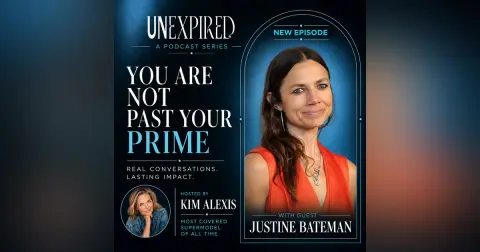
What changes when you stop trying to keep up with who you used to be? This episode features Kim Alexis in conversation with Justine Bateman about aging, reinvention, creativity, and the unexpected turns that can shape a life. From going back to school at 50 to challenging the way women are expected to age, Justine shares a perspective that goes well beyond the usual conversation about getting older. They also dive into fame, filmmaking, social media, and why the future of creativity may depen...


What changes when you stop trying to keep up with who you used to be?
This episode features Kim Alexis in conversation with Justine Bateman about aging, reinvention, creativity, and the unexpected turns that can shape a life. From going back to school at 50 to challenging the way women are expected to age, Justine shares a perspective that goes well beyond the usual conversation about getting older.
They also dive into fame, filmmaking, social media, and why the future of creativity may depend on something technology cannot replace.
Key themes:
- Reinventing yourself at any age
- Aging without comparison
- Creativity and storytelling
- Challenging beauty standards
- Human creativity in the age of AI
Listen to a conversation that asks a bigger question: What if there is still so much more ahead?
00:04 - Welcome And Setting The Theme
03:55 - Early Career Doubts And Belonging
07:10 - Fame And When Rules Disappear
14:32 - Unique Skills And Not Self-Eliminating
15:56 - Culture Shock And Instant Success
22:55 - Learning Story Craft And Directing
25:08 - Why Movies Miss What People Need
27:45 - Online Video Then A Hard Pivot
33:47 - Generative AI And The Credo 23 Stamp
34:06 - Computer Science Degree And Real Triumph
36:47 - The Pressure To Look Young Questioned
49:19 - Back Up And Find The Door Ajar
53:57 - Unexpired Mindset And Closing CTA
Welcome And Setting The Theme
SPEAKER_00Hi, I'm Kim Alexis. Today in Paris, Dr. Kelly is showing his collection of spring clothes. Hi, I'm Kim Alexis with your ticket to adventure. I'm Kim Alexis, and I'm here in New York City. Got a great show coming up for you, so stay tuned.
SPEAKER_01Unexpired is about celebrating you. First of all, this is all about you and all your different journeys. And you've had many. So it will be I am going to repeat myself and say to you what I told you off camera that it's just really a pleasure to be here. And that, you know, like many people my age, uh, you know, we saw you in magazines. And I personally was like a big collector of magazines because I loved art direction layouts and all this sort of thing. And uh your attitude just stood out so much so, you know, with the winking on the covers and all this sort of thing. So I'm very, I very much appreciate and have been a beneficiary of your work.
SPEAKER_03Thank you.
SPEAKER_01And that's back in the day we had no feedback from people, right? Oh, yeah, I know. Right? We were busy working. I mean, I'd work morning, noon, and night and never hear anything. And social media, they're like, Oh my gosh, I studied every makeup, all your makeup and all your everything. I'm like, really? You have no idea how your life affects someone else's life until you're now all able to communicate morning, noon, and night. I mean, and I feel like what's what's uh influenced me, what influenced me when I was younger, that I've carried into older age, so much more so, especially by, especially by, I mean, you're not that much older than me, but like anybody who was years. Okay, but anybody who is a sage and anybody who is much older too, though, is attitude. Like whatever attitude they had, you just look at that and go like, oh God, that's awesome. More so than what they were wearing or what they, you know, what their face looked like or anything like that. You just go like, man, that attitude. I that's what I want. And I didn't want the attitude. I felt like I never fit in because I was always, I was a grew up an athlete. I was always heavier, you know, and I didn't, I wasn't that skinny, skinny body image. And I wanted to study and I loved learning and I never got to go to college. And so, like, what am I doing in this business? I just really always felt like I didn't belong, or it's so messed up, I gotta go. Yeah, like I like I had something else to fall back on. Well, I'm glad you were in there. We all benefited. I don't know why I stayed. You know, sometimes you look back, it's like, why didn't I stay? I guess they just kept giving me jobs, and I'm like, Well, there was like an intention that was happening through you to the benefit of society, people like me. And uh that's why you were there. And you didn't need to know. Yeah, I guess. Yeah, yeah. I don't know. But it worked something, yeah. What what does drive us? I mean, that's kind of what the show I love talking to different people. I mean, you started at a young age. What drove you at 15 to go walk into an agency? You were up in Rye, and I used to live in Harrison. Uh-huh. And you took what the Metro North down and decided to go. I wasn't, I was only there when I was little. So I was born in New York, and then we lived, we lived there, and then we lived in Massachusetts, and then we lived in Utah, and then uh LA. And when you were 15, where were you? LA. Okay. I was in LA. And never crossed my mind ever to act ever. Right. But my brother decided a year prior that, or he decided when I was 15, he decided he was going to be an actor. And he went to an audition with a neighbor who was an adult, right? And they were auditioning. There was a some piece where it was uh they were auditioning for the father and the son. So Jason went too. And um, and then uh yeah, and then Jason took off. He was on Little House in the Prairie and he was doing commercials and stuff. And then a year later, my mom said, Why
Early Career Doubts And Belonging
SPEAKER_01don't you do a couple commercials for the hell of it? And I was like, I mean, I you know, I was like, I mean, I was in play production school because that was an easy A. I mean, I was all about the GPA. Funny. So I was like, That's why you were in theater? Oh yeah. So then I was like, I don't know. And then and I just walked into my vocation, like uh at that time, which is like a similar story to like writing, directing, and producing now for me. But yeah, at the time I went um auditioned for Jason's agency, um, which was uh so and Tracy Jake, I mean, this is too much detail, but Tracy Jacobs became our agent who then became like a partner at UTA like years and years later. But um anyway, um, yeah, and within four months I did two commercials and the pilot for family ties. Like absolutely did not know what I was doing. Right. But I just that's what was I just walked into. And that's something I want to talk about here, considering your topic, topic of your is that you have a basket of skills, you have a basket of skills and talents that are yours only, and you have a basket of opportunities that nobody else gets to have. So like it doesn't matter if that girl that just walked in the party is prettier than you. Right. There's not she can't take anything from you. Right. There's there's a there's and the only way that you can uh the only way that these opportunities can be eliminated for you is if you X yourself out of the running. Yeah. You tell yourself, I'm too old, I'm too fat, I'm too gay, I'm too straight. Like whatever your thing is, whatever your whatever the way is you're kind of eliminating your own, your own uh voyage down your path that nobody else, nobody else is gonna, nobody else is gonna have that opportunity. I mean, not in that same way or anything. That's that's just yours. Nobody can take it from you, and you're not gonna get anyone else's. So go take that one, you know. If more people thought that, right? And well, it takes faith. Like either whatever your thing is, you know, if it's God, the universe, nature, the idea that the general idea that like life is gonna work out, like whatever your thing is, it doesn't really matter. But you have that con the confidence that it's going to be okay. Right. It's the fear, the insecurity and the fear that makes people uh get jealous. Right. What else? Why should I be jealous of somebody? Because I'm afraid that the thing that I wanted to get, they just got right and now I don't get it. Whatever. I mean, there's other all all kinds of different versions of that, but that's one, right? Right.
SPEAKER_03Yeah, but that's fascinating.
SPEAKER_01Like so that's so me getting a family tie is like that was meant to be. Yeah, is my thing, you know? And think about it, I didn't know what I was doing.
unknownRight.
SPEAKER_01I didn't know what I was doing when I started either. But they're, you know, so you know, for so for people to go like, oh, I can't do that, you know, or you know, some opportunity in front of them, right? And they go, like, oh, I can't, I I don't know what I'm doing. It's like just walk through the door. Like, you don't know. You don't know what's going on here. Just show up, just show up. Yeah, you don't know. Yeah. Uh yeah, because
Fame And When Rules Disappear
SPEAKER_01I mean, I was gonna go to pharmacy. I was already in school, in college, I registered at University Rhode Island and already on their swim team. I was swimming five and a half hours a day. And for me, what do you mean you want me to model? I've I've never looked at that before in my life. I'd never plucked my eyebrows. I mean, I just had you ever looked at through magazines. Uh no. No. And I go to New York and my first job, two days after you ever been there before. I went with my church group on a bus. So you saw a version of New York? Yes. From the bus. Were you in the bus? This is Times Square. Put your foot on the accelerator. Yeah. Yeah. So for me, I went to New York two days after I turned 18. My birthday's in the summer. And back then, New York was New York. Yeah. I mean, there was no 1978. There was no Times Square was bad back. Times Square was bad. Yeah. You could walk through New York, even up through when I started going there, it was like uh 80, 80, 81 or something. And if you could walk through Times Square and not and nothing happened to you at the other side of it, you were like, fuck yeah. Like it was like a good day. It was amazing. Yeah. That was really well so that must have been a big culture shock. It was. I mean, besides what you saw from the window, exactly your bus, right? Well, because I graduated late when I were from Buffalo. We graduated like end of June, right? So mid-July, I'm in New York three weeks later. I had been under the tutelage of my parents, my teachers, my coach, my swim coach. Yeah. And now I'm in New York City and I can do whatever I want. Three weeks later. I mean, so I don't know how I didn't get in more trouble, but I really didn't. And then I had my first magazine cover within four days. No. For Italian Bazaar. Yeah. Yeah. Get out. That's awesome. I think that had to happen because I would have left. How fun. No, it wasn't fun. No, I mean, just like what a trip. No, no, no. I know, I know. But like, what is it? But I didn't know the value of it because I had never studied. So, in a way, for me, it was almost that if I do, I do. If I don't, I don't. I'll go do something else. And also, like what you said earlier about um uh feedback and social media and all this, like we didn't need that back then. Well, we didn't know anymore. Well, we didn't know. Like, I mean, we were I mean, until until you would go out in public and then and then the reactions, I mean, I found the reactions to be like huge because like in your case, there weren't that many supermodels. I mean, there were like there were like a handful, like you were one of a handful. Like I was there weren't that many famous people. Like, right, I was one of a handful. I mean, I wasn't like Brad Pitt famous, but like somewhere between 26 and 40 million people were watching every week. That's and so when like I couldn't go to Disneyland or you know, if you go to the airport, you gotta call the airline up ahead of time and ask them to uh escort you through just because and put makeup on when you land because they're taking your photo in the airport. Wasn't that I didn't have that. I had that, I didn't have that, but I had like the people. And the funny thing about when everybody's and I I wrote uh the my first book is called Fame, The Hijacking of Reality. That's your second. This came out on paperback if anyone wants that. This is your second one. And that's the second one, right? This one I can relate to. We're gonna talk about it. The the throngs of people, and there's something about like everybody, first of all, they they let go of whatever they were doing at the time of that that moment, right? Like, let's say you walk into like an airport, right? Or and everything's everybody's waiting for the airline or they're checking the or okay, they didn't have phones back then, but they're reading a book. They're checking the time, they're reading the book, they're talking, they're they're correcting their children, they're you know, they're um making sure they're getting to the gate, whatever. As soon as someone uber famous comes through, they everything, all of that stuff that they were doing, or if you walk into a restaurant, everything they were doing and every and also every attitude they had, every mood they were in, whatever, it stops. And then it becomes all about oh my God, there's so and so. I mean, everything stops like that and they go, there's so and so. But what also stops is any sense of you know, in society, we we have we the reason we have kind of order is be I mean, there are laws against certain things, yes, but most of it is an agreement we have with each other. When somebody very famous walks in a room or there's a or there's a natural disaster, anything that's like a big make a big change suddenly, right? Right. All that goes out the window. And so if you feel like you're in a dangerous situation, there's kind of nobody who are you gonna call on the police, and then the police are going, you are that girl from the such such such and such show or whatever. I mean, I'm not saying anything negative about the police force or anything or any of these people or anything. I'm just saying all of these rules about like your person, you know, the kind of societal rules you have between people, it all goes out the window. You are an imaginary object that doesn't exist in real life, and they are all wanting to come around and not even be touching you, but touching this moment you are in, and you're on your own.
SPEAKER_03Yeah, you're right.
SPEAKER_01You are really on your own. So I I know you experience, I mean, you're because you're not only you were not only very famous, but you very tall and very, you know, very striking. And like, how are you gonna even hide how could you ever hide in a in a group? So I was racing a car in the streets of DC. It was a celebrity event. They clutch shut down the streets. And I'd practice for two days down in Sebring, right? For racing this car. William Shatner is my partner. He we do a practice. In the car with you. No, we he we were like a tag team. So I went first. He changed the car. So we we rehearsed around the track to get a feel for the track, the car, everything. Then I jump in the car. He had changed cars. So the brakes were different, the the where the pedals were different. Did you have a block on the on the was it a clutch? Oh, so they had they have a block on the clutch, or no, not on the clutch, they have a block on the brake so that you could no. I just knew that this car was different and the brakes were not doing well going in the first turn. And it's the oldest. So I get to the last turn, my brakes lock, and I slam into the wall. And I remember like complete dead silence, right? You know, and then you hit that little thing for the electric so you don't blow up. And I'm sitting in the car by myself. The fire guys come to rescue me. They come in the window and they're like, We're so glad you crashed. We wanted to meet you. Oh, by the way, are you okay? I was once pulled over by a cop and uh I was actually it was uh not a good thing. And then when he said why he pulled me over, I was like, 'cause uh then you'll take that one, right? I'll take I'll take that. He was like, I saw I ran your plate and I saw that you were that girl, and I was like, Yeah, yeah.
SPEAKER_03Yeah, do you want an autograph on anything but a ticket?
SPEAKER_01Right. Yeah. Yeah. Oh crazy. Okay. All right. Yeah, well, that's the other book. Yeah. Same, yeah. It exists, and I think it exists, and it it ties into this book of thinking you should be something that you cannot.
Unique Skills And Not Self-Eliminating
SPEAKER_01So as a model for me, and I I kind of talked about this, is that I wasn't super skinny. I wasn't this lean little thing. So here I am, athletic. And I wasn't celebrated for that. So I tried to change my whole life of how I ate and not eating and this whole weird thing. So your this book with the face is also the same of I don't fit into I don't feel like I fit into society. And what do do I or don't I change and what does that do to me as a person? So um we won't go there. Uh talk about getting into how writing. Did you love writing when you were um yeah, I was always I mean, like I loved school, like I said earlier. So you loved English? Uh yeah, all of it. Yeah. English, math. I mean, I just really liked school. Maybe it's the uh maybe it's it like your your effort is is uh correlates to your reward. Like and if you get it if you have an A, then they it can't be taken from you. Okay. And I yeah. Like how did you get into writing after it was after Family Ties, right? Oh yeah, yeah. Then after Family Ties, yeah. Um I'd always I'd written like uh poetry and short stories and all this, and uh and
Culture Shock And Instant Success
SPEAKER_01then uh when was this? It was like um in the nine late nineties. I don't remember when I but I started I was like I should just have like try writing a script. Because as an actor I had read so many scripts and broken down so many scripts, like you know, and could and it became very uh easy for me to see like okay, this script is is off here, why is that? Oh, because these two characters say this thing on page 30 that sets it on a particular trajectory, and it's like um story and character and character relationships, all these different uh elements that have a particular um compass heading. If you change the compass heading, you know, within the first 30 pages or 50 pages, even a degree, and you can imagine like a like a ship. Then by the time you get to page 90, you you've set it on this track and you were supposed to get here, but now it's over here, right? And the audience, and then you have the character do something that's on this track and this compass heading. And then the audience goes like I don't know. I don't I don't know that he'd do that because and it's because you had made to make make needed to make this little adjustment on page 30. Anyway, that kind of thing was really easy for me to see. And maybe that's true for other actors too, you know. So did you accept scripts that had this flaw? Or did you like you know you see actors and actresses and they they do a movie and it's like that probably didn't turn out the way the script was written when they first saw it, right? Because sometimes things were out of your control. Oh, it's it's all uh, you know, the the the marketing campaign's out of your control, the um the editing is out of your control. Um but things can go wrong even though you might have performed super well. That yeah, so dude. That happened all the time. Like you would do, you'd go like, okay, this is really well you'd or you would have done it different because you saw that as a a director or a writer, right? Um, well, back then when back when I was acting, um, I I said there were three kinds of directors ones that stay out of your way, ones that get in your way, and ones that actually help. And the ones that actually help us was a really small collection of people. Because it was too much effort, or they didn't know what they were doing. They didn't know what it was, didn't really know what they were doing. They didn't know how to fix it. Well, they just didn't know. I mean, directors direct for different reasons, and some directors are just um kind of uh train conductors or or dispatch or you know what I mean? Like they're not they're not thinking about the whole the thesis statement of this project and making sure everything is servicing that. Right. Um some directors don't know how to deal with actors. It's like an element, it you know, you've got the acting, you've got the lighting, you've got the music, you've got the editing, you've you've got the camera movements, you've got all these differ you're making a collage. Yeah, you're like a conductor. And you've got to make sure that they are all the department heads that you've chosen and all these different elements are servicing your thesis statement, whatever it is. Maybe it's a theme or a like whatever your kind of art creative artistic directive is. And if you don't know how to kind of facilitate one of those elements, like you know how to do all these other things, but you don't know how to deal with the actors, like I don't know. It's it's gonna look, it's hard. It is hard to make a movie that that uh hits all of that, right? And then imagine you're you're putting the movie together, the script, you're looking at the script, uh you're looking at the script, you're getting the getting the funding, you're getting it cast, you're getting it shot, you got post-production, all this. So this the genus of it is like maybe two years before it gets released. Right. So the the the last element of this magic trick of making a film that really works is having it released, that film that started to be put together two years ago, having it be released at a particular moment in society, that it strikes a chord. That's almost impossible. Like, so when you do see a film that really works and strikes a chord, whoa, right? That's it is a miracle. Uh like we saw it with like Barbie and Oppenheimer, the timing. Um Top Gun 2, the timing. Yep. That you you just can't really anticipate. Do studios put them on shelves knowing that it would be more valuable? But how do you possibly I don't know? Do we know? Do we know what's gonna happen a year from now? No. I can tell you what, and this is what the film business has not been doing. All right, I don't want to get on a tangent about talking about the film business, but but but I'll just say this. One of the things that it used to be very, very good at is looking around society and seeing what was missing. Like, what do we, what needs to be put in society right now? Like to me, I can see easily people want to have a good fucking time. That is absent from filmmaking for the most part. There are we have some exceptions here and there, but like, my God, no, I don't want to see another lecture about fill in the blank, not interested, don't care anymore. Been bombarded with this for years, not interested anymore. Just can I have a good time? Can I see a love story? Yeah. Can I see something where people are having a good time? Like, yeah, please, where nobody gets T-boned with a car near the end and like, oh, it's they're still in love, but she can't walk anymore. You know, like please, come on, please, why not? Yeah. Sure, you there's room for films like that, but like that 80% of what we're looking at, right? We have a good time now. Yeah. So how about comedy? Is it yeah, can we have a comedy? Well, is it is that harder, like because some people don't think things are funny? I mean, it's hard, it's harder because they made it sort of uh made it sort of illegal to to make fun of things. Oh it's like okay, that's why you got a society that's like out of balance. Because that's like taking an insect out of an area that was, you know, once you've eradicated this insect, you're like, oh no, you know what? We've got we've got a uh overpopulation of overpopulation of these lizards now that are destroying the trees or something. It's like, yeah, because the bugs were keeping them in check, right? So yeah, comedy, satire, mockery. Yeah, that's those are important elements in society. Roast very important elements in society. It keeps it in balance. Yeah, it does. And you take that out, and what do you get? Yeah.
unknownYeah.
SPEAKER_01Anyway, I know I'm going off on a standard. No, I love it. Yeah. So um after I may have your oh, so the writing. Okay. So I started started doing the writing, and then I just kind of kept them all these scripts. I was just writing script after script after script. And they were easy and just you kind of just spit them out. Writing is easy for me. Maybe because I think about it for a long time. Um, and then like I
Learning Story Craft And Directing
SPEAKER_01let it bake. And then, okay, it's time for it to come out of the oven. I mean, I have lots of script, lots of script ideas that I haven't. You're baking now. Yeah. You know, and when, you know, and then I'll I'll in my mind, in my mind, I'll I'll kind of get the alert, like, oh, it's time to write that script. Oh, okay. And then it's easy for me to write it because it's already been, you know, baking. Yeah. Um, so yeah, I started doing that. And then I started um uh and then professionally started writing and producing and acting just kind of went by the wayside. Um, and uh, and then I went to college. Maybe I'm running ahead. And then I went to college, and then when I got and then when I came out of the year. In your 50s. That's what Yeah, I graduated at 50. What but what was behind that? Like you said, I'm missing something, or you had time, or what was it? Uh at 46. Uh, okay, first of all, with the acting thing. Yes, I was acting for many, many years, very successful at that. Um, plays, uh films, not so I was in an era where you didn't really make the jump to feature films. So I got to do a few, but you know, my fame back then was mostly in TV. I think it was like Michael Fox, John Travolta, and Chris Lloyd were the only ones that like broke the membrane between the two. Right. Otherwise, it it just wasn't, it wasn't done. It wasn't done. Um, so well, you seem like you're a break the mold type person. No, but to bust through the membrane of a like an established, like you didn't go from film to TV unless you were at the end of your career, and you didn't go from TV to film unless you were those three guys. It just back then it just wasn't, but I did get to do a few films, which was great. But I did uh a lot of theater and and television, of course. And um, anyway, so it kept doing that, and uh, and then I got to a point where this was 2007, 2008, during the writer's strike, and I I knew like, oh wow, something this is really now just take us back. YouTube, uh, we had YouTube, and YouTube had just started. Netflix was doing, you know, you could buy, you know, DVDs, you could rent DVDs
Why Movies Miss What People Need
SPEAKER_01and mail them back. That's what Red was doing. And and Blockbuster. Amazon was we didn't, it wasn't like it is now at all, at all. And um, and I said, Oh my god, this is amazing. Uh and I and I started writing a script for uh um for a series at Be Online, and then went around and pitched it to like places like Crackle, like Sony had a uh an uh a, you know, the the networks and the studios had like an online, you know, made for new media is what it was called.
unknownYeah.
SPEAKER_01For these um little um channels. And and I went and pitched them and they're like, nobody's gonna watch more than three minutes online. And I said, no, no, no, no, no. I said, that's a YouTube technical restriction because their servers couldn't handle videos that were longer than three minutes at the time. I said, that's not, I said, but there are other channels that have like more capacity with their with their servers because they're not serving so many videos. I said, and we can do, I said, I'm telling you, like online, trust me, everybody was like, it's never gonna happen. I was like, online, we're just gonna have like 30, like half-hour episodes or one hour episodes online. It's just another way to distribute. They're like, no, no, it's never gonna happen. And I'm like, they're and I go, okay, they're like, you're three years ahead. And I'm like, no, no, no, just give me the money and we'll make this show. And I said, and we can bring brands in, they can be a character in this, and this is how we can, you know, satisfy some of the funding. And anyway, so three or four years later, I went into uh a meeting with this big company, and and they were like, hey, we just want to know like what have you got? And I'm and I at this point I was like, tell me what you guys are looking for, because I was like tired of hearing people say you're three years in. Right. And um, and she and she started pitching to me what I had been that pitch I just said three years prior. And I thought, okay, now I'm gonna picture myself. Not I didn't say this in the meeting, but I'm just thinking to myself, I know I'm gonna picture myself five years from now. What am I doing? I'm still doing this, I'm still pitching things that are ahead of. And I just went, oh fuck it. Uh I I'm just gonna, I'll just go get a computer science degree. Uh, you know, coding. And uh because I'm like half into tech anyway, and I'll just facilitate because by that point I had ideas about shows it be on a touch screen that you would drill down into to so I love it. Not not knowing what it well, not knowing what it would take to get a CS degree, I have to say. So my ignorance was probably really benefiting me because like, yeah, did the whole application process. I even you know, like um sat in on some classes while I was waiting to hear if I got in. Anyway, I
Online Video Then A Hard Pivot
SPEAKER_01I got into UCLA and uh and as a freshman and did freshman orientation and everything. And um, yeah, and I and I got a computer science and digital media management degree. Good for you. So, like uh yeah, it was coding classes and math classes and uh um and then like management classes and you know uh law and um it was great. It was like one of the hardest things I've ever done and one of the most reward like rewarding's a wrong word, triumphant, like which are directly connected. Like if you don't work hard, if you didn't have to work hard for something, right, the degree of your triumphant feeling is going to be the size of your is going to be at the level your effort was uh your your I mean like if somebody just hands you a trophy, which they do, yeah. Nowadays then you go, but if you worked hard for that, you're I mean if you just think things should be handed to you, you will never feel what Olympic athletes feel. Yeah, you will never feel that. When you see them crying, it's that's like the culmination of all that effort and the release, then is the triumph of like I knew I could do it, right? But it was hard and I had to work really hard. I mean, when people want to avoid hard work, I'm like, I don't know. Then you want to avoid it's like the reward. It's like avoid if you never want to feel annoying. It's like that, right? Yeah, you never want to feel triumph. Yeah, don't don't work hard. Right. But man, that if you want to go through life and never never have experienced that that level of triumph, yeah, what a bummer. Yeah.
SPEAKER_00Thinking about buying a home, but not sure where to start. Jeff Schwartz at Altitude Home Loans makes the process simple.
SPEAKER_01From application to closing, Jeff helps you find the best loan for your financial goals and keeps everything moving smoothly because the right team makes all the difference.
SPEAKER_00Ready to get started?
SPEAKER_01Apply today with Jeff at Altitude Home Loans.
unknownYeah.
SPEAKER_01So did you wear the cap and gown and do the whole all of it. Graduation picture, I should have worn graduation ring. Yeah. All of it. Yeah. All of it. The only thing I didn't do was was like opt in for the for a dorm room. And I was thinking about it. I was like, but that would be a cool experience. They would have been like 18-year-olds, and you would have been like having to counsel them. Oh, trust me, I retook the SAT test too. I mean, I took that back in 84, but I retook the and I started I tried the Did you do as well? Oh, I did so much better. I wonder what I would do like on the S. I did so much better. I was so pro I was like, look at these score. I was so happy. And that's when they, for a moment, they had it at uh instead of topping out eight, 800 points, they had it top out at 2,400 points. They had the scoring differently for a period there. But then you could there were there were uh charts where you could see like what that meant in the 800 scale and or not 800, sorry, 600, 1600, 1,600, 800 on each. And I was like, I was very proud of myself. But but when I went when up, you know, back when I was in, back when I was in high school, I and doing family ties, I did apply to, I got into like B U, NYU, Northwestern, and waitlisted for Dartmouth. So I I did get in. For the same degree. No, no. What were you calling? I was gonna, well, I told you, I wanted to be like a uh art director for a magazine. So it was like, I think I I think I went in for communications or journalism or something because I I knew I wanted to go in that direction. Right. And um, even though I had been on a show for two years, like it just didn't. And I thought I could like just become like a semi-regular, like just go to school and just do the show like a part-time thing or something. And then the line producer had to come sit me down and go, like, line producer's the one that like actually like makes it all happen, right? And she was like, Justine, you can't go to college. You know, and I was like, What do you mean? She was like, You're under contract to a network show. You know, this is actually I'd have been doing it for two years. Right. So you're 17 at the time. 18. Yeah, it's like 18. And I'm like, oh, I don't know, I just didn't understand that somehow. Anyway, it all worked out. It all worked out. It was great. So how do you use that degree now? Because here's I tell you, like generally speaking, how I use that degree now, every time I would get a spec for a project for a uh a coding project, every time I got the spec, I didn't know how to do it. And every time I turned it in. So generally speaking, that's how my computer science degree gets used every single day. You ask me to do something, or I gotta start. Like, I just wrote a script on a topic that I knew very little about. And then before that, I wrote a script, another topic I knew very little about. There was a period piece. And you just like hammer it, just go do the research. Just you find the people you need to talk to, but just like hammer, hammer, drill, drill, drill, drill, drill, drill, drill. And you're like, boom, here it is. I'm an authority now on this. Not the one I just wrote the script on, but the last one, like I can tell you with with no hesitation, like, I am an absolute authority on that topic. I know, I know more. I am the one person on the planet that knows the most about that particular topic because I know the research that anyone else did. I see, I saw all the research that anybody else did on it, and I'm the only one that got this piece and this piece and this piece, and I'm the only person that put them all together. Anyway, I'm patting myself on the back. No, we're casting it right now. Oh, good. But I'll just say, like, generally speaking, that's that's what it gave me. And, you know, and your coding and all, you know, all that stuff, but just speak generally, like, how do I use that every day? Yeah. Yeah. Yeah.
Generative AI And The Credo 23 Stamp
SPEAKER_01And also as being somebody who, like, when I saw, you know, generative AI getting like, you know, just irresponsibly just spewed all over the place three years ago, because I have a computer science degree, I could go, like, and I've been in the business since I was 16 years old. I can go, yeah, generative AI in society, one
Computer Science Degree And Real Triumph
SPEAKER_01of the worst ideas you ever had. And generative AI in the film business, this is bad, guys. This isn't good. And I've been like, you know, talked to a lot of outlets and about this on this topic. And it's nice to have a computer science degree on my resume as this, you know, when I'm speaking about this. Right. You know, you're not gonna get anyone go like, oh, she's just a filmmaker. What does she know? It's like, no, fuck you, I have a C S degree. Right, right. So, and that's what formed your credo 23. And then Credo 23, yeah, is like because I started thinking, like, wow, people are really gonna want to know, am I looking at AI or not? Because as the tech got better and better, and you know, now it's it's pretty indistinguishable. You can't tell. Yeah, a lot of it you just can't tell. Um, but I thought, like, just like organic food, like people are gonna want to know, you know, fine, go ahead and do it. But people are gonna want to know, is this all people? Is am I am I just looking at all? And am I looking at human actors? So yeah, the Credo 23 stamp is like an organic stamp. So if you see that stamp on something, you're like, oh, okay, and they didn't use A, they didn't use any AI in this at all. To get a stamp, isn't that like a whole process to just get that credibility? I mean Or did you just make it up? Like did you make your stamp? Everything, everything I'm telling you about, except UCLA. I didn't make up UCLA, but all of it, my books, my films, uh the Credo stamp. Yeah, I just made it. I just go in, like, you know, in my graphics uh program and I just make a logo and then I buy the URL. Anybody can do it. Yeah, yeah.
SPEAKER_03I love it. Just make it, just make it happen.
SPEAKER_01You just you don't have any control over whether or not it's gonna like and then we and then we have people accept it. Yeah, you know, it like catches on or anything. But you do have control over, I mean, especially now. I mean, not so easy back, you know, before the internet, yeah, to do things like that, yeah, to get it kind of out there any. But then the then we have a film festival too, that's non-AI films. Oh yeah. It's a credo what's that called? Credo 23 Film Festival. Okay, and we have an online portal that we've done that the end of March for the last two years. Okay, and now we have an online portal called Room C23. If you go to roomc23.com, you the we have um it's like the digital pass to the film festival, and you can see a lot of the films that that were in the film festival.
SPEAKER_03Oh, good.
SPEAKER_01And it's and you can just watch it and know that there's absolutely zero AI in the whole thing. In all of it. Right. Bunch of people put in a lot of effort to give you this work. Right. Yeah.
SPEAKER_03Yeah.
SPEAKER_01Oh, good for you. I have to talk about this. Okay, let's go. This was my nickname once in a while. Face.
The Pressure To Look Young Questioned
SPEAKER_01Oh yeah? Yeah. Get the face. Well, they just called me face. So this book is literally, I mean, I've read through probably a third of it or so. Interesting, just interesting and so relatable because women are under such pressure that they have to stay young looking and we're not allowed to have character. Well, let me ask a question. Under such pressure, from what? From where? What pressure? I I guess from people's opinions. And I understand because I have not done anything. But like what, but what no, really, I think it's important for people to break it down because I mean, I don't mean just you, but I mean for anybody who thinks that. And I'm not saying you think that. No, I don't think that. I'm saying for anybody out there who thinks that they need to change because there is, quote, a lot of pressure out there to look young. I think for themselves, like I find this really useful for myself. Like, what exactly am I talking about? Pressure from where? And then you can say the word society, and then society is a very important thing. Okay, but society is everybody. Right, right. But let's really like break it down. Okay. Okay. So let's say it's society. You go, well, okay, well, what's what is society? Right. Well, other people. Which other people? Well, people online. Which people online? Well, you know, Gregory uh 473. Who who is that? First of all, is it a bot? Right. You don't know. And if it is a guy, what's his who is he? What's his uh opinion about things? What is his taste? What is his like do you does that matter? Or have they said something you that you think yourself? Or is it that, well, I just want to avoid being criticized at all about anything? Yeah, well, good luck with that. Yeah. Like, what is it exactly? Oh, is it the oh, all these brands, these cream companies and these lotion companies, cosmetic companies, they're putting the pressure on. Are they? They're making ads, they're doing what they're supposed to do, they're trying to make money, they're preying on your fears through the advertising, which a lot of brands do. So, how is any of this pressure on you? Is somebody pin you down in your house, gun to your head, change your face? No. No. So then what it is really is this is what I and this is what I talk about in the book. What it really is, is that you have a completion to this sentence. I'm afraid if people think I look old, then therefore I'm then therefore I won't get a maid, then therefore no one will listen to me, then therefore I won't get a job, then therefore I'll be fired, then therefore you have all of these things that have nothing to do with your face. You have a fear of something else that's and you're afraid that this is going to cause that. And my I my position is deal with that fear. Right. Forget the face. Right. In fact, I mean, I'm not a fan of doing anything to your face, there's nothing wrong with your face. But if somebody wants to go ahead and like that's their right. Do yeah, you can do whatever you want to your body. You want to cut off your hand, like whatever you want to do, you can, you know, you can do any of it. But that if this fear that has driven this decision is not going away when you change your face, which is why women keep going back over and over and over again because it didn't solve this problem over here. So solve this problem. You're gonna have a freer life. That you are afraid you're never gonna find a mate, that you are afraid you're never gonna find a job, that you are afraid you are never gonna be listened to. These are the things you have to deal with. Right. This is changing this is not gonna fix that. Right. So in my business modeling, okay, I don't even have an agent anymore because you know it just it was uh for me, it wasn't that this wasn't uh tweaked, I guess would be the word. But for me, it was number of followers. They didn't want to see your book anymore. Oh, they do that with with for actors too. Like for me as a director, like the pitch somebody and they'll go, what about so-and-so for the role she has this many followers? And I'm like that's what you're using, that's what they're using as the metrics for along. What I say back is like, tell me the conversion rate. Exactly. Tell me the conversion rate. Exactly. How many, what percentage of her followers go to whatever site she posts about? Right. And then how many of those actually buy those jeans or whatever? Like, seriously, tell me the conversion rate. Right. Because if the conversion rate is big, well, you've got something. But if it's not, okay. Right. Well, I I just in my business, I wish more people thought that because it's so silly. In a way, it's so silly that we're not allowed to just age and be But you but this is what I'm saying. You are well, without certain pushback from some people. But I choose not to listen to it. Wait, wait, wait. What's pushback from whom? People in the business, opinions of certain people that's pushback that's keeping you from doing what? I'm I'm just I'm kind of talking general, but I'm kind of talking about we shouldn't talk generally about it. We should talk very specifically about what when people say, oh, uh I don't I don't want the criticism. Criticism from whom? Oh, you know everybody. No, no, no, no, no, no. Specifically, who is criticizing you? Because this idea that generally speaking, society's against this, and generally society, which is all other humans, and generally speaking, the my business hates this, like exactly who? I'll tell you from my side. But that's what keeps women from like this this basket of opportunities. I'm saying, this is what keeps them from going forward. And when you think about it, and I I write this in the introduction, when you think about it, 50% of the population, let's say 50% of females, this is probably not right, a third of females. No, I probably say 50% of females are highly concerned with their looks now, with their, even if they're 30 years old, they're bought into like, oh no, well, I better do something to it now because I don't want to, I don't want to wind up like that. I don't want to, not I don't want to wind up with a face like that. I don't want to wind up in a position where I am criticized like that. Right. Okay. Right. So if more older women are like, I give up. I'm gonna go do whatever I'm gonna do. I'm gonna go get a degree in whatever I feel like in college. I'm gonna go do the whatever, whatever. I'm gonna start a podcast. I would 65, 65. I'm gonna start a podcast. Whatever. If more women did that, then maybe more young women would go, oh, I don't even know. I don't think I have to start messing with my face. Right. So that's what I'm hearing social media because if I talk about it, or even if I don't talk about it, obviously you can see I, you know, I have wrinkles. But what's nice is people are saying, Thank you for giving me permission because you didn't do anything, I can be me. And I'm like, wow, yeah. We got I got so many, so Much response from this book. It would explode more celebratory of many women. And I choose to look at those women, the ones that want to just be accepted for who they are and what they've turned into, and that we've earned this, right? That this is this is wisdom. This is character. Think of it as anything. I do. I just think of it as like my hand. Like I don't look at my hand and go, like, is this pro true representation of me? It's my hand. You know what I love about my hand? It's fully functional. Yes. It's fully functional. I have no nerve damage. I'm like, I can do anything with these hands. Yes. So you're grateful. There's a there's a and then we've lost it all works. Yes, we've lost the great. My eyes work, my nose works, my mouth. Like, I don't am I hearing and all my facial like all the muscles in my face. Yes. I don't have like, what is it called? Bell's palsy, or I haven't had a stroke or like knock wood, like all this. You know what I mean? Right. I got a fully functional face. Right. You know how many people who have had those problems would give, give everything to have this face, right? That's full that's fully functional. Yeah. I know. Yeah. And they don't realize it until it's too late. And that's well, I'm just like, you know, it's to me, it's just like get on with it. Like you got like there's more important problems in this world. But even like, oh, forget all the problems in the world for a second, just in your own life. Like I'm 60, okay? I've got, let's say I live to be 85. Nine, I don't know. Conservatively, let's say 85. There you go. Right? All right, I'm not gonna go to 95. But 85, that's 25 years.
SPEAKER_03Yeah.
SPEAKER_01What am I gonna do with it? What am I gonna spend 25 years now? Like looking in the mirror, going like, oh no. Because why do you look in the mirror and go like, this is great, because at 85, I'm not gonna look like this. I mean, if it's a concern, if it is a concern of yours, yeah, go look at a picture of yourself 20 years ago. I mean, if you only do this, look at a picture of yourself 20 years ago, and you're gonna remember, oh, 20 years ago. Yeah, I remember looking in the mirror and going, I don't know. Right. What's going on here? You know, whatever. Right. And now you look at it and you go, like, I don't even, I can't even relate. Like, what was I talking about? What did I see that I thought was a I was so much better at then than I am now. So now look in the mirror now and go, like, you know, and you 20 years from now, you're gonna look, or even 10 years from now, you're gonna look at a picture of yourself right now, and you're gonna go, I look so young. You know what I mean? If that's your concern, yeah. If it's not your concern, like get on with it. Yes. You've got how many years now? Whoever, whoever the people are out there, right? Yeah. Let's say you got 40 years left, 20 years left, 10 years left. And honestly, you don't know. No. I'm just talking about like if you die of old age in about this amount of time. Right. So, like milk it. Like, get squeeze the juice out of it. Yeah. Don't spend one minute because if you think like, oh, if people think I look old, then therefore I'm not gonna get this job, I'm not gonna that's not how it works. And if anybody says to you, you're not getting this job because you look old, all they're saying is, I'm not giving you this job because you're not supposed to come in this direction.
unknownRight.
SPEAKER_01And I don't even understand why I'm not hiring you. Well, it goes back to the beginning of your thing that's in control of where you go and what opportunities come your way is not any people on the planet. Nobody on the planet is in control of what happens to you next. Right. It is, again, whatever it is for you, God, nature, the universe, that's what's in control. And so you can just go like so the guy goes, uh, I we're you're not here for the job. Like back when I was acting, you know, they go like uh they'd say, you know, no, you didn't get the job and stuff, and they go, Do you want me to go? And the agent would say, like, do you want me to go back and ask them like what was and I would be like, you know what? It doesn't matter. Right. It doesn't matter what reason they think they didn't hire me. Because the fact of the matter is, uh, I'm not supposed to go in that direction. Right. But the mental mindset is okay, if the agent goes back and they say, Well, it's because uh we didn't like her hair, so whatever it is. I mean, I get that, you know, I cut my hair, people get pissed off because I cut my hair. But then you're thinking, okay, I have to mold myself into something different, and that throws you off the path. Right. Because what that is is fear and impatience. I'll put it this to you this way. Okay. Let's say you have a relationship where the other person treats you poorly, and you have two choices. We have more than two choices. We have two choices about the way to think about it. You could think they're right and I'm wrong, correct? They're treating me this way because of something I I did wrong, right? Or I'm right and they're wrong, and they're just kind of, I think I don't want to be around them anymore. In both instances and I'm fine, right? Now, when you choose the first one, they're right and I'm wrong. What you're doing is you're trying to find out what you need to do to make that person suddenly
Back Up And Find The Door Ajar
SPEAKER_01go, ta-da! I love you now. Yeah. Okay. People do this with parents all the time. If I do the right combination of things, then they're gonna go, you win. You're gonna have the end of Charlie and the Chocolate Factory, the original. Remember the end? I love that. The end of Charlie Charlie, he goes like, You won, my boy, you won, right? That's what they think is gonna happen. And that is the same thing with like, tell me the reason why you didn't want me.
unknownRight.
SPEAKER_01Tell me the reason why I wasn't hired, tell me the reason why I don't have any followers, tell me the reason, tell me the reason. So I can make myself wrong and I can change because if I make myself wrong and I'm I'm I'm too fat, too tall, too gay, too hetero, well, whatever your thing is, then if I change that, then I will ta-da! I'll win the prize. And the truth is, it's just not for you right now, not now. And what I need to do in situations like when I'm not things aren't going the way that I wanted them to go, right, and I've been pushing too hard on a door or whatever, I gotta back up in the hallway and look at the corridor again with all the doors. And I go, okay, I'm pushing really hard on this door and really focused on this door right now. Let me take a step back and look at the hallway again. Which door is slightly ajar? And even I've had this situation with doors that used to be open for me and then aren't anymore. Right. Like the acting, acting was wide, that was where I was supposed to be, wide open, wide open, wide open. And this time I told you, like 2007, 2008, when I started, I was like, wow, this is like you know, made for new media and writing and all this. I was still going to acting auditions because I was that's what I did for a living. Right. For five years, from that point until I finally like accepted that my life had made a a right turn. Right. Uh, I'd not get any auditions. Now, to put this in perspective, I was working all the time, all the time. Go on audition, get a job. I didn't get everything I wanted, but I was working steadily, right? Right. For five years, the spigot, and not by anybody in the business, but I think for me, it's God, right? I think God was just like if if she continues auditioning for things, she's gonna get jobs, she's gonna keep acting, she's gonna keep going in that direction, and she's not gonna go in the direction that I need her to go right now. Right. So it got cut off. And it took me five years. Now I was going in the made for new media direction, the writing direction, but I was still auditioning. I was so baffled. It was really confusing. It is like completely confusing why I wasn't booking any acting jobs. And I got, you know, there was a few, you know, there were just like offers in within there, but um that was um yeah, I I was not getting them, not because of anything to do with me, but because that's not what I was supposed to do anymore. And once I finally went, okay, then that's when I went to call I went to college. I mean, everything most of my accomplishments happened after 50 or happened at 50. Graduated from college with a CS degree, wrote two books, made two short as a director then, did two short and writer and producer, two shorts, uh, three feature films, started a film festival and had that two years running, and now I'm casting three films. Yeah. All from 50 on. All because like and God just missed it. But you were basically God was just like waiting. No, he was waiting for me to just like release my my stubbornness about like, no, but I'm acting, I'm an actor. This is where it used to work. When in fact, yeah, when yeah, but I had to get back into the hallway and go like, okay, what is open? Oh, this is wide open for me right now. And the funny thing is, it's what I always want. I always wanted to be behind the camera. The coolest people and the coolest women were always the writers, the directors, the art directors, the, you know. I mean, I remember in in I mean, I I was never in fashion like you, but I mean like when I would do like a shoot for for something, you know, when I was acting, the women who were like the art director, the the you know, or handling, you know, the stylist, whatever, they were they the the they were all the cool, they were the cool girls. Yeah, you know, some of them were super strong. It was yeah, it was definitely crazy. Well, I just you're you're fascinating, and there's so much depth, and uh you probably talk forever, but just I know I can hear like okay, we're done now. She's get her off. In enough time. So, yes.
Unexpired Mindset And Closing CTA
SPEAKER_01So thank you, Justine Bateman. It was wonderful to have. Thanks for having me. And you are definitely unexpired. I think you expire when you die. That's about it. Yeah, well, that's the name of my show, unexpired. I really was trying to find a name that was one word that could talk about so many different things. And I'm so fascinated because from modeling, I had to retire at 27.
unknownYeah.
SPEAKER_01And I'm like, what do I do now? I'd come off a Revlon contract and I couldn't go back to regular modeling. Like, people were like, What are you doing here? You're better than this, you can't be here. And I didn't understand branding. I'm 27 years old. And so I'm like, Well, I don't know. And so I went to William Morris and they're like, Oh, here. And so, how do you want to you want to try this? Let's go to this meeting for Good Morning America. I go to the meeting. That's right. The next morning, they're like, She says, Would you like the job? I said, Sure. She says, Good. Tomorrow morning you're live on the air at 743. I'm like, What? But I showed up. Uh-huh. I didn't know what I was doing. Yeah. And Joan London was on break and a maternity leave. Well, I'd already had a child. So I know what that's like when you're on a maternity break. You come back and there's this hottie, and like, oh yeah. I'm just a fashion correspondent. I'm not the host. Well, but come on. So I went to Joan London and I said, You're the mom. You're it. You're the big cheese. I will learn anything from you. I'm here to learn. I'm not here to take your job. I don't want it. I want to learn from you. And she sat me down like a mother and she taught me how to conduct live interviews and I learned how to do voiceover work. And it was just fascinating to just do something new, start something, even though you don't know what you're doing.
unknownYeah.
SPEAKER_01And that's what we kind of talk about. Yeah. Yeah. Yeah. Just uh just be open to like, you know, and also be open to it not looking like what you assumed it would look like, too. You know, like if you ask for a vehicle and then a bus comes by and you're like, no, that's not it. And then a ship comes by, you're like, no, that's not it. Because in your head, you've got that it's supposed to be like this red sedan. Right. And then, you know, and then after a while, you're just gonna, you're gonna kick yourself. You're gonna go, like, wait a minute, all this time, yeah. I've been having this thing, but because I was so stubborn about what it was supposed to look like, really, with my pea brain of like what what's possible, I'm gonna come up with what the maximums, you know, be open to the idea that like, again, whatever it is for you, God, the universe, whatever, has a bigger imagination than you. Yes. And also can make things happen. Yes. That you don't that you can't possibly make happen. And those years that you didn't do what you think of as nothing, you're just a mother, or you're just a whatever. Those are defining character moment years that now make you this valuable person to be able to give back. When you're going through something, just do it fully because you don't know what you're being trained for. Yes. You don't know what's coming up, and you'll look back and go, This was perfect training for that. And I had no idea this was coming. Yes. Yeah. Love it. Like, there's probably things you can point to in your life that before you had that good morning America job, you're like, oh, it's so good that I had this, this, this, and this, because I'm able to use it here now. But no, modeling is like, you're like an athlete. Like you don't get to just well, I mean, maybe nowadays some people do, but you don't get to just do that until you're 60 or something. No, yeah, no, yeah, I know. It's a there's yeah, there is a specific reinvention somewhere. Yeah. Yeah, yeah. Like athletes. They don't, you know, some guy's like 40 and this like, wow, he's close to retiring. It's like, man, he's at the top of the, you know, the top of the hill in football or whatever. Webpass or whatever it is. And they're like, But he's hard to retire. Yeah. But athletes, yeah. Yep. Well, thank you. It was wonderful. Thanks for having me. Thanks for watching the show. If you have any questions for me or you want any more information, go to Kim Alexis.com.


