BREAST CANCER SURVIVOR: QUIT FEELING SORRY FOR YOURSELF
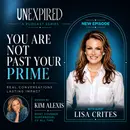


Being told to shower in a trash bag while recovering from a mastectomy became the unexpected starting point for one woman's invention.
In this episode of Unexpired, Kim Alexis sits down with Lisa Crites, a medical journalist, patented inventor, and author of Beautifully Unbroken. Lisa shares her journey through a stage-one breast cancer diagnosis, difficult surgeries, complications, and the recovery challenges that inspired her to create the Shower Shirt, a patented garment designed to help patients safely shower while managing surgical drains.
The conversation also explores grief, the importance of breast cancer awareness, the challenges women face in medical innovation, and Lisa's fight to have her invention recognized as a medical necessity.
Listen to discover how a deeply personal challenge led Lisa to create a practical solution for patients facing recovery.
00:00 - Welcome And Meet Lisa Kreitz
01:22 - Choosing Medical Journalism Early
06:28 - Going Back For Two Masters
08:49 - Losing Her Mother Suddenly
11:47 - Breast Cancer Shock And Decisions
22:16 - Drains Trash Bags And MRSA
32:50 - Patient Innovation Beats The System
37:35 - Winning The Patent And Helping Women
43:00 - Medicare Bureaucracy And Capitol Hill
48:18 - Writing Beautifully Unbroken To Give Back
52:23 - The Emotional Cost Of Telling The Story
59:13 - Legacy Hope And How To Connect
Welcome And Meet Lisa Kreitz
SPEAKER_00
Hi, I'm Kim Alexis.
SPEAKER_01
Today in Paris, Patri Kelly is showing his collection of spring clothes.
SPEAKER_00
Hi, I'm Kim Alexis with your ticket to adventure. I'm Kim Alexis, and I'm here in New York City. Got a great show coming up for you, so stay tuned.
SPEAKER_02
So I am here today with a medical journalist, an author, a patented inventor, and a survivor of breast cancer, Lisa Kreitz. Hi there, Lisa.
SPEAKER_03
Hello, Kim.
SPEAKER_02
So I um, yeah, you and I met through a mutual friend. And that was probably how long ago was that? Maybe six, seven years ago, something like that. But
SPEAKER_03
you encouraged me. At least it's in Palm Beach, I believe.
SPEAKER_02
Yes, yes. So you encouraged me a lot and helped me when I was in that. What do I do next? So very instrumental in that. And so your background is in journalism. How did you get there from being a farm girl? And how did you know you wanted to go into journalism and especially medical journalism?
SPEAKER_03
You know, from the time I was a little girl, I read medical articles: alternative wellness, hope, homeopathic, clinical, everything I could get a hold
Choosing Medical Journalism Early
SPEAKER_03
of. Reading medical articles. And my parents were like, you've got to be going into medicine. I said, no, no, no. I want to be a journalist, but I want to cover medical. I can tell you I have no idea, but it was just an interest from the beginning. You know, as a student in your younger years, some people love history, some love mathematics. I loved medical, which was very weird. You don't take medical classes in junior high or high school. A little bit of biology, which is something different. So when I started studying journalism at Maurice State University in Western Kentucky, which coincidentally I just did a couple of guest lectures there last Thursday to journalism students. So I've talked a lot about this. When I started studying journalism, at the time, there were a lot of niches in the newsrooms. You had the education reporter, you had the environmental reporter, you had the medical reporter, you know, and then as time went on, the technology reporters and so on. And my, even my professors were like, Lisa, if you're not going to study clinical, why do you want to cover it? I said, I don't know. But by the time I graduated from college, I felt like I had a BS in medical because I did take some medical classes. Uh, but again, it was it was all journalism. And I was very lucky, I'm going to be honest. I talked about this in the classroom at the university last week. When I got into news in my mid-20s, my goal was to work in a top 20 media market. I wanted to be in Orlando. I was not going to veer from Orlando. Right out of college, I worked on the Disney College program. So that put me in Orlando. So I started, you know, harassing news directors in the Orlando media market. I want to be a medical reporter. I want to be a medical reporter. And some of my uh friends that I had gone to college with who were older, out there covering fires, crimes, murders, and politics, they were like, at least you're not going to start in a top 20 media market. I said, You watch me. And I did. Uh, but I was lucky. I'm going to be very honest. I was very lucky.
SPEAKER_02
Part of that was your determination. And I think it was a gift that you knew at a very young age what you wanted to do. I did not. And I think a lot of people listening would be like, wow, that to me that's a gift.
SPEAKER_03
Well, thank you. Uh, because I I didn't, I I felt it was a little crazy at the time, but I just had that, I had a box. This is what I wanted to do. And I was not veering from the box, even when I was lifeguarding at Disney, uh, the college program, and doing some um assistant production work at MGM Studios. It had just opened that summer. So I was very lucky. Uh, a 24-hour news station started, channel 13, which was a CNN affiliate at the time. I sent my resume tape in, and I, in my resume cover, I said, I want to do medical journalism. That's what I want to do. I don't want to do fires, crimes, murders, and politics. And a nice lady by the name of Robin Smythe, I talk about her in my book actually, she was the news director and she said, I'm looking for a medical reporter. I'm looking for the original medical reporter of Channel 13, which of course they've been on the air forever now. I walked right in there and I was thrilled because I was able to do what I wanted to do. And it's interesting. I say this now. Medical journalism has carried me through 35 years of a career from the broadcast medical journalism into the print, into becoming a patented inventor of a class one medical device. And uh, so it's it's carried me through. I did media strategy within the hospital system as well. And my my goal on that was simple. I had been in the newsroom doing medical journalism TV for many years. And I thought, I've covered the clinical side, I've covered the human interest side, I've covered the regulatory. I want to learn the business side of healthcare. So luckily, I, you know, you can put things in the universe, I did. And a multi-hospital health system recruited me to handle all their media strategy because they were in all types of antitrust litigation. So, wow, that gave me an opportunity to then work in the corporate side of the medical industry, planning to go back into medical news. And then I went through breast cancer and my trajectory changed. But I still am very thankful to Robin Smythe, who hired me for that first medical job in journalism that has literally carried me through 35 years of medical journalism in a lot of different categories.
SPEAKER_02
Yeah, but it's you you had the opportunity, but you took that and ran with it. It sounds like you're always looking around and where can I go next? What can I do? What can I learn? I mean, you studied in Barcelona, you got your MBA in Barcelona.
Going Back For Two Masters
SPEAKER_02
Why? What made you go there?
SPEAKER_03
Well, let's say my undergrad in journalism, I wasn't the best of students. I mean, I I knew what I wanted to do, and I just wanted to get to Florida to work. So I always had some guilt. I was not the best students. Here, I had three brothers who were amazing students, and my parents were like, there, now there's Lisa. And I always had guilt because
SPEAKER_02
do you think your parents made you feel guilty? Or I guess no one can make you feel anything, but where'd they come from?
SPEAKER_03
Me, because I always knew I could do better.
SPEAKER_02
Okay.
SPEAKER_03
I I always knew I could do better. And so it was around 2015, I was like, I want to go back and get my master's. And my husband was like, why, why? Of course, he was on the downside of you know getting ready to to retire. And then in 2018, I applied um and I was accepted, and I decided to start in November 2019, coincidentally, right before COVID. So in the middle of COVID, I ended up with two masters, an MBA and then uh an MS and digital uh MBA, of course, master's business business administration. And then the MS was in digital marketing and e-commerce. And I loved studying. I loved it. Now, granted, the world was shut down. Um, you know, elective surgeries had stopped. Uh, my print medical pieces had wound down some. So I had all the time in the world to study. And I loved it because I did it for me. I didn't do it for my parents, I didn't do it profess for professors, I did it for me. Yes, I have
SPEAKER_02
to
SPEAKER_03
tell you something funny. One of my first classes, I think they gave me a B. And I, of course, was arguing with the professor. Why did you get my husband's like, please don't argue with the professor, Lisa? And uh, but I I loved studying in my master's, and um, it had nothing to do with medical, it was just something I wanted to do. And uh since that time, I actually have been accepted for a PhD program in philosophy. Um I already have
SPEAKER_02
all that, but yeah, I mean, I didn't realize your your uh your bachelor or um MBA came from so late on.
SPEAKER_03
Yes.
SPEAKER_02
So let's go back a little bit because I always like to do things in order.
Losing Her Mother Suddenly
SPEAKER_03
Sure.
SPEAKER_02
So how old were you when your mom died? And how did that affect you? Because your mom died suddenly, right?
SPEAKER_03
Yes, in a car accident. Um I was 34 years old and I had just gotten married, and I went on my honeymoon, I got back home and I had the flu, real good timing, and my brother called me the next day and said my mom had died in a car accident. So the last time I saw my mother was at my wedding
SPEAKER_02
when
SPEAKER_03
I was 34 years old. And so um, that's a tough one. And I've studied a lot about psychology since that time and uh have had clearly counseling on it, and they talk about traumatic deaths. My mother had just left the farm. Again, I grew up on a farm, I'm a Midwest farmer's daughter, and she had just left the farm to go into town. She had just turned 60 years old on December the 11th, and this was December the 19th, and just left the farm, and it was a mile and a half. And sadly, there's a big highway, big thoroughfare there through the Midwest. She crossed over and pulled out in front of a college student who was going home for Christmas break to visit his family. He T-boned her and she was ejected from the vehicle and it broke her collarbone. Then, coincidentally, my father drove up on the scene within 30 seconds. Drove up on the scene, had to identify her body on scene.
SPEAKER_02
Oh no.
SPEAKER_03
They were married for 42 years, and I write about that. I'm like, I'm not sure how someone can get in the headspace to do it, but but he did. I laugh about my dad. Of course, he passed in December, I believe, right before your family scenario as well. Um, he was half Archie Bunker, half John Wayne, strong as heck. And uh yeah, and he identified identified her. So that's been tough.
SPEAKER_02
Yeah,
SPEAKER_03
I've studied so much about this. Just like when my father passed away last December, he had been sick. He was 86 years old, and there were some complications, you know. My mother just passing away at 60 years old. I'm not so sure you ever get over that. It's changed me. It changed my outlook on life, it's changed so many things. Um, but like they say, you focus on the glass is half full versus half empty. And I've told myself for many years, at least I had my mother until I was 34. If I would have lost my mother when I was 15 years old, I wouldn't even know how to be a female. I wouldn't even know. And um, and it's been great. Even to this day, a lot of my mother's friends just wrapped their arms around me
SPEAKER_02
and
SPEAKER_03
became and became um motherly figures to me. So it's okay. And at least I had her until I was 34, but it changed, changed me. It really did.
SPEAKER_02
Yeah, and then fairly quickly after that was more bad news.
Breast Cancer Shock And Decisions
SPEAKER_03
Correct.
SPEAKER_02
Yeah. So how long after then did you find out you had breast cancer?
SPEAKER_03
It was uh within uh quickly. I I went through, unfortunately, I went through a divorce because my marriage just could not withstand me, could not withstand the grieving and the trauma from my mother's death. That marriage lasted uh four years. So I had that trauma going through a divorce, and then it was just a couple years later I was diagnosed with breast cancer.
SPEAKER_02
Wow, yeah. So you were hit with a lot of life changes all at a in a short period of time.
SPEAKER_03
Yes, it they say it comes in threes, and of course, there's all kinds of controversy about, you know, everybody has cancer cells and it depends on our body and our lifestyle. I truly believe that everything I went through in such a short period of time, the my mom's death, which was tough, so tough. My father remarried quickly, divorce, and I often wonder, I don't know, but I often wonder if that brought on my breast cancer because of all the stress. And and and you know, you can imagine just mental grieving, psychological grieving. Um, I saw a grief counselor eight months after my mother died, and this did help me. She said you can't start the grieving and mourning process until you're over being traumatized. And that can take a year before you can even start grieving. So you can you can imagine the years. And then, of course, being diagnosed with breast cancer, it was trauma all over because I did not see that coming. Um, I had no family history of breast cancer. I exercise, I eat right, I hardly drink. I mean, of all my friends drink like fish. I have always been so healthy, not all of them. I've always been so healthy.
SPEAKER_02
So, what does what go through your mind like it's not fair
SPEAKER_03
in a way? It absolutely wasn't fair. I was a very angry person. I was still angry because my mother had died. I had not dealt with that, and even though I tried to, and then breast cancer. And one thing that was good about this, because here I was in the medical industry, I was working at the corporate office of a hospital system. It was stage one. So I'm like, okay, I got this. This is not fair. I did not see this coming, but I have this. Because at stage one, we can we can handle this. And so being the kind of aggressive person that I am, I'm a bit aggressive, I think, because I grew up with three brothers. I was like, let's just do a bilateral mastectomy, let's just take these off. Uh, because I read, again, even as a journalist, I had read and and interviewed so many women that had breast cancer, and then the breast cancer came back. I was like, we're just gonna take both of them off quickly. And we did, and I'm so glad I did, because there was already breast cancer in the second breast. So when I say I was stage one in the right breast where they found the cancer, I was like, this is easy. Stage one, it's still in the ducts. It's called the DCIS, ductal carcinoma inside two, it's still in the ducts, it's not spread. But when they uh basically did the bilateral mastectomy, there was already uh breast cancer in the second breast, and it was a lobular carcinoma, which is a very aggressive form of breast cancer, and it had not shown up on the mammogram yet.
SPEAKER_02
Right. So that's that was my question. Like, how did that not show up? But the one on your other breast did.
SPEAKER_03
It just hadn't, I guess, gotten large enough to show up. And you know it's interesting for me, and I say this a lot knowledge is power, knowledge is power, but when you don't have that knowledge, I could have easily just had a lumbectomy. In fact, the the oncologist gave me two options a lumbectomy, chemo-based radiation for five years, or bilateral mastectomy with no meds or anything. And uh, if I'd done the lumpectomy, I would have had to have taken tamoxifen as well. And I just I didn't want chemotherapy running through my veins. I didn't want radiation, I didn't want medication, just take them off. And I'm so glad I did because here we go back to the knowledge is power. When I talked to the doctor, Dr. O'Lin was his name. In fact, I mentioned him in the book, and uh Dr. O'Lin said, Lisa, it's gone. It's gone. Why are you so upset? And I said, I didn't know. This is why I'm upset. Knowledge is power. And but I I did the right thing because there I would have been right back in surgery, right back. And who knows? By the time they found it on mammogram, Kim, it could have been stage four.
SPEAKER_02
Right. I mean, yeah, that makes it scary for women who may not have had a mammogram recently, or now there's new tests also, like a thermo thermal, right? I think they're using some different testing too.
SPEAKER_03
All kinds of things. And what is fascinating now is all the genetic testing. Now, at the time I had brack analysis one and two, I was negative for cervical and very I'm sorry.
SPEAKER_02
What's what's brack analysis? You're being medical now.
SPEAKER_03
Oh, I'm so sorry. Okay, I'm sorry. Brack analysis is genetic testing, where in fact it this is really interesting, uh, and we'll get to the shower shirt, but I would sell a lot of shower shirts to the Ashkenazi Jewish population because most of them are brack positive, BRAC one, brac two positive. And it's a genetic test. Luckily, I was not BRAC positive, so there was no reason that they thought I would have ovarian or cervical cancer. But if you are positive genetically, BRAC one, BRAC two, they normally go ahead and do um the ovarian hysterectomy, ovarian removal, and all that, because there's a big percent that you're gonna also have ovarian cancer and cervical cancer. And so that's
SPEAKER_02
identifying genes has them cutting out organs just because that's
SPEAKER_03
prophylactically. It's a people have prophylactic it is, but people have prophylactic uh mastectomies all the time. Angelina Joe Jolie did, uh, you know, and she wrote a big uh guest column in I think it was the Washington Post, I don't or New York Times, I don't want to misspeak, but she had a prophylactic bilateral mastectomy because she was BRAC positive. So a lot of genetics, I mean that's what's fantastic about the medical world. You can see a crystal ball, you can see in that crystal ball as to genetically what you're predisposed to do. So it's here we go, it's knowledge. Of course, a lot of people don't want to do prophylactic um uh bilateral mastectomies or um hysterectomies. I don't know. I luckily I was negative in the BRAC testing.
SPEAKER_02
Yeah, I mean you could never prove that you were right or wrong because you've taken that out of the equation.
SPEAKER_03
Absolutely. So
SPEAKER_02
I guess it's whatever brings you peace, and everybody you know listening to this has to make their own decisions. So um I don't know. There's so many people struggling with different cancers, and so I think as you said, knowledge is power, and how much do you really want to know? And then you can read about what others may have, and you can start to become worried, and you don't want that either. You have to figure out what's best for you.
SPEAKER_03
Well, for me, having the bilateral mastectomy was peace.
SPEAKER_02
Yes.
SPEAKER_03
This is something that, and again, the little minds, you know, we create things in our minds, true or not. I don't know if I manifested it, but from the time I was a little girl, I would have dreams that my mother would die tragically. It was never in a car accident, it was just tragically. And from the time I was a little girl, I dreamt that I would have breast cancer.
SPEAKER_02
Oh my goodness.
SPEAKER_03
Yes. You're either
SPEAKER_02
very prophetic or
SPEAKER_03
a little crazy. No.
SPEAKER_02
Well, but that did help you understand that you wanted to be a medical journalist, but
SPEAKER_03
could have been. You
SPEAKER_02
also learned other things too. So yeah.
SPEAKER_03
But when I was diagnosed with breast cancer, and again, you know, everybody has a lot of stories in the clinical protocol. But when he called me, it this was interesting. I had just done a story about self-breast exams. You know, everybody knows to do self-breast exams.
SPEAKER_02
Had you had the surgery yet, or was this when you just found out?
SPEAKER_03
This is how I found, this is how I found out I had breast cancer. So I uh self-breast exams, I had done a story on that. And the doctor said something interesting because I always thought, how do you test? How do you check? It's weird. Touching yourself, you know. And uh he said, Lisa, you need to test. He says, then when you go back and feel again, if anything's different. Well, that's exactly what happened was one day I felt, I'm like, well, that feels different. So I went directly to uh my OBGYN and she said, I don't like the way that feels. So they immediately did an ultrasound and then did a biopsy. And uh they came back, they did the biopsy and they said, We'll see you next week. No problem. They called and said, We want to see you tomorrow. So I was like, Okay, well, that's a red flag. And uh the radiologist says, We're not concerned about the tumor, or it was a it was a cyst, it was not a tumor, a cyst. What we're concerned about is what is behind the cyst, and that's where the cancer was. And um, so I I just in my mind, and that's exactly what I said to myself, I said, it's my turn. It's my turn to have breast cancer. I knew it from the time I was a little girl. And it's but like I said, knowledge is power, and I quickly said, let's do a bilateral mastoctomy. In fact, this is interesting because when I've done speaking engagements on becoming a patented inventor because of all this,
SPEAKER_02
which we'll get into in a second.
SPEAKER_03
Patients ask me what would you do? What would you do? And I said, I'm not telling you what to do, I'm telling you what I did. Uh and this made that gave you said peace. That gave me peace to go ahead and do a bilateral. But I did ask my oncologist. I said, if I was your mother, This is a great question for doctors. If I was your mother or your sister or your daughter, what would you tell me to do? And he said, exactly what you're thinking about doing. I said, okay. And that's that's that's what I did. And I didn't look back.
SPEAKER_02
Um so
Drains Trash Bags And MRSA
SPEAKER_02
talk about. I mean, first of all, it went from one surgery to many, but you your first surgery, then you come home and talk about the trash bag and having to deal with the showers and how you got to your patent from a patient to a patent.
SPEAKER_03
Okay. I like that. Um yes, patient to patent. That's cool. I like that. I may use that cancel.
SPEAKER_02
Thank you. Thank you.
SPEAKER_03
Very good. So I was sitting in um, you know, you usually, if you have a bilateral mastectomy, you're in the hospital for at least a couple days. And then you leave. Um, you leave. I wish I had those drains with me because I've done a lot of interviews lately. I have these drains, they're called JP Blake drains, and they're sutured into your armpit. They're four feet long, they come down to your knees. And so I'm after being discharged from the hospital, I went to the doctor the following day. They look at everything. And the reason for these JP Blake drains, it's pulling fluid from the body. Clearly, uh a mastectomy surgery is about an eight-hour surgery for both breasts. And uh, so it's traumatic to the to the chest. And they want to pull the fluid out through these drains to decrease the chances of lymphedema. You know what lymphedema is, right? When
SPEAKER_02
yes, but you can tell the audience.
SPEAKER_03
Okay. Oftentimes when women have too much fluid buildup, where lymph nodes uh aren't exactly working correctly. And anyway, it's fluid buildup, is what it is. And that's why oftentimes you see lymphedema sleeves with breast cancer patients. So it helps decrease the chances of lymphedema. So I said to my doctor, I said, Oh, when can I shower? I stink. And uh he said, Oh, you can't shower until those drains are removed. And and there were, again, two in each armpit, they go down to your knees. And I said, Okay, uh, how long will that be? And he said, two to three weeks. I said, Okay. So I went home showering after mastectomy, showering with post-surgical JP Blake drains, and nothing existed. I laugh. If you want to find a contraption to protect your dog while you're showering or you're bathing it, there's all kinds of contraptions, but there was nothing for breast cancer mastectomy patients. So I reached out to a lot of the doctors I had known for years as a medical journalist, and of course, uh patients who had gone through breast cancer. And I said, What did you shower in? Every one of them said, Oh, use a trash bag as if it was acceptable. Oh, just use a trash bag and you know, um, tape it with duct tape. And I was like, Okay, that doesn't sound uh pleasing, but okay. So I did, and I was so frustrated. Now I'm a feminist, my father was domineering, three brothers from the farm, and I was like, this is ridiculous. Women have been going through mastectomy surgeries for 80 plus years in this country, and this is the best the breast cancer industry, the medical industry can do. So, one thing that was very important as far as my breast cancer journey, initially when I said I had stage one, this will be simple. Unfortunately, it was not simple for me. It was anything but I ended up with two hospital-acquired infections, four months of hyperbaric oxygen treatments, and seven surgeries in a year and a half because of that hospital-acquired infection, which was MERSA. So traditionally, now clinical protocol can change depending on the patient, but traditionally they remove the breast, they put tissue expanders in. It just kind of holds a socket because you no longer have breast tissue. Holds a socket that's
SPEAKER_02
they didn't put in um
SPEAKER_03
implants, not yet.
SPEAKER_02
Implants. I'm thinking fake. Yep, yes, implants. They didn't do that right away. Do they do that now right away? I thought I heard someone recently say that it was all one thing.
SPEAKER_03
It's really interesting. You could have 10 breast cancer patients, and there could be 10 different clinical protocols. I think some of it has to do with the size of the patient. There's sometimes they will take muscle and fat off the back and rebuild the breast. I mean, they they do all kinds of things, but they felt for me that the tissue expanders would be the best. So they put two tissue expanders in, and within just a few days, my left tissue expander became infected. I mean, like 72 hours. And I remember going back to these drains that can't get wet, um, they started filling up with a lot of infection. So I went to the emergency department and my white blood count was like 13,000. And they said you would be sepsis, which is basically an infection in your blood, if you hadn't have had those, that these drains. So I was lucky, knock on wood on that one. So they had to remove the tissue expander, this one because it was it was so infected with MERSA. So then they have to let that sit for six months. I went back in so they could rebuild the right side because there was no problem there. They went back in on the left side a few months later, another infection. And uh, so that's why all and I went in hyperbaric oxygen treatments for four months to try to get the wounds to heal. And my doctor, you know, like all doctors, they want to keep you alive, they want to keep you uninfected. And he said, Lisa, if you get one more infection, you will live the rest of your life with no breasts. This has become so complicated. And it wasn't my fault, it was a hospital-acquired infection. But that's the downside of mastectomy and reconstruction. As a good friend of mine who is a doctor, Dr. Imran and Mami, he has a breast center. He says, Lisa, he says, that's the problem with infections and breast cancer patients, is if you get an infection, it's devastating to the process. And 5 to 29% of all breast cancer surgery patients get infections. So getting to the point about the trash bag and the drains,
SPEAKER_02
I was
SPEAKER_03
in and out of the hospital so many times with these drains, I was in and out of the shower with a trash bag. And one night I was just, of course, I was sick, infected, and so frustrated. I kept hearing this voice, Lisa, create a water-resistant garment for chest surgery patients. I was like, no, I'm infected. I am quite annoyed and frustrated. Created water-resistant garment for chest surgery patients. So I reached out. I can tell you quickly what happened. What happened is one day I was like, you quit feeling sorry for yourself. You quit worrying about not ever having breasts the rest of your life. You do something positive for these future breast cancer patients. This isn't about you. You've already dealt with this. You create a product for future patients, and that was a pivot. I know it was a cathartic pivot to get through breast cancer. I don't think I've ever really dealt with breast cancer. I dealt with it by pivoting to create a product for future patients. So that's when I went to work. That's when I was no longer upset. That's when I was no longer mad about sharing in a plastic trash bag. So I reached out to all those doctors, said, I'm going to create a product. You have to help me. Sure, sure. And what was fascinating, we, of course, the inception of it started with breast cancer. But they were like, Lisa, rotator cuff patients. Lisa, end-stage renal disease. They have hemodialysis catheters for those in dialysis treatment, wound vaccine, infusion pumps, cardiac patients, because they have these vests that have technology in them. My father used the shower shirt once we were on the market to change his battery out of his pacemaker. So there were all these patient populations that could use a product like this. So I created a little mini medical advisory board with all these doctors. And I said, I'm going to bring this product to market in a year and a half. We're going to go on the market in October 2011. Now I was diagnosed with breast cancer in June 2009. And they said, you can't bring it on the market in a year and a half. I said, you watch me. And I did.
SPEAKER_02
I just love people trying to tell you what to do and then you just proclaiming stuff.
SPEAKER_03
Yes. I was a maniac. I became this cathartic maniac to get this product on the market. And when I'm a very spiritual person, we've discussed that briefly a while back. And everything just fell in line. It was not easy, it was hard, but it fell in line. I had a friend who had a friend who was a manufacturer or a manufacturing liaison. My aunt and my cousin created a prototype, and not with all the bells and whistles, the basic prototype out of a beauty salon cake. We took that prototype, sent it to the manufacturer. Next thing you know, I have 12 prototypes. I gave them to all my doctors, and they started having patients use them. And I mean, we just had all this wonderful feedback. A quick story. There was a firefighter, a local firefighter, female. She came and she says, You know what I use to run into burning buildings? I said, What? She says, a fire jacket with one strip of velcro. We need one strip of velcro around the shower shirt. And that's when I learned you learn so much from patients who are using the product. So uh we got the shower shirt on the market in a year and a half. As a medical journalist, I knew producers, editors would be looking for breast cancer stories. So I knew the story would sell. Medical reporter becomes breast cancer survivor, becomes patented inventor of a medical device. Boom. And it lended so much credibility to our product. You know, it's interesting. I never marketed the product. We never traditionally marketed the shower shirt product. We just put it on the in the universe and it started selling. Because guess what? It's a heck of a lot better than a trash bag and duct tape. And so I don't want to laugh and say this is all easy. It was not easy. No. We got it. And it's sad
SPEAKER_02
that it needs to be used. But if you do have this problem and you need to use something, use something that's wonderful and right that you invented versus a trash bag.
SPEAKER_03
Exactly. But I still go, you know, it's interesting. Um, and I usually don't make notes when I talk about it because you know I lived it for so long. But this was really interesting.
Patient Innovation Beats The System
SPEAKER_03
Uh, in 2015, we won a Patient Innovation Award. We've gotten a lot of awards, you know, patient innovation, a patient who created a product for future patients. And the Patient Innovation Advisory Board, and now I was there in Lisbon, Portugal for this award. And it was really cool because there were US-based academia there. Yale, Harvard, Columbia, and of course from universities across the across Europe. Dr. Eric Von Hippel, in fact, I wrote a guest column about this. He asked the 600 professors in the audience, why did Lisa Kreitz create this product and the medical industry didn't? And there were no, there was dead silence. He said, I'll tell you, Lisa Kreitz cared about the patients. The medical industry cared about the numbers. So because you think about this,
SPEAKER_02
yeah,
SPEAKER_03
and you've you've covered medical stuff for years, alternative homeopathic. I mean, you are so into wellness. We know the medical industry is a business. I mean, it's it's it's a numbers game. The pharmaceutical is a business. I mean, we need evidence-based medicine, we need meds. Uh, but sometimes it's not about the patients, it's about the business and the numbers side. So I went up to Dr. Von Hippel. I said, thank you for answering this question. Because I I was always confused. I just knew this is what I was supposed to do. And I said, Can I quote you? And um in a in a guest column. And he said, Absolutely. So I did a guest column that innovation doesn't always come from industry.
SPEAKER_02
I mean, you also kind of because you were a patient, you focused on the dignity and the importance of a shower and how that well that makes you feel after a surgery, right? So they're telling you, okay, well, this is better for you because you have the surgery. Well, okay, but I don't feel good. I feel better when I do take a shower. And I do feel better or more dignified when I have something better than a trash bag on.
SPEAKER_03
Right. You know, that that's a great question, Kim, because I say this a lot. If women can bathe, people, people, it doesn't matter. If we can shower safely, we're going to feel better psychologically and emotionally. And that is something that is gravely needed after a breast cancer diagnosis and obviously, you know, surgery and amputation of the breasts. And this was interesting when I was uh at the college the other day talking, and the professor said, Stop right there. I made a joke that I became emotionally connected to the trash bag when I was showering in it over that year and a half. Because remember, I had so many surgeries and so many drains, it wasn't one and done. It was months after months after months, those darn drains had to be protected. And my surgeon would say, Remember, you have to protect those drains. I'm like, Yes, I know that. I've got another prototype to test. So, but before those prototypes, I became emotionally connected to that, to that trash bag. It's crazy. Exactly. And I would put that trash bag back in the shower why I didn't switch it out. That that's beside the point. I became emotionally connected in that trash bag because I would put it on, it would make me feel better. It didn't work well. It's flailing with the tap water, and you know, the drains were flailing. But in my mind, I was already trying, you know, to create the prototypes, and I kept thinking, I'm emotionally connected to this product. I want future breast cancer patients to become emotionally connected in the shower shirt.
SPEAKER_02
Yes. Because
SPEAKER_03
it's something you can hang on to to make, again, you feel better physically, you're going to feel better psychologically and emotionally. But when I said that, the prep professor said, Lisa, that's fascinating. And I said, Well, that's what the product was all about was for future patients to get through surgery much better than I did. And if they can lean on hope, that's that's what we need after a breast cancer diagnosis or any illness. And uh it's kind of interesting to this day. Uh the shower shirt is still considered the first and only patented water-resistant garment for chest surgery patients who have um post-surgical drains, hemodialysis catheters, and uh infusion pumps and ports, because we really sold a lot of shower shirts to chemotherapy patients that had the open ports. So and we and again, we got our patent also in record time within a year and three months.
Winning The Patent And Helping Women
SPEAKER_03
A quick story on that. Um, we we applied for our patent, uh, like everybody does, and within a year they turned us down. So they said I was infringing on 72 patent citations, meaning citing 72 existing patents. And so I sat down on my uh office floor and I had become pretty good friends with the patent attorney at the time. And I said, look, I want to do as much of this as I can myself. As a journalist, I can do the research. I want to keep the cost down because we were spending a fortune bringing a product to market. And so I sat every day, every night, 72 citations. We applied again and we got our patent in three weeks. And so
SPEAKER_02
you did because you did so much research and you knew how to reword it?
SPEAKER_03
Not as much. It was first of all, I found that the US Patent, U.S. Patent and Trademark Office, United States Patent and Trademark Office, US PTO, they make you fight for the patents, number one. It's like 99.5% of all patent applications are denied the first time around. So I learned that. So it wasn't unusual to be denied.
SPEAKER_02
Uh-huh.
SPEAKER_03
And it was a bit unusual to have 72 infringements. So those infringements, there was a leotard, there was a limb covering, um, there was a gown. And none of these, my my shower shirt didn't even touch some of those existing patents. And something that's very important for the audience, just because, let's just say you have an idea, just because a product is not on the market doesn't mean there's not a patent intellectual property that doesn't exist within the USPTO. We knew there wasn't a product on the market. Clearly, myself and 300 plus thousand women would be diagnosed, you know, diagnosed every year, would be showering in something besides a trash bag. So we knew it wasn't on the market, but that didn't mean it didn't exist. But every citation I studied, there was no comparison. So we did the application again and we got our patent in three weeks. And this is a funny story. Uh, my patent attorney, his name is Christopher Brody, great guy. He talks really slow. I thought he was from Texas. And uh by this time I had, you know, talked to him over a year. He called me, Lisa, this is your lucky day. And I'm like, speed up, you're too expensive to talk so slow. And uh he's from Virginia, and uh, so he says, You got your patent for design and method of use, which is a gold standard. And I said, Oh my goodness. What I didn't know at the time, so we were off and running. We got our patent, we were on the market. So you felt great. Yes, it was it was a great call. Uh, what I didn't know at the time, only 7% of women in the United States owned patents. 93% were owned by men. And now, a few years later, 13% of women in the U.S. own patents, and the other percent is owned by men. But there's a huge disparaging difference between male and female patent holders, clearly, in this country. And my patent was only 2.7% of women in the U.S. own a sole patent. The majority of patents that women are on are um teen patents. So I've I have loved this. You know, I've loved helping women shower, clearly. I've um I loved getting a patent, but what I've really loved is presenting for the United States patent and trademark office to support other women who are looking at innovation to become patent holders. Because again, here we go. I'm a feminist through and through. And I I've loved being connected to the USPTO and speaking on on patient innovation for women.
SPEAKER_02
Wow. And I love it. You turned something that was really bad into something that was good in ways that you never possibly imagined.
SPEAKER_03
Right. Uh, my friend says it best you turn lemons into lemonade. You know, that's my goal. Uh, I mean, that's that's what it is. And it and it's I mean,
SPEAKER_02
you went farther than that because you had to then fight for it to be affordable and to be approved by Medicare. So, I mean, you've become a big champion of helping all other women that go through this process in so many ways.
SPEAKER_03
Yes, and I because I can, if that makes sense. Um, I grew up in a philanthropic home. My father was on the school board, uh, and just everything was philanthropy, philanthropy in my family, really, because we could. And, you know, there were years with the shower short. When we first went on the market, my first order was 500 units. I was like, well, this is cool. My second order was 200 units. And and I did. Uh, it was interesting when we went to the very first conference to bring it on the market to, I had a line of people out the door, clinicians, nurses, doctors, and they said, we have been dealing with patients not having a product to shower in for years and years. I came to this conference just to see this product. Getting the shower shirt on the market was not that difficult. Um, you know, oftentimes you talk to business people and they were like, getting it on the market was awful. Getting it on the market was not hard. What became hard was bureaucracy.
SPEAKER_02
Yeah.
Medicare Bureaucracy And Capitol Hill
SPEAKER_02
Okay.
SPEAKER_03
Because every clinician would say, What's the hick pick code? It's called healthcare common procedural coding. Every time you go to the doctor or you get a shot or anything, they will code. Kim, hick pick code, you know, and then they bill your insurance. So everybody kept saying, What's your hick pick code? I don't have one. And um, so we had to fight for a hick pick code. I spoke on Capitol Hill because they kept saying the shower shirt was a convenience item. Um, and so remember the whole process of showering in a trash bag to protect your surgical drain sites. One thing I didn't mention earlier when I asked the doctor, well, why do I have to protect them? Well, Lisa, what comes out of the tap water is not sterile. There's toxins, bacteria, fungus, and that can increase your chances of a waterborne illness. This is why we drink uh filtered water every day. There's pathogens, bacteria, In tap water. So I'm like, okay. So thus the showering in a trash bag. So that was the goal again to create a product. So when I started applying for the HICPI code to get approved for Medicare, Medicare is the gold standard. And then you can get insurance coverage after that. They kept saying, well, this is a convenience item, not a medical necessity. And I said, How can a product that is designed to help decrease the chances of waterborne illnesses in chest surgery, patients, specifically breast cancer, be a convenience item? It's a convenience. So filed again. The second time they asked me to speak on Capitol Hill. Now, this is probably something I should have run by you before we started taping, but you can always edit it out. So this was very interesting. I was working with a team of attorneys in Washington, D.C. on hick pic coating. You know, you can imagine it's an animal. And they told me right before I spoke that week before, they said, Lisa, let me give you a little few nuggets on your speech. So what is that? They still want to say your shower shirt is a convenience item, not a medical necessity. But Medicare approved penile implants as medical necessities and not convenience items. Oh, don't tell me that right before I'm speaking on Capitol Hill. So uh should I run this in front of you before? And so I
SPEAKER_02
did you run that through into your speech on Capitol Hill?
SPEAKER_03
Oh, yes, I did. Yes. And I spoke at CBS in Washington, DC the day after uh because it was and it was breast cancer awareness month as well. So here we go, looking for breast cancer stories. And I explained the shower shirt by this time we had been on the market doing well. And I said, you know, it started for breast cancer patients, but now it's for chest surgery. It's a it's a uh a protective garment for chest surgery patients. And so I said, and can you believe this? They're still calling it a convenience item when it helps decrease the chances of a waterborne illness in chest surgery patients, not just breast cancer, chest surgery, but penile implants were approved by Medicare and insurance companies as a medical necessity and not a convenience item. So I, by the way, I did run that by the anchor at CBS in Washington that morning, and she's like, go for it. Now, the committee didn't do that. So I looked at each one of them, and of course, this was also crazy, but you know, there's statistics. Based on the American Hospital Association, again, five to 29% of all breast cancer surgery patients get infections for one reason or another. It could be water, you know, it could be MRSA like me. But like Dr. Amami always says, you get an infection, it's devastating. But there's costs behind it as well. Um, and when I went through all this, my hospital costs were about a quarter of a million dollars. Now, granted, I had insurance and I worked with the hospital system. But in that American Hospital Association study, we talked about every breast cancer patient that went back in the hospital. It was a minimum. I mean, this was 15 years ago, Kim, $10,000 just to get in the hospital to take care of an infection, not to mention all the complications that came from that.
SPEAKER_02
So when I met
SPEAKER_03
the HIC PIC committee on DC, I'm like, I looked at every one of them. There were eight men and five women. Every man. I said, Would you want your mother, your sister, your daughter showering in a plastic trash bag after stamp mutation? Of course, they just got all nervous and looked away. And uh, and then of course I brought up uh the penile implants. So it was interesting. And the women, I tell you, you can pick it up every time. The men are looking at me like, don't look at me, they're looking away. And the women were smiling like you go get them. You get them.
SPEAKER_02
Like me. They do. I was
SPEAKER_03
fighting for them. I was fighting for them, I was fighting for you. I was fighting for every female.
SPEAKER_02
Yes, exactly. Exactly. Yeah.
Writing Beautifully Unbroken To Give Back
SPEAKER_02
So let's get to your book.
SPEAKER_03
Okay. Uh,
SPEAKER_02
do you have a copy of it with you?
SPEAKER_03
Yes. Oh, we've got some. That's the
SPEAKER_02
little glare, tip it a little.
SPEAKER_03
Uh, tip there is that's a little bigger.
SPEAKER_02
Yes.
SPEAKER_03
So it's beautifully unbroken.
SPEAKER_02
So what made you write this?
SPEAKER_03
Um, well, I don't know. Except, no, in seriousness. Um, I had worked with a team last summer, and it was a Wikipedia page, part of patient innovation. And when they credentialed everything, uh, they reached out and they said, You should write a book. I said, I don't want to write a book. And they said, Lisa, we've studied your speaking engagements as a patented inventor. You know, you're one of a few female patent inventors. We've studied your blogging and a lot of the media features. They said, You need to write a book. And I said, No, I don't want to write a book. And um, I tell you, I admire people that write books. And so, uh, and anyway, they came back with an outline. It was about a seven-chapter outline on how they felt the book should evolve. And of course, I cried all the way through it, and a lot of it was about my mother's death because I talked about that in my speaking engagements, primarily that I was in the same headspace. I was overwhelmed and traumatized when my mother died, the same as having breast cancer. You just didn't see that coming, and you're traumatized. So I cried all the way through that outline and I finally acquiesced, and for two reasons. Number one was with the shower shirt, I always wanted to create a foundation. I always thought I wanted to create a foundation to give shower shirts away to women who couldn't afford them, but I never could because hosting a class one medical device is expensive. A patented class one medical device that's registered with the FDA, it's very expensive, product liability insurance. So I never could. So I told them, I said, okay, I'll write the book for two reasons. Number one, I write it for the same reason I invented the shower shirt. And that's to help patients or help people who are going through what I already have. So that was the reason I wrote it. And number two, to create a foundation or create a philanthropic mission from the book. So proceeds from each book go to breast cancer support groups or nonprofits who support breast cancer patients. So it's all it's almost become full circle as to what I wanted to do the first time around. I couldn't. So I am the second time around. And we have already given money to a Florida-based breast cancer group, Ohio-based breast cancer group, and we just had a fundraiser in Missouri where I grew up, close to my farm. And uh, so yes, so it's full circle, seriously. But that's why I decided to write it. I never cared about being an author. Kim, I know you're an author. I I laughed for many years and said I'm an accidental inventor, and I've always believed that. I felt God put me in a position, yeah, she's crazy enough to do this. And uh now I'm not only an accidental uh author or an inventor, now I'm an accidental author. And I felt that this was presented to me in a way, and I agreed to do it for the same reason I created the shower shirt, and that was to help people. And so uh, but I can tell you I knew nothing about the literary world, and I'm learning a lot. Uh, but I'm blessed, I was blessed to have publishers approach me to write the book. And like I said, I told my husband, I said, I don't want to write a book. And then I finally said, Okay, I'll write a book. And I was immersed in a manuscript for seven months, so I'm finally coming out of my cave. We published in May, the end of May, and we were very lucky. Uh, we hit Amazon bestseller within five days, and we even won a literary award for a memoir. So I I want the book to help as many people as
The Emotional Cost Of Telling The Story
SPEAKER_02
did it help you when you wrote it. Was there uh tapping into something or learning why you did something? I mean, because it has to help other people, but I think it this journey also would help you.
SPEAKER_03
You're such a natural in your interviews. That's such a perfect question because it surprised me. It it it it heavily affected me. I want to say negatively. Um, and I've read since that, and I've talked to a few of my friends. Thank goodness I have psychology friends, and I said I what I did was unpack 24 years of a lot of luggage and lived it every day, day in, day out. The publishers were Lisa, where's chapter one, two, three, four? Where is this? Are you not done with this yet? I'm you know what I'm talking about. And I was so focused on writing and and and and reliving, trying to make it as authentic as possible. What I really did was relive it. And I I'm gonna be honest, but this podcast are supposed to be authentic, and I consider you a friend. I went into a depression after we published in May. I went through and I didn't understand it. So many of my friends, are you excited? You're an Amazon bestseller, and I would cry. I would be like, I don't know, I'm so tired. And uh I was sad. I'm great now. I'm great now. But I think Well,
SPEAKER_02
you poured you poured everything into your book, right? You you were raw. I think it was you open yourself and you're raw. Some people don't do that. I mean, in my business, we had to learn at a young age to do that. So I think that's what it was was that you just reopened the wound and tried to learn why did I feel this way? Why did I go through this, right?
SPEAKER_03
Absolutely. I ripped every, you know, band-aid off that had been there for years, going back to my mother's death, living it, reliving it, um, going through newspaper clips when my mother died, just so many things. But I can tell you the bit I knew I had never really dealt with my mother's death. I just think there's certain things you just don't get over. But either way, what I have learned and experienced, I want to help other motherless daughters who are going through, you know,
SPEAKER_02
did the the teenager, was it a teenager you said that T-boned your mom? Did that person live that killed your mother?
SPEAKER_03
He did. Yes, he absolutely did. And our family reached out to him, and we just felt, you know, my mother pulled out in front of him. It was her fault. It was a horrible gray Midwest day, and uh, you know, overcast, and she just didn't see him. And he was uh driving a small silver car. And so
SPEAKER_02
these silver cars, I find they disappear also.
SPEAKER_03
They do what
SPEAKER_02
they should meet really ban that color in my book. I
SPEAKER_03
would agree.
SPEAKER_02
have to be a good idea. Sometimes
SPEAKER_03
that's exactly what happened. But one thing that surprised me, I did in looking back hindsight's 2020, we know that. I knew that my cathartic project to get through breast cancer was the shower shirt. I knew that. And I'd lived the shower shirt for many years, and I've met amazing people because of it. And I'm blessed, I would do it all over again. But I don't think I realized that I had not gone through the emotional aspect of breast cancer until I wrote that book.
SPEAKER_02
And
SPEAKER_03
then I'm like, I thought I had gone through this. I thought I had um I thought I was emotionally healed from the breast cancer, but no, I've spent years and years helping other breast cancer patients. So, you know, it's interesting. I told my uh husband not too long ago, I said, I need to go back and read my own book. Because I mean
SPEAKER_02
you'll be amazed, you'll be like, wow, I wrote that? Huh? Right. That's pretty good.
SPEAKER_03
So many of my friends who lived a lot of this through me and with me, through me, with me, and held my hand. And they said, Lisa, your book is about as authentic as it can be because we lived it with you. And that was, you know, there are certain things in our mind we even brought out.
SPEAKER_02
Yeah, that's a compliment though. I yeah,
SPEAKER_03
I felt it was too. And I was like, thank you, thank you, because chapter 18, you know, I tried to be as authentic as possible and it was tough, and we rewrote it several times. And um, but I like I said, I'm great now. I didn't see that coming. I didn't see after we published that my mind, my psyche was going to dive. Part of it's probably being tired and exhaustion and book tours and stuff like that. But there was some psychology there that I had not dealt with. And, you know, they do say from journaling, I don't know if you journal or have a diary, they talk about the cathartic aspect of writing things. And I blogged for five years after uh breast cancer. I blogged breast cancer, I blogged my idea, I blogged the the, you know, writing on a nepkin, what I thought the shower shirt might look like. I blogged a lot for five years, but since that time, I've not blogged at all. So when yeah, and so when when the book, when I started writing the book, it's like, okay, I could lean back on my blogging for certain things that first five years, but after that, I hadn't blogged. But a lot of the stuff had been documented from you know, awards and different things like that. So um it's a journey, you know. I I think when we're young
SPEAKER_02
well, what's next for you in your journey?
SPEAKER_03
Well, let me tell you, not another book.
SPEAKER_02
There you go. Hey, it's good to know what you do and don't like to do, or that was just one and done, like you've said it all. It's one and
SPEAKER_03
done. I think for me, um, I I think that I mentioned earlier I'm a PhD candidate. Um, I I and that there's something about the dissertation that's which has already been accepted, which will be the disparaging differences between male and female patent holders. So I do want to get through that, but I am not in any hurry. It's been a whirlwind of a year. Um, I'm not sure what's next. I do still want to stand on that platform uh in hopes of you know the book helping, whether it be future patients, there's an excerpt in the book that I talk about, and I can't can't say it exactly, but the reason besides writing the book to help people, which was the same reason I created the shower shirt and the philanthropic portion, I there's an excerpt in the book I talk about. If this book can help one motherless daughter, it was worth writing. If this book can help an entrepreneur realize that their idea could become meaningful for other people, then every you know, page was worth writing.
Legacy Hope And How To Connect
SPEAKER_03
If it can help a breast cancer patient feel less alone, if it can help any cancer patient better get through the trauma of complications, then every page was worth writing. And you know, there are those days, and we know we have stressful days. One one day I said to my husband, I said, I've got to get back to the reason I bought the book. Forget the stress. I wrote the book to help people. And every time I recalibrate my mind to helping breast cancer patients, entrepreneurs, motherless daughters, then I just start smiling like I am right now.
SPEAKER_02
Yeah.
SPEAKER_03
Because that's, you know, everything in life is about paying it forward and helping people once you can.
SPEAKER_02
Yes. And once you get that, there's just, yeah, you've gotten that. And I think the book will uh the books we write and the the things, the podcasts, all these different interviews we do, they may outlive us. And that will continue to help other people beyond. So that's where your unexpired comes from, is that you're able to this voice and this message that you have can go out and help so many other people.
SPEAKER_03
I love uh the unexpired because we had had these conversations about you potentially doing a podcast. And I think I again I think it's great. And I love the word, whomever created it, you or a branding team, unexpired. And I said, that's perfect. She did it, she's moving forward. I think it's great. And it is, like you said, the podcast. Well, everything you've done is a legacy. And uh I uh it's kind of funny. This is just a funny story. Um, it's not as funny as the penile implants, but uh when I first created the shower shirt. I know I kept thinking the shower shirt is going to be a band-aid, it's gonna be a household name. People are gonna know it like a band-aid because you use it until you no longer need it and you get rid of it. A lot of people donate them, which is wonderful because it's there, it's a labor-intensive, high-quality product. And then after a while, it's interesting what we focus on and then we evolve. And and one day I told I said to a friend of mine, I said, you know what? Everybody knows what a band-aid is. Everybody needs a band-aid at one point in time. I said, let's hope you don't need the shower shirt. It's there if you need it to this day. Showering after mastectomy, it pops right up on Google. Let's hope you don't need it, but it's there if you need it. So um let's hope you don't ever, ever need it. But it's there if you do, and that's what's most important. I did what I set out to do.
SPEAKER_02
Well, you have a wonderful heart, and I thank you so much, Lisa, for being on Unexpired.
SPEAKER_03
Thank you for having me, and it's always great to see you. Keep in touch.
SPEAKER_02
I will, yeah. It's a fun journey. Yeah,
SPEAKER_03
I'm in North Carolina now, but I'll be back in Florida. Come visit in the winter.
SPEAKER_02
Oh, yeah. Well, we're in Phoenix, so it's still nice here, too.
SPEAKER_03
True. Which is cool on the mountain right now.
SPEAKER_02
Thanks for watching the show. If you have any questions for me or you want any more information, go to Kim Alexis.com,
unknown
no, no, no, no, no, no, no, no, no.


