SCARED TO CHASE YOUR DREAM? A SEINFELD STAR HID FOR 5 YEARS
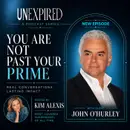


From a career in public relations to becoming one of television’s most recognizable characters, John O’Hurley’s path to success was anything but predictable.
In this episode of Unexpired, Kim Alexis sits down with the actor best known as J. Peterman on Seinfeld to explore the unexpected turns that shaped his career. John shares the story behind landing the iconic role, why he nearly turned it down, and how trusting his imagination led him to opportunities across television, Broadway, voice acting, and beyond.
He also opens up about reinvention, taking creative risks, and his latest venture in clean energy.
Listen to hear how John followed an unconventional path and why his biggest opportunities often came from unexpected places.
00:00 - Episode Welcome And Guest Intro
00:46 - Childhood Certainty About Being An Actor
02:37 - College Detours And Playing Newport Weekends
04:01 - Public Relations Misery And A Wake-Up
06:47 - Broadway Breakthrough Via A Flop
10:32 - Soaps To Los Angeles For Bigger Roles
16:08 - Becoming J. Peterman On Seinfeld
20:39 - Back To Broadway And Voiceover Fame
24:12 - Dancing With The Stars Says Yes
28:36 - Game Shows And A Relentless Schedule
31:48 - National Dog Show Dogs Books And Heart
39:35 - Epilepsy Advocacy And Waste-To-Energy Future
44:03 - Final Takeaways And Where To Follow
Episode Welcome And Guest Intro
SPEAKER_00
I untimelactive collection. Hi, I'm Himalaxis in your ticket to adventure. I'm Himalaxis in here in New York City. Got a great show coming up for you today.
SPEAKER_02
Thank you so much for being on. And what a spectacular career. I have known you as a friend, but to study all the different things that you have done. I love that you're on Unexpired because we truly talk about how you can pivot and change. And you've had such a multidimensional career that I just uh love talking to you about it. So you're very
SPEAKER_01
quick. Thank
Childhood Certainty About Being An Actor
SPEAKER_01
you.
SPEAKER_02
Yes, you started out young, self-teaching yourself piano. So did you want to be a musician?
SPEAKER_01
Well, no, it even started earlier than that. It started at about the age of three when my earliest memories were of large people standing over me, uh asking me questions, and always the same question. They would say, What do you want to be when you grow up? That was it. That was the only question I ever got. And and I remember thinking, well, you know, I was only three years old and I was still soiling diapers at the rate of six a day, and I don't remember having a concrete career objective, but I did think maybe they were asking me because they were looking for a better idea for themselves. But finally, with a sense of disgust that only a three-year-old can muster, I would put my hands on my hips, I would point to the black and white TV in the corner of the room, and I would say, Well, I am an actor, so that's what I'm gonna be.
SPEAKER_02
I love you.
SPEAKER_01
I knew I knew it, I instinctively knew that I was an actor the first time I saw television, and I knew that I was supposed to be there. So whatever I watched was always in the context of how I should be there.
SPEAKER_02
Right. So you started literally almost studying your the whole profession at a young age.
SPEAKER_01
Very young, yes. Oh no, I knew when I was watching Romper Room, I was watching with an intent. When I was watching Captain Kangaroo, when I was uh even watching uh cartoons, you know, and I heard that these were voices that were recorded. I said, Oh, interesting. Oh, okay. Did
SPEAKER_02
you practice the voices?
SPEAKER_01
Everything was uh I knew I was supposed to be doing it.
SPEAKER_02
Did you practice the voices?
SPEAKER_01
Well, I tried to, but you know, my voice was kind of up here like this, but it really didn't matter.
SPEAKER_02
Okay.
College Detours And Playing Newport Weekends
SPEAKER_02
So you went off to college at Providence, and that was literally with the intent of graduating with a Bachelor of Arts in theater?
SPEAKER_01
Yeah, I if I'd done my homework, I would have realized that uh maybe that was not the best choice because Providence didn't have a theater. Um however, in retrospect, uh I uh along with another alumni, we uh gave the college a grant to build a theater and to the state. Uh they have what I believe to be one of the best theaters in the country for uh for academics.
SPEAKER_02
Oh wow. So did you know I was going to go to the University of Rhode Island for pharmacy?
SPEAKER_01
Isn't that funny? Wow, just down the road.
SPEAKER_02
Yeah, it would have been down the road.
SPEAKER_01
Down the road. Yeah. I spent many, listen, I spent uh a good portion of my uh uh waking hours uh down at Newport, Rhode Island at Salve Regina with my guitar, and I would play there from Friday until uh Sunday night at the boathouse, and uh and then if I was lucky by Wednesday I'd wander my way back up to campus.
SPEAKER_02
Ah, so did you live off of the money that you got from the plane in the hat?
SPEAKER_01
I I got uh I think fifty dollars for the weekend.
SPEAKER_02
There you go.
SPEAKER_01
Which, you know, that was a lot of money back then.
SPEAKER_02
That's beer money, right?
SPEAKER_01
That was well, not not the way I drank beer.
SPEAKER_02
Okay, so now you've graduated college, what happened next?
Public Relations Misery And A Wake-Up
SPEAKER_01
Well, uh in truth, I got scared to death of the business of acting because I knew what I was doing. I just didn't know how to make a living at it. I knew nobody. And Providence really had no, you know, uh uh alumni to speak of that, you know, I could have gone to or for to for mentoring or even encouragement. Um so I got, as I say, got scared to death, and I was like a deer in the headlights, and so I retreated and went back to live with my parents for about five years and uh went into the next most theatrical thing I could think of, which was public relations. And I um
SPEAKER_02
for the American. And I focused my
SPEAKER_01
I I decided that I was gonna focus my life on that, and I was miserable as can be. I did very well in public relations. It was something that came naturally to me, uh especially the public speaking and the writing end of it. And uh but I I wasn't doing what I wanted to do, and I was uh terribly depressed for five years. And uh I had to look in my my shaving mirror every day and keep the lie going. But at one point uh I had a very difficult uh moment in my life losing my best friend to a horrific automobile accident. And this was this was a young man who was was uh gave up everything because he wanted to be a doctor. And um it would have been a phenomenal doctor, but unfortunately didn't get to uh see those plans come to fruition. And uh i in my grief I decided that in order for to come out the winner on this tragic situation that I had to go back and recommit myself to what I was supposed to be doing with my life. And so I did. And I laid myself out a two-year plan to go back and restudy, and um and I kept to that, and I was in New York um two years later, and uh 1981, early September, and uh I kept to it. And I got my first show 48 hours after I arrived in New York, and I have never looked back.
SPEAKER_02
So what was your first show? Was this the Studio 54 when you were Johnny O?
SPEAKER_01
No, I don't know where the I don't know who talks about that, but that that is a myth.
SPEAKER_02
It is you weren't dancing at Studio 54?
SPEAKER_01
No
SPEAKER_02
gosh, that's in definitely in your bio.
SPEAKER_01
I would love to find out where that is. That's very funny.
SPEAKER_02
Yeah, all right. Well, I've just perpetuated the whole rumor. Sorry about that.
SPEAKER_01
Yeah, no, no, no. You would have loved to have seen
SPEAKER_02
that tape. That's all I can say. It's back in I would have loved to have seen that tape of you back dancing at Studio 54.
SPEAKER_01
Well then, you know, I I
SPEAKER_02
didn't
SPEAKER_01
I did that in dancing, I did that in Dancing with the Stars. So
SPEAKER_02
Right, right. Yeah, that's that's down the road a little bit.
Broadway Breakthrough Via A Flop
SPEAKER_02
So
SPEAKER_01
But I uh no, I uh no, I got my first show 48 hours after I arrived in New York. It was the worst musical ever done on Broadway. Um and so reviewed by one quit critic.
SPEAKER_02
Uh huh.
SPEAKER_01
Um but the nice thing was it got me my equity card, it got me an agent, it got me uh friends in the business and contacts, and so that one monstrosity of a musical was so terrible. But it uh did everything I needed for me. It it got me it got me in the door.
SPEAKER_02
Right. And that networking really helps of who you know and where you've been. Well,
SPEAKER_01
back back then it did. Today, not so much. I don't I don't know how one gets is uh paves their way through this career anymore. I I really don't.
SPEAKER_02
Yeah.
SPEAKER_01
Uh you can't access anybody. Everybody's hidden behind a door and has no plans on talking. Send me a tape. That's what they want.
SPEAKER_02
Right. Well, and agents aren't agents that you have to pay them now to just look at your stuff, right?
SPEAKER_01
That's exactly right. That's true. Yeah, that's true.
SPEAKER_02
Yeah. So now you have this bad musical, as you say, and how long did that last then?
SPEAKER_01
Oh, it it died a merciful death about six weeks later. Um back then, uh, I think to to execute the tax write-off on a on a show that was that bad. I think you had to at least open it one night on Broadway so you could claim the losses. And that's that's what they did.
SPEAKER_02
Yeah, well,
SPEAKER_01
losses to claim.
SPEAKER_02
So then did you stay you stayed in New York then, right? Oh,
SPEAKER_01
sure. Yeah. No, I was once I was in New York, I was there for the long haul. I had uh eight hundred dollars in my pocket, two suitcases full, and I lived in a single room occupancy hotel. On uh the 79th in Amsterdam, the Hotel du CERN. Now it's a very now it's a very, you know, upscale uh uh place to stay, but not so much then. I had a mattress, a quarter of which was missing, as though someone had taken a bite out of it, and uh they never bothered to repair it, they just made the bed up around it. I say shared bath I had a shared bathroom with it was so disgusting. Um I won't even describe it. But what
SPEAKER_02
was your rent back then? Do you remember?
SPEAKER_01
Um I was paying um eighty dollars a week.
SPEAKER_02
Okay, because I had I was there in 78 and had my first little studio apartment, but I was on 61st in York. Oh
SPEAKER_01
all the way down.
SPEAKER_02
I think I was I paid six hundred dollars for that a month.
SPEAKER_01
Well, this was a hotel, and this was um it was it was a single room full of well I I shouldn't say a single room, it was me and the roaches. So
SPEAKER_02
I was gonna say you had some company. Oh
SPEAKER_01
yeah.
SPEAKER_02
Oh my gosh, first one ever, so I screamed and jumped on the bed. That didn't help me either.
SPEAKER_01
Well, I didn't realize I didn't realize I had roaches until I came in unexpectedly one day, and they all I caught two or three of them trying to freeze in place.
SPEAKER_02
Okay. Well, you didn't stay there long. So then you had an agent at this point, and now that agent's working for you, right?
SPEAKER_01
Uh yes. I was pretty lucky because I always found something to do. I never had to, I was never, I never had to do uh wait waiter service. I never had to take an office job. I was always acting.
SPEAKER_02
Right.
SPEAKER_01
Um and I was really fortunate that way, and that was a goal of mine because I knew if I went to New York and I'd spent all that time studying and then restudying, uh, that I came there to be a success. And that was um that was the focus in my life. And so I I wouldn't accept anything but success. And um and uh I was very fortunate. I
Soaps To Los Angeles For Bigger Roles
SPEAKER_01
I got smaller shows, I I did a little bit of opera back then, uh, because that was a minor of mine in uh college.
SPEAKER_02
Wow.
SPEAKER_01
And um went to and then I discovered very quickly, uh, about a year later, I discovered daytime television. The soaps.
SPEAKER_02
Right,
SPEAKER_01
and I for and I quickly found success in the soaps. I started off on The Edge of Night and then went over to ABC, had a show called Loving, which was a brand new show, and then from there I went to All My Children, from there to um um Young and the Restless, and uh from the final, the final one I think was Santa Barbara that I did, but I was kind of Mr. Daytime. I was uh I was always doing something, and and it was wonderful because I tell you, you know, it was they were very lucrative. I mean, you earned a really good living uh back then. So my yeah, my so my lifestyle uh grew with it, and um, and uh I had a very nice apartment in New York.
SPEAKER_02
Finally got a nice apartment, a whole mattress.
SPEAKER_01
Yes, a whole mattress, yeah. That's right, that's all you really want. And so um, but I uh I had a I had a wonderful time in New York on daytime television because it really was a way that you could, you know, as as an actor have a dependable income and uh and still enjoy, you know, the the the wonders of the greatest city in the country. But um I also realized that if I moved to the other coast, I could take the decimal point and move it over one.
SPEAKER_02
Uh-huh. Yeah.
SPEAKER_01
Because they were paying people a lot more out there. And so uh and so eventually in the late in the late 80s, I had done my stint on all the shows there. Um, and I decided that I was going to move to uh to LA.
SPEAKER_02
Right.
SPEAKER_01
And that's and that's when I I would say the more the better quality things were available to me.
SPEAKER_02
And you weren't married yet, right?
SPEAKER_01
Uh no, I wasn't. Um I wasn't married until um until I got out to uh Los Angeles. I I found somebody married, somebody young.
SPEAKER_02
Right. So your that decision was just your own. Like you were making self-awareness decisions at a very young age to be able to pivot and move and
SPEAKER_01
well it's just I knew, you know, I I I'm a great believer in listening to my imagination. I don't listen to my rational mind. I listen to my imagination. My rational mind will lie to me all day long. Its job is to keep me alive, it's to keep me upright and breathing, and that's it. It fulfills its obligation after that. My imagination doesn't care about any of that. My imagination is a 24-7 self-assessment of who I am and what I'm supposed to be doing. And it's always growing and always nurturing and it's always changing. And uh so I listen to my imagination, and my imagination is what has moved what has moved me along uh from project to project, from genre to genre, and it's always it's never it's never led me wrong.
SPEAKER_02
Yeah, it's amazing. So I I mean, I just have to go through some of the things you did. So when you got to LA, I could be getting all these in in the wrong order. What was the first thing you did? It wasn't Baywatch, was it?
SPEAKER_01
No, um, gosh, what are the first thing I got out there? Um
SPEAKER_02
did you have the same age?
SPEAKER_01
Well, Val Kilmer and I did uh put uh did um Billy the Kid together. Okay uh and so it it might have been that. Uh I did uh uh a um well back then back then in the 80s, uh late 80s, early 90s, the the uh the TV TV was focused a lot on movies of the week. So I did a lot of the movies of the week. Uh I did a wonderful one, actually a really nice one, um based on Alien, uh and it's called Something Is Out There, and that was
SPEAKER_02
a
SPEAKER_01
four-hour mini-series that I did um out down in half in Australia and half in the US. Uh I did a lot of um uh two and three-part shows, uh opposite some very nice ladies and what have you. But uh but I yeah, no, I always had uh I always had good good stuff to do. I was really, really lucky. But nobody none of them were any of them were comedies because nobody would trust that I could be funny.
SPEAKER_02
I think you're funny.
SPEAKER_01
Well, I thought so too. In fact, I was on a show that was all about funny uh for a long, long time. And then it became well, he doesn't do drama, he only does comedy. So
SPEAKER_02
Oh. Yeah, and you probably refuse to be stereotyped because you've got such a vast array of things you can do.
SPEAKER_01
Well, I I'd like to think so. I like to think so. But uh, but uh so yeah, so I did a lot of a lot of straight things that uh and then eventually a comedy came through called there was the first comedy was called uh The Nurses. Uh and it was kind of a short-lived series, lasted a season or two. But uh I played a oddly enough, a daytime uh soap doctor. Oh and uh I was the only one that could get a patient to submit to what the doctor was asking, the regimen the doctor was asking them to do, because I was the only one that she would trust.
SPEAKER_02
Uh
SPEAKER_01
the soap opera doctor. So as the patient, I walked into her room and cured her.
SPEAKER_02
Right. Okay, so how long did it take for you to get on Seinfeld?
SPEAKER_01
Uh
Becoming J. Peterman On Seinfeld
SPEAKER_01
Seinfeld actually happened um uh kind of following so I had several series of my own. Um one was called Scorch, uh, which was very funny on CBS, and then uh um and then I had one that was really great. It was on ABC called A Whole New Ball Game. That was one of the funnier series I've ever done. It was a really wonderful, wonderful cast. Um and um but but we didn't last, you know. It was a show that was following the show Coach, and so it was marching all over television and it never really got a chance to find to stay still enough long enough to find an audience.
SPEAKER_02
Right.
SPEAKER_01
And so I uh so the show got canceled. They called me on a Wednesday morning and said, Don't bother coming to work. They pulled the plug on the show, which is the way they did it. Yes, and uh so I I didn't go to work and instead went out to dinner that night with my manager crying in my beer, trying to take the cancellation as personally as I possibly could. And um uh Larry David's office had called and said we had this role for tomorrow as a guest star. Uh, is John interested? Because it's something he could chew up and really sp and have fun with. And so I said no. I said, tell them no. I'm still wincing, you know, I'm still licking my wounds over having my show canceled.
SPEAKER_02
Right. I
SPEAKER_01
don't want a guest star on somebody else's show. So that was my ego leaking out of every pore of my body. So, long story short, he never called. And the next morning called me and said, They're waiting for you over there. I never made the call last night.
SPEAKER_02
Wow.
SPEAKER_01
So that's how I ended up on Seinfeld.
SPEAKER_02
Wow. And did you help develop that Jay Peterman character, obviously?
SPEAKER_01
Well, they they you know, they basically said at the read-through of the um uh for the episode, they hadn't finished writing. They only finished about we were the most disorganized show on television. They only finished writing about half of the script. And so they hadn't really gotten into the character, but it was they handed me the J. Peterman catalog and said, we want him to sound the way this clothing catalog is written.
SPEAKER_02
Right. I
SPEAKER_01
said, that's strange. And it was the, you know, it was kind of this oblong small catalog, and and it was written like a Hemingway novel about an Oxford button-down. And uh and that was the humor of it, I guess. It was that um it was a parody of itself, but it was uh it was like a you know, it really was like poetry, prose that you were reading. So I uh I looked at it and I said, well, it uh it occurs to me that it's kind of like a 40s radio drama combined with a bit of a bad Charles Carult. And so that really was the genesis of Peterman. And um and uh the second I opened my mouth in in the voice of Peterman, they burst out laughing.
SPEAKER_02
Right.
SPEAKER_01
And so I knew that this I knew that I had hit it spot on.
SPEAKER_02
Right.
SPEAKER_01
And uh but it was only going to be for one episode. But at the end of the episode, she turned to her friends and said, I've got a new job. And they said, What? She says, I'm a write I'm a uh I'm writing for the Jay Peterman catalog. And I remember the script supervisor turning to me at that point um on the set there, that she goes, Well, looks like you've got a new job. And sure enough, and and uh so it uh I wasn't on every show, but I was on for the last five seasons or so and uh and uh had the time of my life.
SPEAKER_02
Do the Elaine for me. I love it the way you say it.
SPEAKER_01
Elaine, do you have any idea what happens to a butter-based frosting after six decades in a poorly ventilated British basement? I have a feeling that what you are about to go through will be punishment enough.
SPEAKER_02
So funny.
SPEAKER_01
Great writing. It was all about the writing, and there was some of the best writing on television.
SPEAKER_02
Yeah. Well, I mean, obviously you you made it all come alive, so that was wonderful. So then Seinfeld more or less is done, right? It 19
SPEAKER_01
Yeah, we finished in 89.
SPEAKER_02
89, right?
SPEAKER_01
Yeah, and um um then that's really when everything opened up for me, I would say.
SPEAKER_02
Yeah.
SPEAKER_01
Um because of the you know, the exec and eccentricities of the characters. Um everything kind of fell into place and uh I had an opportunity to do a lot of different shows.
SPEAKER_02
Yeah. Yeah.
Back To Broadway And Voiceover Fame
SPEAKER_02
So you went on. And
SPEAKER_01
in other means. I I went to, you know, I went back to Broadway and uh did um Chicago, the musical there for um well, I think I've done four or five thousand performances uh over fifteen or twenty years.
SPEAKER_02
Wow.
SPEAKER_01
Um of that. And then I did Spamalot, the Monty Python uh musical for about a thousand shows. Did it out in Vegas for two years and then toured it around the country. Um and
SPEAKER_02
King Arsenal. And then
SPEAKER_01
uh the fantastic I did the Fantastics there on Broadway for quite a while. So I had a nice I enjoyed returning to Broadway because that was kind of that my that was that was my original roots and uh and and certainly the such a great joy for me.
SPEAKER_02
Yeah, so which was your sweet spot though? Do you think you had one or you liked all of them?
SPEAKER_01
Well, I I liked them all. I I mean I loved living in New York and I loved having a place to go to at eight o'clock every night, and knowing that the audience was going to be standing on their feet at the end of the show screaming, and
SPEAKER_02
yeah,
SPEAKER_01
and I would know that at 10 45 I'd be over sitting down having uh uh my favorite meal at my favorite Italian restaurant. So it was like it was a just the lifestyle was so wonderful.
SPEAKER_02
Right. Right. So and then obviously you did a ton of different um cameos, right? You would go on things and then When did you get into voiceover work? I did not know you were the voice of Coarse Light and on SpongeBob. My kids watch SpongeBob SquarePants all the time.
SPEAKER_01
And do they and they and obviously they watch it while they're drinking course light.
SPEAKER_02
No, and they were younger. Yeah, but uh just amazing how you just have popped up. I mean, when I look at your body. I
SPEAKER_01
did uh well, you know, the the character of Peterman really was the genesis of all the voiceover work because the uh Peterman was kind of everybody's mayor, king, um uh president. Um you know, he was just anytime you needed that type of a character, it was a you could uh you know just pick the phone up and I was there.
SPEAKER_02
Right. Well, and that's that's part of your
SPEAKER_01
So I've done some, I've done, and I've and I've done a lot of the the bigger shows too. SpongeBob, I'm King Neptune on SpongeBob. I've been there for 10, 10, 12 years or so.
SPEAKER_02
Do that voice.
SPEAKER_01
SpongeBob, that was quite a burger.
SPEAKER_02
It's so cute. I did not know that was you.
SPEAKER_01
It's funny when I you know when I go to Comic-Cons now, which are these autograph conventions. You
SPEAKER_02
go to those
SPEAKER_01
for comics. I still go and I still enjoy, I still enjoy them. In fact, I'll be doing one this weekend out in Pennsylvania. But uh it's funny because the kids will say, You were on SpongeBob, and I'll do the voice, and they'll go, you know, it's like it for them, their sense of amazement that and it connects the voice with the person that they know on TV. It's very funny.
SPEAKER_02
Right, right. They don't know the core's light commercials yet, those children.
SPEAKER_01
Not yet. But oh, they were those were hysterical. I had more fun with those. I've done, yeah, I did a lot. I was spokesman for a lot of different companies. I was spokesman for uh Xerox for many, many years, right after Seinfeld, and uh showed my appreciation by knocking their stock in half.
SPEAKER_02
Oh, uh oh
SPEAKER_01
actually, they had accountants that did that, but I I was there.
SPEAKER_02
Hopefully you didn't get blamed for that.
SPEAKER_01
No, no, I laugh about it though, that it was under under my aegis that uh the the stock plummeted.
Dancing With The Stars Says Yes
SPEAKER_02
Uh so then you decide you wanted to dance, right? You were in the first season. Well,
SPEAKER_01
I didn't want to. Oh no, no, no, no, no, no, no, no. But you said
SPEAKER_02
yes.
SPEAKER_01
I said yes, but that's only because I go back to this thing called my imagination.
SPEAKER_02
Right.
SPEAKER_01
And I the ABC took me out to lunch one afternoon. And um I like it. Yeah, I should have been suspicious right away. They never take me to lunch.
SPEAKER_02
Right.
SPEAKER_01
Uh and so I'm sitting there at lunch, and there's half a dozen millennials, and they all have their laptops open, and they're all showing on the screen this thing called strictly come dancing, which was the new hit over in uh in England.
SPEAKER_02
Okay.
SPEAKER_01
And uh and so I said, Okay, what is it? They said, Well, it's a it's a celebrity show about competitive ballroom dancing. And I said, Check, please. I I said, Come on, no. I said, I'm the guy who at the wedding reception, when the music and the dancing starts, I take my glass of Chardonnay and I go back and I hold up a wall and say, knock yourselves out, shriners.
SPEAKER_02
Right.
SPEAKER_01
Um and so I I had no in I mean, I really I really didn't. And they said, well, I said to them, Well, I'll be happy to host it.
SPEAKER_02
And
SPEAKER_01
they said, No, we want you to do it.
SPEAKER_02
Who hosted it?
SPEAKER_01
No, no, no. I said, a show like this. I would host a show like this. They said, No, we have a host, we want you to do it.
SPEAKER_02
Yeah. Who hosted in
SPEAKER_01
my you know, my uh my brain says, um, okay, it showed me the picture of me being a success. So once the imagination does that, I make that promise, I do it. And I said, All right, who else have you got? They said, You're the first one we've asked.
SPEAKER_02
I
SPEAKER_01
said, but now we know, but how about this? They said, now we know that we have you. We know we can get Evander Holyfield.
SPEAKER_02
Oh
SPEAKER_01
and I said, What? How do you connect those two dots? Yeah, so anyway, yeah, they uh they were using the uh obviously they were using Dancing with the Stars to give America what they they've been hoping for for a dozen years, and that's the Evander Holyfield John O'Hurley matchup together on the level playing field of ballroom dancing. And I took them out in the third round with my fet.
SPEAKER_02
Ooh, your frot.
SPEAKER_01
Couldn't survive it.
SPEAKER_02
Yeah.
SPEAKER_01
The champ couldn't survive it.
SPEAKER_02
Oh, and that was season one, right?
SPEAKER_01
That was season one, yeah.
SPEAKER_02
I got asked to do season two, and my husband at the time says, You're not doing that. You're five foot ton, you look like a monster. So you wouldn't let me do it. Plus, I can't dance worth a stitch.
SPEAKER_01
Well, it'll if you can't, it'll certainly expose it.
SPEAKER_02
Yeah, exactly. Yeah. Anyways.
SPEAKER_01
But it was a lot, it was a lot of fun, and um, and it was fun, it was a fun show to be in. It was a fun to win, and it was the whole thing was it was great.
SPEAKER_02
So then did that lead you into like your game show hosting? It
SPEAKER_01
did, actually. You know, the nice thing about Dancing with the Stars is that it gave me my name back.
SPEAKER_02
Yeah.
SPEAKER_01
Because people knew me as Jay Peterman. That's you know, it's just I lived with it every day. JP, Mr. Peterman, you know. Um and uh, you know, it was one of the great acts of identity theft ever. John Peterman, this guy who all he did was run a successful clothing company, had lost his identity entirely.
SPEAKER_02
Which you now own part of.
SPEAKER_01
Well, that's the PS to the story. I love it. He ran he went bankrupt uh shortly after Seinfeld ended and um called me up and said, uh, I got the property rights back. Would you like to put the company back together under our parallel strengths? And I said, Okay. So I had to write him a large check, and then uh he and I became co-owners of the Peterman company.
SPEAKER_02
Yes,
SPEAKER_01
I'll tell you, we would at the board meetings, after the board meetings, we'd be walking up Madison Avenue to a little Italian restaurant that we always frequented at lunch.
SPEAKER_02
Right.
SPEAKER_01
And the windows would the the car windows would roll down and it'd be the policeman on the other side of the block screaming, Hey Peterman! And
SPEAKER_02
you both
SPEAKER_01
and they weren't talking to him.
SPEAKER_02
Oh, yeah, yeah.
SPEAKER_01
They were talking to me. He had lost his identity and wasn't never going to get it back.
SPEAKER_02
Yeah. How funny. All right, but then game show
Game Shows And A Relentless Schedule
SPEAKER_02
hosting. You were hysterical.
SPEAKER_01
When it came, let me finish what I was saying. I I got my name back with Dancing with the Stars. Uh, you know, people knew me as John O'Hurley now. And um, and uh so they were swapping hosts at a time at the time on uh on Family Feud. Now I had done uh a game show before. I had uh three years of a show called uh To Tell the Truth,
SPEAKER_02
right?
SPEAKER_01
Which is a wonderful show. And and and truthfully, I look back, and one of the fondest jobs I ever had was that show. It was the funniest panel, we had the most interesting stories, and it was my show so I could really dictate what the whole environment was like.
SPEAKER_02
Yeah.
SPEAKER_01
We had we had child care, doggy care.
SPEAKER_02
Oh I had
SPEAKER_01
a chef uh catering the show, we had a masseuse, it was just it was a lovely place to work.
SPEAKER_02
Wow, yeah.
SPEAKER_01
So every weekend I I never had trouble getting a celebrity cast for the show because the word got out what a fun time it was.
SPEAKER_02
So what happened to that?
SPEAKER_01
But I did that. But let me say I did that, and then but then uh uh I got a call for uh Family Feud.
SPEAKER_02
Right.
SPEAKER_01
And I said, Well, that's interesting. So um, you know, I again I I listened to my imagination and I said, Yeah, I I think it's something that I could do, and and uh and it's funny um and fun too. It's like Family Feud is a little like um having a cocktail party, and you just kind of get out of the way and let the show run itself.
SPEAKER_02
Right.
SPEAKER_01
Um it wouldn't say it's not a particularly difficult show to do,
SPEAKER_02
right?
SPEAKER_01
Um but um so I did five years of it, and but it became um uh a real obstacle to me doing anything else. Uh at the time I was doing Family Feud, I was also doing uh Spamilot out at the Wynne Hotel for two years.
SPEAKER_02
Oh
SPEAKER_01
and if if I told you the schedule of what it was like to get me back and forth on a weekend,
SPEAKER_02
yeah,
SPEAKER_01
I literally I I'd finish Family F I'd finish Spam a lot at at ten o'clock on a Friday night, I'd fly back to um LA, do six shows the next day of Family Feud, hop back in a plane, go back and do two shows that night of Spamilot, then hop back in a plane, do the other six shows in LA the following day of uh my commitment to get 12 done, and then I would fly back Sunday night and do uh Spamilot again.
SPEAKER_02
Wow.
SPEAKER_01
And I mean that's that was what my weekend was like. I mean, it was just ridiculous.
SPEAKER_02
Right.
SPEAKER_01
So um it got in the way. So at the end of the five-year commitment that I had in my first contract, I said, you know, I th and they they also they were moving the show to um to Miami, so I or not my Orlando.
SPEAKER_02
Oh
SPEAKER_01
I s and I said, Well, that's where game shows go to die. So I I said uh uh I think I'll just back off.
SPEAKER_02
Right. But
SPEAKER_01
uh Steve Harvey took it over then and obviously he's doing a wonderful job with it.
SPEAKER_02
Yeah, yeah. All right, and then tell me um how you got your the dog show at that you on Thanksgiving when you get your dog show and hosting that.
National Dog Show Dogs Books And Heart
SPEAKER_02
We've been doing
SPEAKER_01
that
SPEAKER_02
for a long time.
SPEAKER_01
Isn't that something? This will be our 25th year anniversary, 25 years, and it is remarkable how successful that has been. It is next to the Super Bowl, the number one show on television. We get an audience every year of 30 million people.
SPEAKER_02
Wow.
SPEAKER_01
I mean, those are Seinfeld numbers. No other show, and it grows every year. No other show gets those numbers or continues to grow every year as we do.
SPEAKER_02
Right.
SPEAKER_01
I'm bewildered by how why this is such a success. But it's for some reason people just love their dogs, and if you're scrolling around with your remote on a Thanksgiving day and you happen upon a a set of puppy dog eyes,
SPEAKER_02
yeah,
SPEAKER_01
we got you. We gotcha.
SPEAKER_02
Those who don't want to watch football, probably.
SPEAKER_01
Yeah, I know. And uh so it's a one in fact now they're la this is the first year this past season that they CBS actually pushed their um their uh their football uh back a half an hour so that they wouldn't conflict with the opening of the dog show.
SPEAKER_02
Oh, wow.
SPEAKER_01
And that's not so that says something very powerful about the power of dogs.
SPEAKER_02
Yes.
SPEAKER_01
The genesis of that show came from the um the Christopher Guest show, Best in Show, the parody of the Westminster dog show.
SPEAKER_02
Oh
SPEAKER_01
and uh the head of NBC Sports took the show home and watched it one weekend back in 2002, and uh said it's one of the funniest things he'd ever seen, and came into the Monday meeting at uh CBS or excuse me, NBC Sports and said, I know what we're gonna do with that slice of time between the uh uh the parade and um and football. We're gonna do a dog show. Well, they about laughed him out of the office, but at the end of the day he had Garina on as the sponsor, and uh he had one show of the Kendall Club of Philadelphia's uh menu over that um weekend as uh the new national dog show. And then Tuesday morning called me in LA. I answered the phone and I said hello, and he said, Woof, woof. And that was the beginning of the 25-year stint as the host of the national dog show.
SPEAKER_02
Uh, he thought you could speak doggy.
SPEAKER_01
Yes.
SPEAKER_02
And you're through all this, where did you find time to write books?
SPEAKER_01
Well, I I would write a lot of stuff for the dog show. Funny stuff. You know, I had to kind of write little interstitials and stuff.
SPEAKER_02
But you wrote And I
SPEAKER_01
wrote a piece. I I wrote a piece called I Everything I've Learned in Life I've Learned from My Dogs. And it was meant to be just a little, like a little skit-ish that I did, kind of an uh uh Saturday Night Live kind of skit.
SPEAKER_02
Right.
SPEAKER_01
Um well I did it, and it was way too long. It was three minutes, so it's we didn't have that kind of time to spend on anything else but dogs. So um didn't end up doing it, but it on the plane back home, once again, my imagination um said, you know, this would be a good idea for a book. And so I sat there in the plane, looking out the window and just sketching down my ideas for what a funny dog would a funny but poignant book would be for dogs, and it and also autobiographical. And it was basically so I wrote um the first book is called Um It's Okay to Miss the Bed on the First Jump and the other life lessons I've learned from my dogs.
SPEAKER_02
Right.
SPEAKER_01
And it turned out to be uh uh a a blowaway. It turned out to be a number one bestseller on New York Times. Thank you, Diane Sawyer, who actually took the time, believe it or not, to read it one night before she interviewed me uh that morning on Good Morning America. By the end of the uh the show, the sh was number one on Amazon and then became uh a the top seller on uh New York Times bestseller list. So it begat that, and then I wrote another one, a sequel to that, because it was such a hit. And the other one, which I liked even better, was called Before Your Dog Can Eat Your Homework, first you have to do it.
SPEAKER_02
Right. Right. Yep.
SPEAKER_01
Which was uh funny. And then and then my you know my son um uh took to the dog show as well, and we, you know, had him at the dog show interviewing the dogs and the people, and
SPEAKER_02
you
SPEAKER_01
know, kind of being the kids' reporter, and uh it was always fun. And um uh one night uh he was lying on my chest, uh falling asleep, and uh and he asked me, he says, Daddy, is the dog that is best in show, is that a perfect dog? And I said, Well, that's a very interesting question. Well
SPEAKER_02
I
SPEAKER_01
said, I'll tell you what, I'm gonna answer that to you, but I'm gonna write a poem. And we'll write it together, and we'll get that answered for you. And so I wrote a poem called The Perfect Dog. And it's about the notion of, you know, a perfect dog would have, you know, a a nose that seemed flattened or long like a mouse, and spots or no spots, and it was all the different things, and I was never coming up with a conclusive answer. And uh so my son's uh uh my son uh uh uh smiled and out of the blue, with the wisdom of children, what he already knew, said, The dog that is perfect is the one next to you.
SPEAKER_02
Oh
SPEAKER_01
and that ended the that ended the poem, and um and it turned out to be such a hit uh on on the dog show because I read it uh, you know, with the camera on all the dogs, and
SPEAKER_02
right
SPEAKER_01
and uh it became such a hit that I ended up um writing it as a book. Well then the book became so popular, it became the number one children's book, and then the um um I it was uh licensed out as a children's musical. And so now it's done all over the world. Uh the perfect dog is done as uh a children's musical. And they for many, many years, and I want to say about ten years, in Philadelphia where we shoot the dog show, uh there they had a children's uh theater group there, and every year they did a production of the um the perfect dog. So it's had quite it's had quite a run.
SPEAKER_02
Yeah, that is wonderful. I didn't know that about you.
SPEAKER_01
See when what happens when you listen to your imagination?
SPEAKER_02
Yes, exactly. That's what you're telling the audience. That's what's really cool. Now, do you have a dog yourself? Do you have dogs?
SPEAKER_01
Boy, I better.
SPEAKER_02
I want to know what breed dog you have.
SPEAKER_01
I have two. Well, actually, I I would love to tell you the breed, but um I think in in both cases, uh mommy swam out to meet the navy ship. Um they're they're just they're Heinz 57. Uh they're two rescue they're two rescues, uh, and they're wonderful, wonderful dogs. And uh love them dearly. But we've I've had, you know, we've had purebreds and uh as well. And um, but we've I've had many, many, many dogs, uh, you know, through through my career as a dog show host, but just as a as a kid growing up. I always had my first dog was a little dachshund when I was four years old and would follow me everywhere around the swamp and we we go fishing together, and you know, yeah. So I've always always had a dog in my life.
SPEAKER_02
Yeah, oh that's great. Yeah, there's something about the rescue dogs, they seem to know we have a big thing.
SPEAKER_01
You're very right.
SPEAKER_02
Yeah.
SPEAKER_01
That rescue dogs seem to always appreciate the
SPEAKER_02
grateful, right? They're grateful to you.
SPEAKER_01
Yeah,
SPEAKER_02
yeah.
Epilepsy Advocacy And Waste-To-Energy Future
SPEAKER_02
So um, and a sad note, you uh because of losing your sister to epileptic seizure, right? You now work with them. So can you
SPEAKER_01
I am the national spokesman for epilepsy, yeah. Uh-huh. And I've been um yeah, I've been kind of uh deeply involved with them. I would say since uh my soap opera days, um back in the 80s, I always said if my you know, if I if I ever had a loud enough voice that I would use it to um to discuss the underfunding of epilepsy and uh and also to educate people on um on the preponderance of it, it's it's all around us. Um you know, it's uh it's and so I have a a golf tournament that's a big fundraiser for them, and I've always been active in fundraising for the Epilepsy Society. Yeah. They do great work and and there have been so many wonderful advances. Um, you know, when my sister passed away back in 1970, she was a year ahead of me in high school, and um there were only two uh two drugs of choice uh back to control seizures, and in many cases they didn't control seizures and the side effects were worse than than uh having the affliction itself. So um, but today I can you know happily report that there's 30 plus medications that are available on the market. So a lot has happened in the world of epilepsy, uh, just due to the uh maturity of our of our our system of medicine.
SPEAKER_02
Yeah, yeah. Well, that's wonderful. And I think that's what we do is we become successful to much is given, much is required. So we give back. And that's how you and I met at a golf tournament. So
SPEAKER_01
that's right.
SPEAKER_02
Yeah. So what's next for John O'Hurley?
SPEAKER_01
Uh well, many things, actually. I have miles to go before I sleep. I still have a lot of uh I still have I have my one-man show that I tour all around the country and actually around the world now. It's called A Man with Standards. And uh it's autobiographical, and and I take the the um the period of time between the 50s and the 60s, and and I use the music of the period to underscore the stories of my life back then, from when I was in kindergarten all the way up through um my uh my early years and my career. But uh I use uh that the music of that time, the standards that uh we use to um to under underscore the music, and it's a lot of fun. Uh I'm writing another show right now, which is more of a Sinatra-driven show, which is the uh the summer and September years of Sinatra.
SPEAKER_02
Oh, okay.
SPEAKER_01
Uh and then I uh I've got a couple more, I've done six movies in the last year, so I've been fairly busy. I've got a couple more to do this year. Um and uh but it the the biggest thing I would say in my life uh is a huge leap to uh a huge leap to the left. I'm a uh serial entrepreneur, and so I'm always investing in good ideas and buying little companies and turning around and selling them. And I found a really, really good idea some years back, and it's it's uh there's nothing like it anywhere in the world, and the technology basically takes any form of waste and turns it into large amounts of energy, but with absolute zero emissions, and on top of that, it also powers itself. So it uses no electricity, it's totally off the grid, and there's nothing like it. So basically it zeros out the need for landfills. Um it it handles uh I can do coal with no emissions, um, it'll do uh agricultural waste, which is a huge, huge problem all around the world. Um it can do that with no emissions and uh provide a lot of a huge amount of uh of either liquid or uh electricity, elect li liquid diesel or electricity.
SPEAKER_02
Right.
SPEAKER_01
Um so it's it's pretty magical. Uh and nobody says no to it. It's um it's gotten a big yes. So it's uh
SPEAKER_02
And what's the name of that company?
SPEAKER_01
Uh that is called very so very easily Gold Seal Industries.
SPEAKER_02
Okay. You probably could have come up with a very humorous name turning waste into energy, but
SPEAKER_01
uh I know. Yes, and I let me tell you that my theater critics definitely think that I'm moving in the right direction towards trash.
SPEAKER_02
You're just full of you know what.
SPEAKER_01
Bingo.
Final Takeaways And Where To Follow
SPEAKER_02
Well, I just would love to say thank you, John. It has been wonderful talking to you. And what
SPEAKER_01
you as well.
SPEAKER_02
What a wonderful story to be able to hear. And for those of you listening, use your imagination and things that's right you think of can come and definitely happen, right?
SPEAKER_01
Your imagination never lies to you. Your rational mind will always lie to you.
SPEAKER_02
There you go. Well, thank you so much.
SPEAKER_01
You bet, darling.
SPEAKER_02
Yeah, have a good one. Thanks for watching the show. If you have any questions for me or you want any more information, go to kimalexis.com.


