THINK YOUR LIFE IS OVER? SUPERMODEL & WORLD CHAMPION DISCUSS
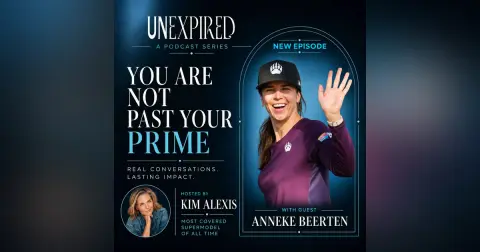
What happens when the sport you love becomes the very thing you have to fight to return to? In this episode of Unexpired, Kim Alexis sits down with BMX world champion Anneke Beerten to explore the mindset behind fearless competition, peak performance, and life after a career-changing accident. Anneke shares her journey from racing against boys in the Netherlands to becoming a world champion, then opens up about the traumatic brain injury that forced her to rethink everything. She reveals ...


What happens when the sport you love becomes the very thing you have to fight to return to?
In this episode of Unexpired, Kim Alexis sits down with BMX world champion Anneke Beerten to explore the mindset behind fearless competition, peak performance, and life after a career-changing accident.
Anneke shares her journey from racing against boys in the Netherlands to becoming a world champion, then opens up about the traumatic brain injury that forced her to rethink everything. She reveals what recovery taught her about resilience, finding purpose, and building a new chapter through coaching and her own mountain bike apparel brand.
A conversation about pushing limits, listening to your instincts, and discovering what comes next when life takes an unexpected turn.
00:00 - Welcome And Meet Annika
01:00 - Growing Up Riding In The Netherlands
04:05 - Learning Fear And Listening To Gut
08:50 - Racing Focus And Mental Health Benefits
10:25 - First BMX World Titles And Pressure
12:40 - Switching To Mountain Biking Training
16:40 - What Fourcross Is And Why It Fits
21:05 - Long Road To World Champion Again
22:30 - Sponsor Message Altitude Home Loans
23:05 - Car Crash Brain Injury And Rehab
32:05 - Moving To Bentonville For Purpose
37:00 - Launching Bear Ten Apparel Line
40:35 - Keep It Fun Social Media Advice
Welcome And Meet Annika
SPEAKER_00Hi, I'm Kim Alexis. Today in Paris, Patrick Kelly is showing his collection of spring clothes. Hi, I'm Kim Alexis with your ticket to adventure. I'm Kim Alexis and I'm here in New York City. Got a great show coming up for you, so stay tuned.
SPEAKER_01So I'm here with Annika Beerton, and she is a BMX world champion, a three times four cross mountain bike world champion, right? And now you are a coach and you coach um people, young, old, whoever it is that loves biking, right?
SPEAKER_02Yeah, correct. Yeah. I kind of, you know, rolled into mountain biking when I was younger or from BMX into mountain biking. Uh, and then I kind of transitioned into coaching over the last couple of years. And I coach anybody from younger riders to older riders, people that are new to mountain biking or
Growing Up Riding In The Netherlands
SPEAKER_02pro riders. So yeah, a little bit of everything.
SPEAKER_01But let's go back. So you were born in the Netherlands, and at the age of four, how did you find biking? I mean, most people don't even ride a bike when they're four, do they?
SPEAKER_02No, a lot of well, in the Netherlands, biking is really big. Um, it's really in our culture riding a bike from a young age on, like getting to school or you know, go to the grocery store. And everything is bikeable because it's so the country is so flat. It's as flat as a pancake. So I had a janky little BMX bike that I got from my parents when I was really young, and I would just do non-stop laps around the house. And it was hard for my mom and dad to get me off the bike. And a friend of my, a friend of my dad, he came over one day and he's like, Hey, you need to take that girl to the local BMX track. And my dad took me, and that's where it all started, you know, that's where it started, and it never it never stopped.
SPEAKER_01Right. So, and there weren't a lot of girls doing it back then, right? So you had no trouble competing against boys.
SPEAKER_02Yeah, no, I was there was like hardly any girls in, you know, the classes that I was riding in. So I was just up against the boys, and I didn't really care because at that age too, and my parents never pushed me. It wasn't about the results, it was about me having fun doing something that I loved, and uh it kind of pushed me, right? So it was great actually just to kind of grow up in between the boys, and it probably helped me later on in life where you know, when I got better and better because I learned a lot from the boys.
SPEAKER_01Yeah, yeah. So, did you have brothers and sisters?
SPEAKER_02Uh, I have an older sister, yeah. She's not really into biking or anything.
unknownYeah.
SPEAKER_01And did you like playing other sports? Like when I was growing up, I was involved in other sports, but I had one that I just really was a swimmer, so I spent much more time in the pool, but would do other things.
SPEAKER_02Yeah, oh yeah. I was totally a little bit of a tomboy, and I was playing soccer, tennis, uh, whatever it was. I was definitely the kid that was always outside trying to do something and um learn different sports as well. So yeah, I've always been very interested in the outdoors and the activities and sports.
SPEAKER_01Yeah, yeah, I know. You and I are the same. I just love being outdoors. And if you keep me inside too long, I get uh stir crazy. And I'm sure some of the young kids probably do, right? Mm-hmm.
SPEAKER_02Yeah, yeah, totally. And I think nowadays I still feel the same, right? I I love walking the dog at night or in the morning, and it's hard for me to sit still. If like the movie is over two and a half hours, I'm like, yeah, I'm not sure if I can finish that in one go because at the end I always get like I have to move, I get impatient.
SPEAKER_01But so how did you I mean, there must be this fearlessness in you? Did you notice that maybe even at a young age? Like BMX, did you have to like do little jumps? And I mean, you're almost like crashing
Learning Fear And Listening To Gut
SPEAKER_01into other bikes, right? I mean, it's it's uh uh dangerous, I mean it can be a dangerous sport.
SPEAKER_02Yeah, I think it really helped that I got into it a very young age. So when you're younger, kind of like you mentioned, you don't really think about the fears as much, or you don't feel that you're like, you know, scared of things. And once I got better and better, you know, I I really grew with the sport. So um knock on wood, I never had any like big injuries on the bike. And um, I think that fearlessness kind of grew over the years because I built was building my confidence and getting better and better and like learning how to jump, but learning how to jump in a safe way, and then slowly as I progressed, and how when I got older, I started doing bigger jumps, right? And bigger and bigger, and uh pushing myself kind of like you know, out of my comfort zone every now and then, but never in a way of like I always knew when something didn't feel right or if I was not ready for it yet. I always like you know, take a step on in one spot and be like, okay, I gotta wait. I'm not ready for this yet. Maybe, you know, in a couple of weeks or in half a year, I'm ready to do something like a bigger jump or something like that. So I always was pretty balanced and in tune with what I felt I was ready versus like just go and do things, right?
SPEAKER_01Like just that's interesting that you use that inner voice, like to make sure that you stayed safe. I mean, yeah, and I go ahead.
SPEAKER_02Yeah, and I still do that to this day when I'm coaching younger writers, because I think that inner voice or that gut feeling is so important when you're doing something or you're doing something new. It's like don't ignore it, listen to it. Because often, if we're not a hundred percent committed to it, we're not ready for it. We just need to wait a little longer.
SPEAKER_01And I think some people probably will never get to be that awfully adventurous, right? Some people are just happy doing minimal, and that's as much as they want to do, and you have to respect that.
SPEAKER_02Oh, yeah, totally. I think it's it's really important to be okay with your current like riding level or your comfort level. It's like right within your own ability, and especially if you do a sport like mountain biking or you get into it at a later age, there's no pressure. You know, if I want you to have fun on a bike, and if you're a beginner, you know, just like with any if you think about skiing, you start on a green slope, then you go to a blue slope, and then you go to the black slope. But if green is what makes you happy and you feel good on, stay on the green. There's no reason to immediately like go to black or double black diamond like rides.
SPEAKER_01Do they have those um uh gauges for like mountain trails?
SPEAKER_02Yep, you yep, exactly. Yeah, we use the exact same uh kind of trail guide guidance for that.
SPEAKER_01Okay. So if I was mountain biking, I'd want the green.
SPEAKER_02Yep. If you start off, you just want to start with green, yeah, the easier trails.
SPEAKER_01Yeah. I mean, I love hiking and I'll see bikes sometimes go by and the edge is like, you know, like the trails this wide, and then like going around a corner. I'm like, oh my gosh, like there's no no way. I would be like, no, no, no, and down the hills. So I really have respect for what you do, but we can have that. I I don't want to ever do that.
SPEAKER_02Do that. It's really fun. Once you get there, it's it's awesome.
SPEAKER_01Yeah, well, I'll take your word for it. I just I'm too old to start something that crazy right now. But I remember I have three boys, so three sons. And as they were growing up, they were always outdoors too and doing all these different things. And they're like, Mom, we're fine, we've got it. And I'd say, accidents are something that you don't prepare for, that someone else like will do something bizarre that you don't know. So I mean, mountain biking, it could be the same way, right? Where you someone does something that crashes into you and that causes you to have the problem.
SPEAKER_02Yeah, for sure. And it could be with somebody else, or it could be, you know, the trail or a rock on the trail, or you know, something that unexpectedly you lose your front wheel, for example, and you crash. Um, yeah, that possibility is always there. But I think it is important not to think about that, right? Like make sure like we don't overthink things or do a lot of fear thinking when we're riding mountain bikes. Um, because yeah, anything can happen anywhere, right? So also when you're not riding a bike or doing something else.
SPEAKER_01Do you
Racing Focus And Mental Health Benefits
SPEAKER_01think of anything at all when you're racing or when you did race? Was there just that your mind was open, or did you were you focused on one thing?
SPEAKER_02Uh really focused on kind of one thing, but you're so you have to trail so memorized, so you're really like executing every single step of like the trail that you're going down. And so it's like you're almost like like you're trying to think two seconds ahead of what's coming up so you can act on it. So it's that's I always say mountain biking is really good for your mental health because you don't really have time to think about anything else when you're riding other than the trail that is in front of you, because you have to kind of make sure you see whatever is coming up to you. You know, you don't really have time to think about the worries of the day. You constantly have to be engaged with what you're doing on the bike.
SPEAKER_01Yeah, that must be in a way liberating, even though it seems like it's intense. I'm sure there's a part of that. Like there's certain things that we all do, and I was like, Oh, I wasn't thinking about XYZ that I have to do tomorrow or this pending blah blah blah at work. Exactly. Yeah. So take me through uh your first BMX championship. Well, I mean, you were 14 years old.
SPEAKER_02Yeah, that was uh, I still remember it very well because it was such a big event for me. And uh it was actually the first trip overseas with my my family uh when we lived in the Netherlands. We didn't really travel a lot. We always did like a lot of races
First BMX World Titles And Pressure
SPEAKER_02close to home. Uh, but for this one, we went across the pond to England and there was the world championships there, and um, that was the first time for me actually seeing the international competition because I just raced in the Netherlands and I knew I did good at home because I was winning the races, and uh yeah, I got there and then I won the finals, and it was like the best feeling ever, right? And I was like, wow, this is this is just amazing. Um, and after that, things really started rolling forward with starting to do like more international races and getting some support left and right from people to go to other events, and um, but yeah, that was a great memory, like going there and being there with my family. It was like a big trip for our family, and then even like bringing home like the championships, that was yeah, fantastic.
SPEAKER_01Yeah, and then you repeated it the next year, also.
SPEAKER_02Yeah, yeah, the next year we uh went to Canada, so we had to go, you know, that was the first time flying for me. I was 15, and my dad came with me because we didn't have enough money back then to have my mom and sister come with us, and we had actually local friends uh donating to us so we can, you know, go overseas and go to Canada and uh race race the world championships. And then I did it again, then I won again.
SPEAKER_01And did you feel pressure because you were defending your title from the year before?
SPEAKER_02A little bit, but I also think I was so young still that I never really had a lot of pressure from like, you know, my my family, my parents, or people around me. It wasn't until like the later years when I really became a professional like mountain bike racer, and I had sponsors and um, you know, coaches, and that was definitely when pressure started building up and because other people were expecting results from me.
SPEAKER_01Right. It wasn't was that a good thing or a bad thing, or just different?
SPEAKER_02It was just different. I think pressure helped for me uh because I wanted to perform and it made me even more like sharp at some events, you know. You you you weren't slacking, you wanted to make sure that not only for yourself you did the best you could, but also for the people that were supporting you and investing in you. Right.
SPEAKER_01So, uh,
Switching To Mountain Biking Training
SPEAKER_01how was coaching? When did you get your first coach? And did they teach you stuff you didn't know, or do you feel like you already knew it and they were reinforcing it?
SPEAKER_02Oh no, they they taught me so much. Yeah, especially because so if you know, I kind of transitioned after that year when I won the world championships in BMX um as a 16-year-old. I try I transitioned into mountain biking. I was looking for a new challenge. There was a team in the Netherlands that wanted a girl that was like skillful, and so um yeah, I got on board on that team and they had professional coaches and the riders, and uh, I I learned so much. Like I definitely did not know how to kind of transition in that into in the beginning or how to, you know, do training, like you know, like a structured training plan. I just rode my bike, right? You know, that was what I did, and lifting weights maybe a little bit, but then I went into like you know, in a full program of lifting weights, conditioning, and all of that.
SPEAKER_01Right, right, and cardio, right? Did cardio play around? Yeah, cardio big role, yeah, yeah. All right, so um talk about uh other fearless women as your role models.
SPEAKER_02Oh, that's a good one. Oh, there's I have a lot of role models when it comes to like sports and at a younger age. Um, but in mountain biking itself, there was like uh uh one of the ladies from the US, or women I have to say, her name was Missy Jovi, and she was one of the most badass women out there and definitely fearless. She was known for her fearlessness. Um, so I remember when I entered the sports, she was still racing, and I just look up to her a lot. Um, did you get to race against her? Yes, I did. Yeah, I got to race race against her. Yeah, she was obviously like way better than me when I started. Um but just you caught up. I'm pretty sure you're I caught up, yeah. She kind of retired, and then like I kind of caught up um because she was already in the sport for so long. But it's always really good and important to like have role models, and it always inspired me too, because I think when I was younger, I felt I was different. I was different because I did different sports, but when I got into mountain biking, I was actually not that different because these women that were already in the sport, they were, I felt like a lot like me, and then they inspired me. And I was like, wow, I was like, actually, I'm not that different. You know, I'm just like these girls that are absolutely badass, and I want to be even more like them. Um, so that was always very inspiring.
SPEAKER_01I find that uh a lot of times people will start whatever their passion is and they're by their self, like if they're a musician, they're in their garage and they're doing their thing and they have a passion, but then you go out and you start uh being around other people and getting this feedback. And sometimes you can become this person way up here from just doing what you love to do by yourself. So I I think that that's what's inspiring, and that's what I try to teach on expired is that you can just keep practicing and doing what you love and you get around people that are better and they refine you and then they, as you said, inspire you. So yeah. Yeah, that's what's neat.
SPEAKER_02Yeah, I think I think you're totally right with that because I think at the core, it's there already. You know that you love what you do. Like I don't know if you're a musician or into sports, it's not your parents forcing you to do something. Um, often the other way, it's like your parents holding you back a little bit, right? Like, oh, slow down here because you know, I don't know if this is a career. It may, you know, you might just want to focus on school or a little bit more on this. Um, and then once you get, you know, get inspired by these other like riders or
What Fourcross Is And Why It Fits
SPEAKER_02people around you, it's like it lifts you even more up and you learn more because the drive, the core of it is already there. Yeah, um, so yeah, totally.
SPEAKER_01Yeah. So then take me to um well, you said you trans just transition to forecross. Can you yeah, what is for cross for people that don't know?
SPEAKER_02So within the sport mountain biking, there are different disciplines. Uh, just like you just said, swimming, there's different uh strokes in swimming, uh, there's different distances. So it's the same in mountain biking. You have different disciplines. So you have cross country, you have marathon, uh, you have downhill, and then you have forecross. And forecross is a little bit of a mix of BMX and downhill racing. So it's four riders that go up against each other. They go down a course with jumps and berms, uh, fairly short course. Uh, and every round, two will go to the next round. The first two will advance to the next round. Uh, and it's like it's a really cool event because the crowd and the people come out often in the evening because they do it under lights. Uh, they come out and they line up next to the course, and you're riding down this arena of people that are just lined up next to the course, and it's just a really cool sport because there's a lot of battling, you know, elbow to elbow racing. Um, so it's very exciting to watch. And because of my background in BMX, that fitted me really well. So that's where I kind of yeah, uh transferred into.
SPEAKER_01Right. And you were a three-time world champion in that. Yeah, yeah.
SPEAKER_02That was uh that was it took me a long time. So uh when I made the transition, you know, I was uh 18, 19, and I didn't get it until I was in my early 30s. So it took me a while to win the world championships. So that was uh it took me yeah, a long time to actually win win that championships and a lot of years of hard work and staying at it. Like I got second a couple of times, I got third, uh, I crashed once or twice. So there was always like I was so close, right? And I think leading up to it too, every year that I did not win it, it almost got harder because people now we talk about pressure, like people were expecting me to win. Like I would win a lot of races throughout the year, like World Cups, and then like so you got world championships coming up. You think you know you're gonna win it this year? And I'm like, Well, I'm I wanna I'm gonna try, obviously. But there's so many fast women out there, and there's so many different factors. It's not that I can just rock up and win this race. So when I did win it, and it was in 2011, uh, there was a lot of like pressure that fell off of me. And I was like, oh, this finally I did it.
SPEAKER_01Yeah, but that took a lot of um perseverance to go from your very first win at 14 and then transitioning and kind of going into these different disciplines, right? And staying with it.
SPEAKER_02Yeah, yeah, for sure. Yeah, I think like staying with it, that was a you know a big factor and just having that like it was definitely a dream of me to win. We call it the rainbow stripes, so that's the jersey behind us from the world championships. Okay. Uh that that as a girl, that was my goal. Like, I was like, I'm not gonna retire before I win this. And then, like, you know, you get older, you're like, oh, I better, I better get make this happen soon because you know, before you know it, I'm too old to to battle with these younger girls. But um, yeah, and then then like you you stay with it, you train as hard as you can, you know, you try to perfect everything. And um, yeah, it all came together on that one day. So that was that was awesome.
SPEAKER_01So then you instead of saying, okay, I've done one and I'm done, you kept going.
SPEAKER_02Yeah, yeah. I I figured it out then. I was like, now I know how to do it. So the year after I felt a lot less pressure. Uh, I won it again. Um, yeah, and then um I shift a little bit in different disciplines because I always like to kind of move around and try different things, but then also in 2015, I won it
Long Road To World Champion Again
SPEAKER_02one more time after that. So yeah, that was my third time.
SPEAKER_01Yeah. And so then what happened after that? Is that when you got the spirit award?
SPEAKER_02Uh that was actually that year. That was in 2015. In 2015, I won the spirit award from the Crankworks World Tour that is also a uh like a World Series. We go all across like uh the world um for different events and races. And that year um I won the it's called the Queen of Crankworks title, and I won already gave me the Spirit Award, and that was like more of a token of appreciation for what I do for the sports, and I often do like at the time I was doing kids clinics and you know, women's rides and stuff like that. So um, yeah, that was really special to get that.
SPEAKER_01Oh, so you were already starting coaching, right, before your accident that we're gonna get to.
SPEAKER_02Yeah, just just for fun when I was out at events, if they would ask me, Hey, would you like to do some, you know, uh a clinic for these younger like riders? And I would always be like, Yes, for sure. And we kind of started doing that more regularly, that I was trying to help out some riders. And uh for some of my sponsors, I would do some events or rides um specifically for women or like kids. So yeah, that slowly was already like starting to kind of like go get in
Sponsor Message Altitude Home Loans
SPEAKER_02there.
SPEAKER_01Thinking about buying a home, but not sure where to start? Jeff Schwartz at Altitude Home Loans makes the process simple. From application to closing, Jeff helps you find the best loan for your financial goals and keeps everything moving smoothly because the right team makes all the difference. Ready to get started? Apply today with Jeff at Altitude Home Loans. Okay, and then let's talk about the accident. So, how old were you
Car Crash Brain Injury And Rehab
SPEAKER_01and take the audience through what happened?
SPEAKER_02Yeah, so uh COVID uh 2020. Uh earlier in the year, I went to New Zealand for one of the crankworks world tour races. I raced there uh that was like early in the year, so it was just before COVID started picking up. Uh, raced there at eighth grade, got third, went home. And um in the summer of 2020, so we weren't racing. I was uh at home in California because I lived in California for uh over 10 years. I uh was driving home from uh training from practice and I got hit by somebody that ran a red light. So I was driving in my pickup truck and somebody t-boned me. Um, yeah, because they totally missed the red light. And I sustained a brain injury and whiplash in that accident, and that took me off the bike for a long time. I had to go into rehab, brain rehab, and yeah, that was not such a good time of my life.
SPEAKER_01Right. So I'm sure. Um I mean, I can't put it into words. I can't imagine having like one minute you're coasting along and things are fine, and the next your whole life changes. So yeah, you must have had laying in bed so many thoughts about what's gonna happen and what's important to me.
SPEAKER_02And yeah, it was it was uh definitely like a dark time in my life. Um, I think the first thing that was hard was um somebody else does it to you. This was not like because I was riding or I crashed, it was just you know, casually driving home and somebody was distracted, you know, didn't see the red light. And then it changed my world. It it went 180 degrees the other way, right? And I had to deal with a lot of things that I never had to deal with. Like I was a person, like we talked earlier, like I was nonstop, always doing things, either if I was riding my bike, camping, uh, riding dirt bikes, motorcycles, to absolutely nothing. I went uh, well, obviously, like I saw a lot of specialists, a lot of doctors in the beginning. I went into a brain rehab facility where I learned um kind of my basic skills again of uh balancing, eye tracking. And wow that facility, most of the people that were at that facility were older people that had like strokes. There weren't a lot of like younger people there, and I felt so lost because I was like, I do not know this person that I am right now. Like, this is so weird. You know, I can't drive. Like I had my friends drive me to these appointments, and I dealt with a lot of headaches, nauseanness, dizziness. So many things were off, and then I couldn't ride and super severe headaches, sensitive to noise, sensitive to light, uh sleeping a lot, uh, no energy, like you name it, right? Um, and yeah, I think I just kind of went, I wouldn't even say day by day. It was almost like month by month trying to improve. And I did start making some improvements, but you know, the time was just ticking away. And then you're like half a year in, and then you're a year in, and I was riding again, but I wasn't riding like more than 45 minutes to an hour. That's all I could handle because sometimes I would ride and I would get like motion sickness, uh, headaches, and then it would backfire on me, and I would be like in bed for like three days because my brain just couldn't handle it. Uh huh. And then after after a year, uh the doctors, the specialists that I was working with, they told me to kind of uh or they told me to medically retire from racing because it's gonna be too dangerous to get back into racing, um, especially with you, you know, we gotta be careful with brain injuries and or if you get another brain injury on top of another one or concussions.
SPEAKER_01Yeah.
SPEAKER_02And that was tough, like having somebody tell me that I had to retire from something that I love so much, and I always feared feared the day of retiring. But on the other hand, on the other hand, I was kind of relieved because I was still putting so much pressure on myself of like when can I race again? You know, can I maybe next month? Can I you think I can sign up? And now it was just like, no, you gotta, you gotta stop, you gotta just relax. And because at some point I was just trying to do so many things to get better, like acupunctures, floatings, uhsault baths, like you know, uh the chiro the chambers, I forgot the name, the pressure chambers, like hyperbaric. Hyperbaric chamber. Like I was trying to find whatever I could to make improvements and to get better, to get back to racing. That I was, I think, so exhausted too, that I just after he told me that I was like, okay, the next month I'm actually not gonna do anything. I just gonna relax. Yeah, and that was needed, but it was it was a long road of recovery.
SPEAKER_01Yeah, yeah. That's interesting though, that I mean a doctor tells you something and they're literally putting a stamp on you, like expired. And you know, when you were saying, Okay, well, I'm kind of relieved because of that pressure, but you were also must have known deep inside that you still had something to contribute.
SPEAKER_02Yeah, a little bit of both, I think. Yeah, I think a side of me knew, like, yeah, there's no way I can get back to the level that I was before the accident. Like, I knew that in me, but the drive was still there to like pursue getting back to that who I was before the accident. And then, you know, I sometimes kind of joke, I'm like, I feel like I have a 2.0 version now of myself because it's a different one than before the accident. Right. Um and it's not all negative, right? Like it's a lot of learning through that process, and also maybe, well, I know for sure, inspiring other people with like being able to tell the story and to tell what I went through with Brit the brain injury and people that have concussions. It's like, you know, showing them that they're not alone through this process. Um, it's maybe a little bit the plus side, and yeah, that I I had to had to adapt to a lot of things that my life was, you know, changed quite a bit. But you know, I'm I'm here where I am right now, and that's not a bad place to be in. So it's all good.
SPEAKER_01Yeah, and I think you've come across as being grateful versus focusing on this man ruined my life, and now my life is blah. You more or less said, okay, this is my circumstances. Now, how do I make things work and how do I stay relevant?
SPEAKER_02Yeah, exactly. I think it is important to like sit with it for a little bit. Like, I can't like deny that it was a really tough time, right? But you gotta get out of that. And I think that is so difficult for a lot of people. And I always tell myself I can only be sorry for myself for a little bit, and then I gotta get out of that and make sure I turn that around. And I think that mindset helped me a lot when I was racing or when you lose races and with dealing with a brain injury and dealing with a lot of symptoms and like headaches and doctors' visits and not understanding why you feel a certain way, but trying to, you know, do your best in every day to get out of that and to get out of that struggle and to find the positives. So I did a lot of like um uh like little videos for myself throughout like my recovery because I was able to look back at like a month before or three months before. It's like, hey, here here I was three months ago. I wasn't able to do this, but now I'm here, you know, three months have passed, and I'm actually gained a little bit of like more balance, or I'm actually riding 40 minutes instead of 20 minutes, and I can handle it. So I think that helped a lot too. It's like trying to trying to find those positives, even if they're hard to find, but they were very helpful with that.
SPEAKER_01Oh, that yeah, yeah. And that's I yeah, that takes a lot of credit on your part, I think that you diff definitely stopped being a victim and you started looking around and looking at your improvements. So that's I think very healthy.
SPEAKER_02Yeah, and I think too, like I that's kind of the way I grew up and my parents always were as well. Like, don't put yourself in the victim mindset. I think that's a great way the way you explain that, because it's easy to do or it's easy to feel sorry for yourself, right? But it's not gonna make me any better, it's not gonna help me recover. It's gonna help me recover if I find the positive side of things and to see where I can make those improvements and where I can get better. So, yeah, for sure.
SPEAKER_01So then you were in California through all of your
Moving To Bentonville For Purpose
SPEAKER_01recovery. Yeah, yeah, I was in California, yeah. So, what made you move to Arkansas where you're at now?
SPEAKER_02Uh, so I think the biggest thing was I felt like something needed to change in my life because after the accident, I felt like there wasn't much purpose in my day. And for ye for all my life, basically, since I was a young girl that was starting riding a bike, I had a purpose in the morning. And when you become a professional athlete, it's like you know, it's getting better and winning races, and then you want to win more races, so that is like your drive when you get up. And I felt like in the after the accident, I had a hard time just kind of getting out of bed in the morning. I was dragging my feet, and I was like, I need to get out of this, what I'm in right now, and I think I really need to flip the switch and change uh things up a little bit in my life. I I love California, and for the time being, it was great, but I always knew that was not gonna be a place I would wanted to live forever, uh, just because it's so expensive, it's a little bit of a concrete jungle, depending on where you go, right? Uh, but I needed to find something that um was a little slower, slower pace of life, uh a little more affordable, and finding a place where I could maybe coach a little bit more and that the community was really into biking. So I had visited Arkansas or Bentonville in Arkansas already twice before for an event, a women's event that I was coaching at. And I was like, man, Bentonville, it's like a pretty cool place. And I randomly like I remember I had a big map of the US. I pinpointed like three spots. It was like Bent, Oregon, it was Bentonville, Arkansas, and it was uh just Park City outside of Salt Lake City. I was like, those are like three of the places that I could possibly live.
unknownRight.
SPEAKER_02So I went for Bentonville because you can ride all year round and the community here. Um, and because I visited here, I was like, this place is just fantastic. Like the amount of trails they have, the people that love biking, the weather is you know, all year round fairly good. And so yeah, I packed up everything in California and I moved here without really having a plan. And uh luckily that all went that all went really well, and it was exactly what I needed when I when I moved here. I slowly uh started coaching, and the community really loved it. And so I I just like slowly builded the business of uh coaching more and more people, and that's you know what I do now full-time here.
SPEAKER_01Yeah, well, I love that. I love the whole idea of just packing it up, and I've done that myself many a time, moved from many different spots to other spots, and yeah, it takes a special uh security in yourself, I think, to be able to do that. Some people want to stay in the same spot, like where they I mean, where I graduated high school, I've still got friends that live there, and for them that works, but for me it was like, oh no, I've got places to go. I gotta go explore and yeah, yeah, exactly.
SPEAKER_02I think that's important at certain times in your life. And for me, that was the time where I felt like okay, I just need to just switch the flip because uh there is something better out there right now than for me being, you know, right where I was, and uh yeah, and Bentonville is just such a fun place. There is so much outdoor activity right here. Um, the community and the biking and the Walton family, they support the outdoors so much. Uh, we just got a brand new mountain bike park that they just opened last month, and um, yeah, it's really, really cool to see what they do here for you know, people that love biking. Not only biking, they are very invested in the outdoor activities here.
SPEAKER_01Do people come from other areas like in the summer or something? Do you have like camps where people stay overnight or for weeks on end and learn a new sport?
SPEAKER_02Yeah, we have a lot of people coming from out of states, especially uh or from different states, especially when we have like spring break, fall break, summer break. Uh in the winter, we see a lot of people from the northern states always come down because it's will be like way too cold to ride, like in Michigan or Chicago, and they all come down to Bentonville to ride. And then now in the summer, we often see people from Texas or Florida to come to Bentonville because it's not as hot as it is down there, right? Um, yeah, so it's really, really fun to see that like this place is bringing a lot of people from all over the states uh to Bentonville, Arkansas.
SPEAKER_01Yeah. And so what is next for you? You've done so many different things. And do you have any goals of things that you want to do that you haven't done before?
Launching Bear Ten Apparel Line
SPEAKER_02Ooh, that's a good one. I just I oh god, so uh sometimes I have to slow myself down because I feel like I'm always like I have the drive to find something new, but I have to sometimes slow myself down as well because I just recently last month uh we had the Bentonville Bike Festival that's a really big uh mountain bike event here in Bentonville. But so for the last two years, I've been working on uh developing my own mountain bike apparel line, and I launched that last month. Okay. Um yeah, and it's called Bear Ten, so it's a play on my last name. That's why I have all the clothes behind me because I launched that last month, and that's that was a project I worked on for the past two years. Because over all the years of riding, I still felt there was a little bit of room for improvement when it came to mountain bike apparel, and especially when it comes to mountain bike riding gear. Um, so for the past two years I worked on that and I just launched it. So that was a really big goal of mine to get everything ready for the launch. And I think I got a few more gray hairs after that. So I think for now I'm gonna take a little breather because I'm just building this brand. It's still very, you know, small and limited edition. But feedback has been amazing. A lot of people love it, and I'm just gonna first build on that before I start another crazy idea.
SPEAKER_01So, what did what did you add to the clothing or what did you alter that wasn't there before? What makes your clothing different?
SPEAKER_02Yeah, so what I made different is so typical mountain bike shirts, for example, are um a little bit heavier, a little bit bulkier, uh, depending on the brand. But I really wanted to develop a uh when we talk about the shirts, something that was more of your athletic wear and bring that into mountain biking. So my shirts are really light, breathable, a little bit more tailored, a little bit more shorter on the sleeves and stuff. So you're not wearing like a unisex mountain bike shirt. And then for the pants, um I have men's and women's, but for the women's pants, I really worked on a lot of stretch material. So the upper waistband and the upper area around the hips actually has like a stretch material like you have on leggings, and then the rest of the fabric is super stretchy but sturdy as well. So that's really what I wanted to focus on, and I wanted to focus on pockets and um just a great fit that you can move in, like really performance but athletic.
SPEAKER_01So, do do I don't even know, do mountain bikers need pads underneath like you would in hockey and football and all that?
SPEAKER_02Yeah, it kind of depends on the type of riding that you're doing. If you're just going out on your green trails, then you don't necessarily have need all of that. But if you go to like a downhill park and you start riding like bigger futures or like double black diamonds or black trails, uh, then definitely, yes, like you want to have some knee knee pads, some elbow pads and stuff like that.
SPEAKER_01Ah, okay. So, and then there's room in your shirts for that.
SPEAKER_02Yes, exactly. Yeah, yeah, especially in the pants, there's room for knee pads and stuff underneath that.
SPEAKER_01Right.
SPEAKER_02Without it being coming too bulky. Exactly. Yeah, that was what we're trying to go for.
SPEAKER_01Right, right. I think that'd be difficult. Like pads, no pads.
SPEAKER_02Yeah, exactly. Yeah, yeah. Normally, like a lot of people ride with the pads, so and they put the pads under, not on top of the yes, under, yeah, underneath, underneath your pants. Exactly. Yeah, gotta look good. Yeah, exactly. Gotta look good, feel good. Yeah, helps with all of it. Yeah.
SPEAKER_01Well, yeah,
Keep It Fun Social Media Advice
SPEAKER_01thank you so much. Um, anything else do you have? I mean, one of your tips was never lose the fun, right? Or never lose the fun in it. So, do you have any other inspirational tips for the people listening?
SPEAKER_02Yeah, I think never lose the fun is really important, especially for the younger writers um and for parents. Don't pressure the kids, let them have fun. Um, and don't compare yourself. And especially now in the the the time and age we live with social media, you know, be inspired by somebody, but don't try to compare constantly. Just try to be yourself. Like we grew up in a time and age where we did not have social media, and you know, I was able to be who I was, and kind of what we talked about earlier. It's like, hey, you know, that's that's who you need to be. Um, yeah, don't don't be fooled by everything you see on social media.
SPEAKER_01Right. Well, I don't know if you're married or not, but I think you'd be a great mom.
SPEAKER_02Oh, thank you. I appreciate it. I'm not married, I do have a partner. There you go. But I appreciate that.
SPEAKER_01Yeah, yeah. No, I think you've got a lot to feed into the younger people. So uh continue doing what you're doing and being an inspiration to so many. I appreciate it. Thank you. Thank you so much for being on Unexpired. Yeah, thank you for having me, Kim. I really appreciate it. Thanks for watching the show. If you have any questions for me or you want any more information, go to Kim Alexis.com.


